Vought you were different: The Boys finale
On 20 May 2026, The Boys aired its final episode, closing the book on five seasons and seven years of television. Based on the adult satirical comic series by Garth Ennis and Darick Robertson, the show found its audience among the tired and the enlightened, more specifically disillusioned Marvel and DC fans, spending its run exploring American politics dressed up in superhero satire.
The finale, titled ‘Blood and Bone’, was a lackluster end to a series that had started off strong. A show that had spent years defying your usual superhero rhetoric ended up playing to the same emotional formula of justice served, monsters defeated, the good people sad but alive. However, with the rest of season five already receiving a very critical reception, it was unlikely the final episode was going to be a cinematic miracle.
The plot mechanics often struggled under the weight of what was being asked of them
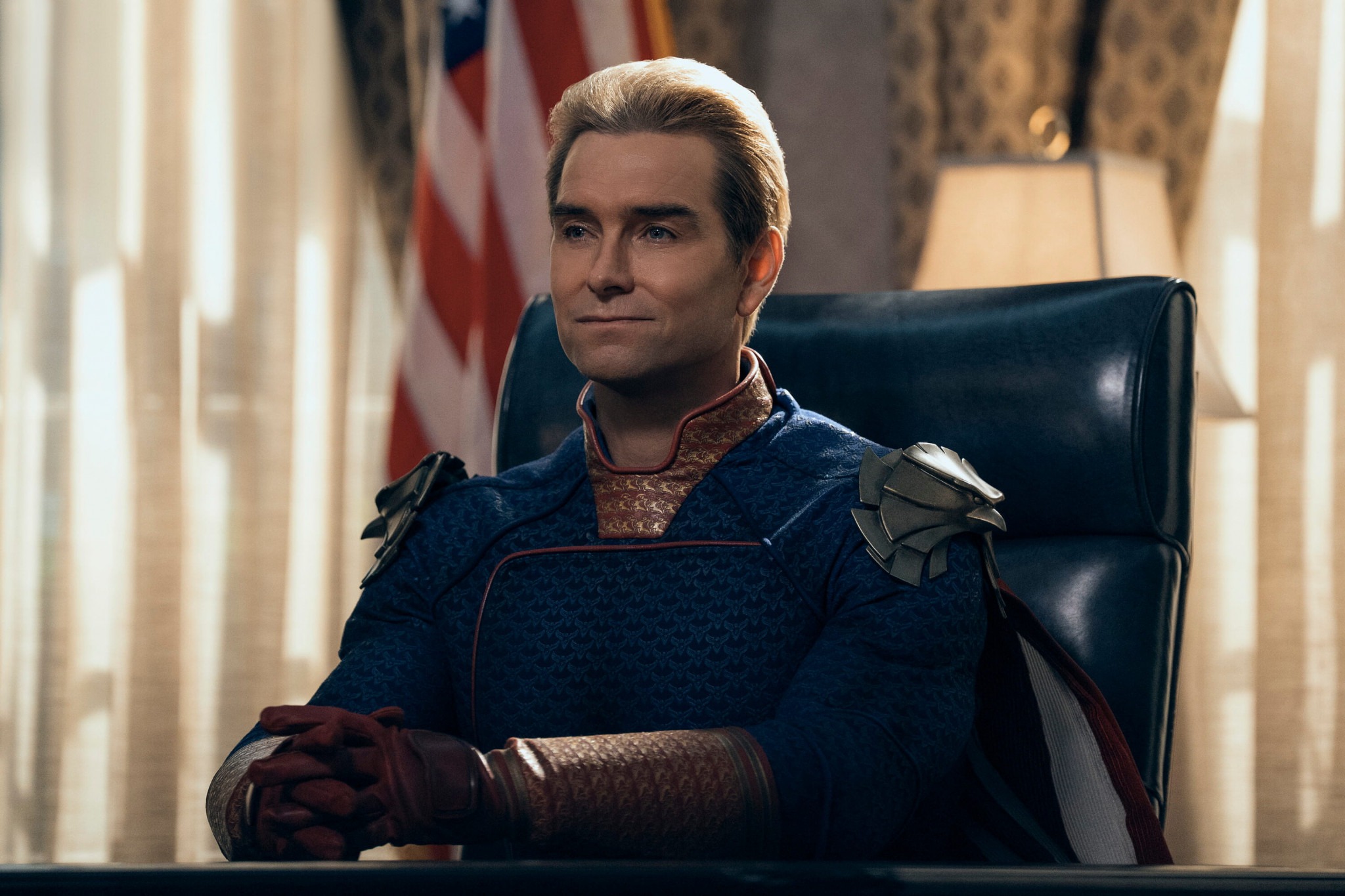
We see a post-Frenchie atmosphere where the screenplay is glitching because of the number of loose ends the show has left for the final episode. As expected and wished for, after seasons of being both one of the finest supervillains and a source of memes, Homelander lost his powers and met an undignified ending at the hands of Butcher, in a deeply cathartic moment that did gave us one last meme in its wake.
The plot mechanics often struggled under the weight of what was being asked of them. Kimiko’s power being developed as a replication of Soldier Boy’s ability was convenient to the point of undermining the show’s internal logic. If it was that straightforward to recreate, what does that say about all the seasons spent treating these powers as immovable facts of the universe? And Homelander, this immortal, near-impossible-to-contain force who had never truly been restrained across multiple seasons, is held down at his very peak with very little effort and in no special circumstance. Homelander’s ending, with its sense of manufactured justice, carries the same hollow logic as the death penalty, where punishment equals resolution. Being forced to live powerlessly after being humiliated on national television and hated by the people whose love and devotion you thrived off, is arguably a more fitting punishment.
Butcher’s death was, in contrast, more well-written and carried more nuance than most of what surrounded it. The fact that it was Hughie who ultimately killed him to prevent the release of a virus that would have destroyed all Supes gave it some form of moral complexity. However, I very much prefer the ending in the comics where Butcher released the virus and killed all Supes. The comics got it right with their major plot points and twists that the show in its palatable glory could not digest. Perhaps if science could empower Kimiko with Soldier Boy’s power, why not make a virus or vaccine that acts as an antidote to compound V in Supes’ bloodstreams?
The most admirable aspect of this finale is undoubtedly Antony Starr’s performance
Other moments in the finale also seemed underwritten and plot-hole-filled. The Gen V callback to Marie Moreau could’ve perhaps been stronger by involving her in taking down Homelander, considering it was established in Voughtverse that she is stronger, or at least as strong as he was. Ryan being taken in by Mother’s Milk also had almost no writing to support the transition. And to top it all off, Hughie and Starlight seemed to have named their unborn child Robin, after Hughie’s ex-girlfriend, which was a questionable choice in itself.
Yet somehow during the end montage when Piano Man played, I felt this warm sense of half-baked closure that fogged some of the dissatisfaction.
The most admirable aspect of this finale is undoubtedly Antony Starr’s performance. In his final scenes, as Homelander loses everything, you see a man who had become the epitome of power and fear, suddenly look like a schoolboy dressed up in a superhero costume.
In the end, I will undoubtedly miss the show for its endless supply of ethics hypotheticals that a philosophy student might ask you at a house party. But with moral compasses that have ever-shifting magnetic fields, The Boys was always going to struggle to stick its landing. Instead, it leaves behind a franchise; spin-offs, prequels, and an expanding Voughtverse, to be seen next in The Boys: Mexico, emulating the exact kind of hollow content machine the show spent seven years skewering. It existed alongside the world it mocks, but the tragedy is that by the end, it seemed to have forgotten it was supposed to be laughing at itself too.
Comments