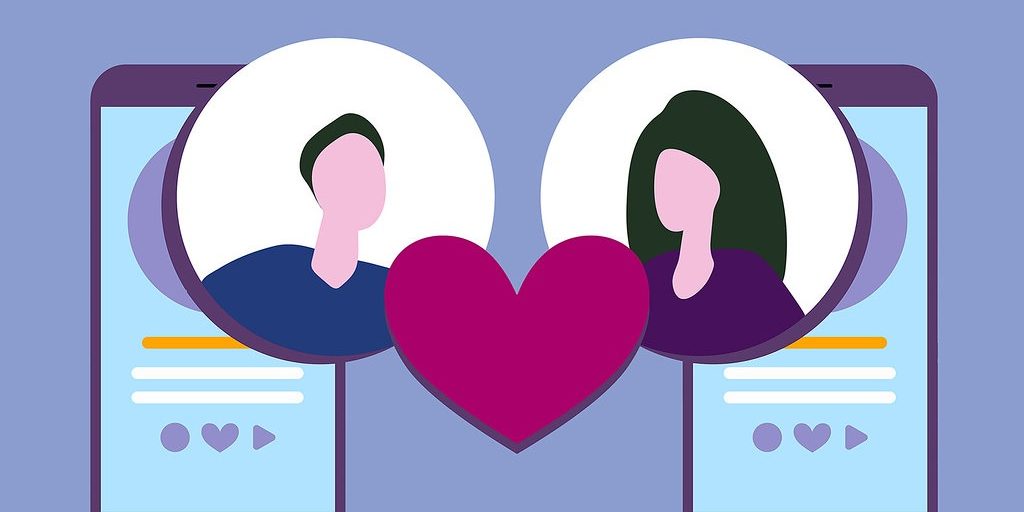
The philosophy of dating apps
With the world becoming increasingly digitised, everything from shopping to reading the news has made the transition over to the digital world. This is no different for dating, and the COVID pandemic only further fuelled the popularity of online dating.
There are several benefits to online dating, for some it removes the pressure of a blind-date or being set up by friends, while for others it provides access to connections that they may not find in the real world (such as for the LGBTQ+ community). However, dating platforms are not without their dark side, acting as yet another capitalist venture. For women in particular, online dating comes with even harsher consequences, as it makes them much more vulnerable to becoming a victim of a violent crime.
The capitalist nature of these corporations means that failure in your search for love is integral to their success and profitability
The capitalist nature of these corporations means that failure in your search for love is integral to their success and profitability. These companies don’t want you to be successful in your romantic venture, if you succeed, you delete the app – and they lose a customer. They don’t care if the constant rejection or lack of connection destroys your self-esteem. In fact, your low self-esteem goes on to benefit and support capitalism even further. Maybe the latest skincare products that you saw modelled by your favourite influencer (with layers upon layers of fillers, filters, and smoothing tools) will make you more appealing? Maybe you should treat yourself to that new bag you’ve had your eye on as a pick-me-up?
The inherently capitalist nature of dating platforms also has a negative influence on its male audience. The consumer culture involved in the very nature of these platforms – as you constantly swipe between different ‘products’ on the market and they present their best attributes to try and attract your interest – only acts to reinforce the frightening rise in toxic masculinity and negative attitudes towards women in young men.
In a 2026 study by Ipsos and the Global Institute for Women’s Leadership, they found that, “24% of Gen Z men agree that a woman should not appear too independent or self-sufficient, compared with 12% of Baby Boomer men.” Furthermore, in a 2016 study by the National Crime Agency, it was found that, “there had been a six-fold increase in online dating initiated sexual offences from 2009 to 2014… the victims in 85% of these offences were female.” These figures demonstrate a startling rise in hostility towards women, resulting in a horrifying rise in sexual assault, seemingly amplified by dating platforms. They promote rating women, based purely on their physical appearance and random prompts, as ‘fun’, while in any other setting this would be deemed as outrageous and objectifying. The constant swiping from profile-to-profile may reinforce the rising belief that women are disposable objects, which can desensitise users to acts of violence against them.
This disturbing consequence of online dating appears to have become normalised for women who participate, as unsolicited images and comments are almost an expectation of being on a dating platform for women. In a 2019 study by ProPublica and Columbia Journalism Investigations, of the 1200 women who completed the survey, 31% reported being sexually assaulted or raped by someone they had met through an online dating site.
Images of romance, intimacy and connection mask the very real experiences of assault, invasion and trauma
There is a major lack of accountability and willingness to intervene of the platforms themselves. These multi-billion-dollar corporations are quick to use the feminist movement in their marketing campaigns, profiting from female empowerment, without actually taking any kind of action to protect women, let alone empower them. Bumble is particularly guilty of this, the self-proclaimed ‘feminist’ dating app failing to respond to users’ complaints of sexual assault and rape. In order to protect their brand image of romantic cliches, couples lovingly walking off into the sunset, they choose to ignore and bury real complaints of violent crimes. Images of romance, intimacy and connection mask the very real experiences of assault, invasion and trauma.
greater pressure should be placed on [dating companies] to enforce stricter safeguarding and support mechanisms
So, how do we combat this? The issue is that these apps are highly addictive, making them almost impossible to delete. Studies show that constantly scrolling, or swiping, on content you enjoy releases small doses of dopamine (the ‘feel good’ hormone) in the brain. This means that you feel rewarded when you consistently scroll, leading to habit-formation. In an ideal world, the easy-fix to force these corporations to assess their issues and handle complaints appropriately would be a mass-deleting of all dating apps by women across the world. However, the very nature of these apps makes this highly unlikely to succeed. The responsibility then falls on the companies themselves; greater pressure should be placed on them to enforce stricter safeguarding and support mechanisms. If online dating cannot be stopped, it must be made safe.
As dating apps appear to dominate the dating scene, only rising in popularity, it appears that popular meet-cute romance novel tropes are on the decline. Perhaps ‘love at first sight’ will become ‘love at first pixel.’
Comments (1)
What an insightful article!! Amazingly articulated as well 🙂