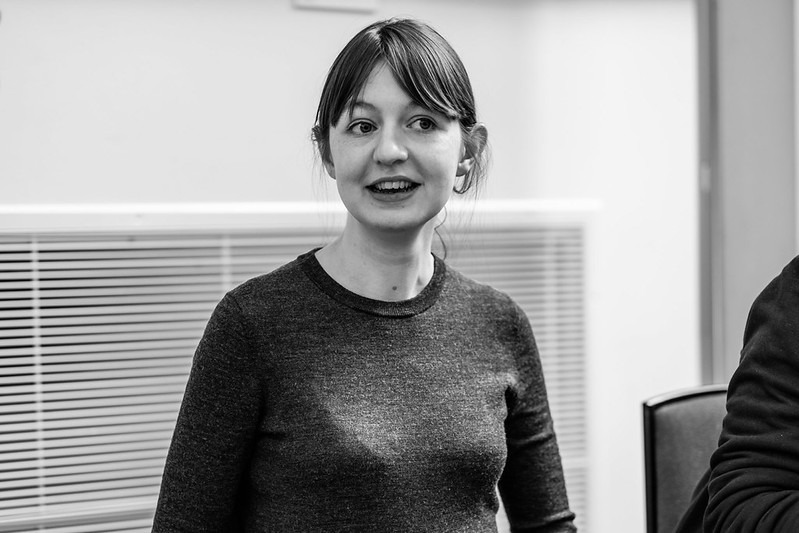
Sally Rooney: Meditations on modern Ireland
Critically acclaimed author Sally Rooney cannot help but write modern Ireland. If such a thing exists.
When discussing the 33-year-old breakout Irish novelist, renowned Irish author James Joyce’s name is frequently offered as her direct predecessor. Rooney’s controversial yet distinctive style is her contribution to Ireland’s long literary tradition. Her focus on interior monologues, narratives that border on streams of consciousness, and lack of speech punctuation are all characteristics of a genre shaped by Joyce.
Rooney is famous for her narratives’ otherwise superfluous details
But her attention to the texture of everyday consciousness is probably the most striking connection that exists between Joyce and Rooney. Joyce helped define the modernist realism genre in works like Ulysses and Dubliners, contemplating his characters’ subjective experiences in intricate detail. Likewise, Rooney is famous for her narratives’ otherwise superfluous details, which colour her characters’ encounters with reality. Normal People’s Connell checks the football scores while reading in the library; Conversations With Friends’ Bobbi strums her ukulele from the other room; Beautiful World, Where Are You’s Eileen peels a tangerine.
To some, like The Point’s Becca Rothfield, these digressions make for “saleable if insubstantial reading”, but really, they mark Rooney as a committed advocate of this genre. For the Irish author, these details anchor her characters to the thrum of everyday life, which aligns with her philosophy of grounding her stories in the reality of her own life: “I set my books in worlds that I know”.
Like Joyce, Rooney uses everyday reality to stage questions of identity, which suggests her work responds to his fundamental themes. Both deliberate the role of the author, what defines individual identities, and most significantly, how Ireland’s historical present should be understood.
Her narratives afford us a window into the realities of today’s Ireland: it seems a living and breathing presence in her novels, as much as any of her characters, butting up against their lives and shaping their everyday experiences. We see a vivid depiction of a country uneasy over its difficult past, one which wants to move forwards but is not quite sure how. True to form, she embraces its unfinishedness and imperfections, and these play out in her storylines.
Irish literature is persistently negotiating its past.
Rooney’s attachment to modernism reflects how Ireland’s cultural transition to conventional modernity is incomplete, since it continues to return to its past, while simultaneously wishing for a new cultural reality. Irish literature is persistently negotiating its past. Although she writes about a post-Celtic Tiger, post-financial crash and post-Catholic Ireland, her characters are still shaped by these circumstances, the same way contemporary Irish society is still informed by the aftermath of these events.
The long and complex relationship between Ireland and the Catholic Church means the two remain synonymous. With good reason: the moral climate disseminated during this lengthy period reaches into women’s lives even today. Marianne’s character is the vessel through which Rooney deals with this in Normal People. Marianne’s relationships with men explores the traditional beliefs of femininity and passivity instilled in her during her upbringing, translating in her feeling that she must be submissive for their pleasure. The physical and psychological effects result in her body “feeling like a carcass, something immensely heavy and awful that she has to carry around.” Characteristically of her genre, Rooney offers Marianne no magical solution and we watch, rooted to the spot, as she slips further towards the metaphorical edge.
Is secular Ireland truly moving beyond Catholic influence, or is it still shaping Irish identity in these terms, albeit increasingly in opposition to it?
Beautiful World, Where Are You considers the value of religion, reflecting Ireland’s shift to cultural Catholicism. Simon, Eileen’s boyfriend, is teased for his churchgoing tendencies. Felix good-naturedly calls him and “his lot” (practicing Catholics) “weird in the head”. Religion appears to be regarded as a sort of pathology when practiced. Eileen accompanies Simon to Sunday Mass after they spend the night together, but she does not accept communion, preferring to observe with some curiosity as Simon receives it. She admits in an email to Alice that, if she went with him to church, she thought “he would have to […] admit he had not been totally serious about the religion thing after all”. In reality, this too rings true, reflected in falling attendance of Mass. This raises a larger question: is secular Ireland truly moving beyond Catholic influence, or is it still shaping Irish identity in these terms, albeit increasingly in opposition to it?
Rooney writes in a way that favours the latter. Despite less traditional religious commitment, this brand of Catholicism continues to dictate much of Ireland’s gender, class, and economic structures, as well as individual responses to them.
Like Joyce before her, Rooney captures a country still negotiating its past, even as it insists on calling itself modern.
Comments