Escaping Eden
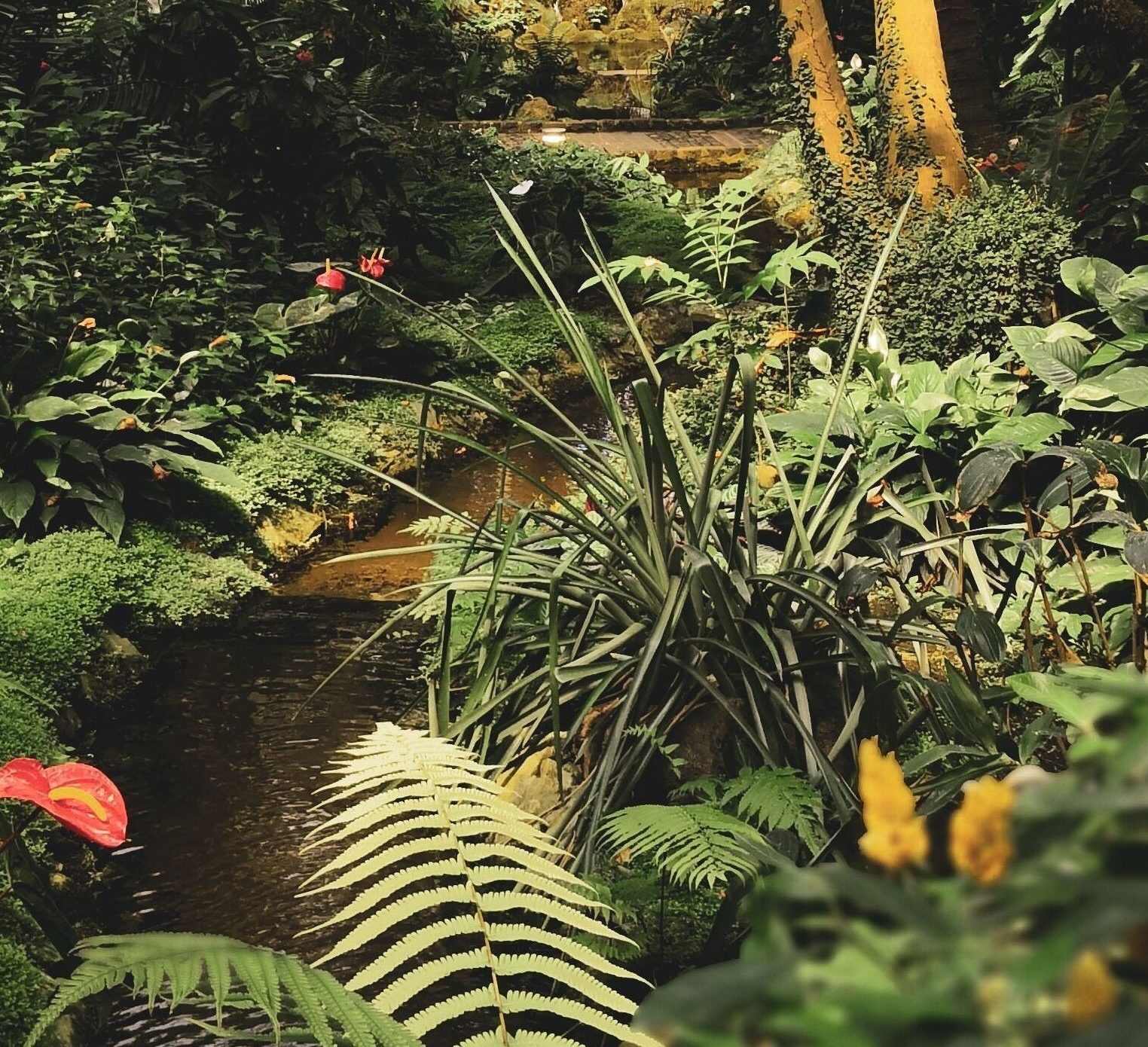
When the moon casts its deathly glow, nightmares infest my subconscious. In them, I return to Eden, as it was before I fell. Ivy and woodbine, untameable and wild infiltrate what was meant to be paradise. I fought them each day. I pruned and weeded, sweating and panting until the sun slipped away. Yet when morning came, the vines had returned, coiled anew around trunks and trellises, as though my labour had been nothing at all. Their onslaught drove me mad. But a mad woman isn’t easy to govern.
Adam called it order.
We were made together, though not in the same breath. When first I looked upon him, I mistook him for my reflection rendered in harder lines, a twin of sorts. An equal. I did not understand that likeness does not guarantee parity. By the time I learned, the garden had already been divided: I to tend, he to own.
“Without me”, he once said, watching as I cut back a climbing rose, “you would have no one capable of guiding you. You are not fashioned for solitude.”
The thorn bit deep into my palm. I welcomed it.
Our days were spent in cultivation. I pruned the roses, slicing away their scarlet blooms before they over-ripened. Thorns dragged their thin nails across my skin, bright beads of blood rising in their wake. The sting was honest. It did not pretend to be kindness.
Adam refused to leave my side. He called it companionship. I called it vigilance. One day, I asked to spend the day alone. A dark look came over his face. “If you ever leave me”, he said, “I’ll kill myself. Then you can be alone forever.” He didn’t speak to me for a week after that. I never asked again.
A reprieve arrived with the angels. When they descended in their bright assemblies, I was not permitted to address them; Adam spoke for us both. So for a few brief hours I was left unwatched.
It was during one such afternoon that I saw him.
He stood half-concealed behind the bole of a fig tree, wearing Adam’s face and yet not. I knew at once he was no mirror of my husband. The smile gave him away. There was something unguarded in his expression. Adam did not look at me like that.
When he stepped into the light, I saw the ruin of him: scars like pale scales snaked across the planes of his body, as though fire had once traced him and left its memory behind. His wings hung torn at his back, feathers singed to shadow. Above his head lingered the faintest suggestion of a broken circlet, as if holiness had been shattered but not erased. I couldn’t look away.
“Why aren’t you with the other angels?” I asked.
He tilted his head, regarding me with bright curiosity. “It’s a long story.”
“Fine. Why do you look like that?”
“That’s an even longer story.”
I told him he ought to expect inquisition if he looked as though he’d fallen out a tree and hit every branch on the way down.
A smile flickered across his mouth. Not condescending or impatient like Adam usually offers me. I believed he was amused. “You’re not going to let this go, are you?”
“I’m curious”, was my only reply.
Defeated, he told me of a war in Heaven. His injuries, he said, were the consequence of standing by his convictions.
Until then, I had believed war to be a pageant of glory, a proving ground for nobility. But there was nothing triumphant in the ruin before me. There was only cost.
“Conquest is seldom glorious”, he said quietly.
I fetched herbs from the shaded beds beyond the pomegranate trees, leaves I had learned would knit torn flesh and cool fevered blood. When I placed them in his hand, something in his gaze softened, as though gratitude might yet live in him. It was enough to stir in me a reckless tenderness.
I walked deeper into the garden, and he followed.
The grass hushed beneath our steps. The air thickened, fragrant with overblown blossoms. I did not look back, though every nerve in my body was aware of his nearness; the warmth of him, the charged silence he carried like a storm not yet broken.
Loneliness is a subtle famine. You don’t notice the wasting until you are starving.
We came to a small glade, hidden from the broad paths Adam favoured. I knelt to gather more of the healing leaves, and as I reached into the undergrowth, a rosebush snagged my wrist. A thorn pierced the skin. Blood welled, scarlet and bright.
I brought my hand to my mouth and tasted iron.
When I rose, he was watching me with a softened gaze, disarmed for a moment.
“It is forbidden”, I said, though I did not know whether I meant the herb, the solitude, or him.
“Is it?” he asked.
God’s law had always reached me through Adam’s mouth. I had never heard it spoken from the heavens themselves. It was Adam who told me I must not stray. Adam who told me I must not question. Adam who told me that to touch another would mean my undoing.
It has been said that reason is the act of choosing, But reason can be shaped by fear. Freedom is choosing despite that fear. The thought felt dangerous.
I stepped toward him. Then again.
I wanted to know whether the world was as narrow as Adam insisted. Whether my body was merely a vessel for obedience, or something capable of answering its own hunger.
When I took his hand, he did not hesitate.
We lay upon the garden floor, among crushed begonias and dark acanthus leaves. We shared our breath first, tentative, searching, then flesh until the sky darkened above us. There was no tenderness in it, but there was fire, and for a moment I mistook intensity for liberation.
After, I lay with my head turned toward him, studying the planes of his face. His eyes were green. Not the soft green of new growth, but the sharp hue of unripe apples. Bitter. Coiled within their depths was something ancient and unyielding, a patience that did not belong to the wounded.
The grass at the edge of the glade stirred. A scaled body slipped between the stems, silent and assured.
Understanding came to me as a settling.
“You”, I breathed.
He did not deny it.
The broken halo above him flickered, then burned brighter, as though fed by my recognition. The ruin of his wings seemed less like injury and more like regalia; the spoils of defiance worn proudly.
“Conquest is seldom glorious”, Lucifer reminded me, voice low with amusement. “But it is satisfying.”
I recoiled from him as though scorched. Shame rose hot in my throat, followed swiftly by anger, not at him, but at myself. I had mistaken rebellion for salvation. I had traded one master for another, imagining that defiance alone could make him virtuous.
Adam sought dominion through law. This one sought it through transgression. Each required my submission to affirm his power. Neither was a hero. And I – I had been foolish enough to search for rescue in either.
I stood, the crushed petals clinging to my skin. The only one who could unmake the cage I inhabited was myself.
The thought was not comforting, but at least it was true.
I would not return to Adam and offer him the pleasure of vindication. I could already hear his measured tone, his patient instruction: how he had foreseen my weakness, how women were not fashioned for independence, how mercy would compel him to keep me at his side despite my failure. He would not cast me out. Exile would grant me too much dignity.
No. I would leave before he could claim triumph.
Without a word to the fallen angel, I turned and walked from the glade. I did not grant him a backward glance.
I crossed Eden swiftly, the paths once familiar now strange beneath my feet. The boundary of Paradise shimmered faintly in the rising dark. Beyond it lay no promise of abundance, only shadow. I stepped through.
The air changed at once. The lush fragrance of cultivated blossoms gave way to damp earth and stone. Moss spread in muted carpets across the ground, its green subdued but resilient. Dew cooled my flushed skin as I moved deeper into the unfamiliar wild.
Creatures watched from the underbrush, those overlooked by heaven’s design. Bent-winged birds. Pale-eyed beasts. Serpents with skins too dark or too dull for Eden’s brightness. They did not recoil from me.
They drew nearer.
When I first entered the Great Deep, they whispered my name with a sound like wind through scales. Lilith. The name Adam had spoken with derision here carried reverence.
They did not see in me a transgressor or a helpmeet. They saw a sovereign.
Yet I do not think of myself as their queen. I think of myself as their mother by recognition. We are the discarded things. The unchosen. The ones who would not bend.
Sometimes, when the moon rises full and cold, I wonder how long it will be before Adam’s new wife begins to feel the tightening of the vines around her throat. Before she questions the voice that claims to speak for God. Before she learns that obedience, if it must be enforced, is not virtue but fear.
If she comes east, she will find us. Eve would be more than welcome to join us.
Comments