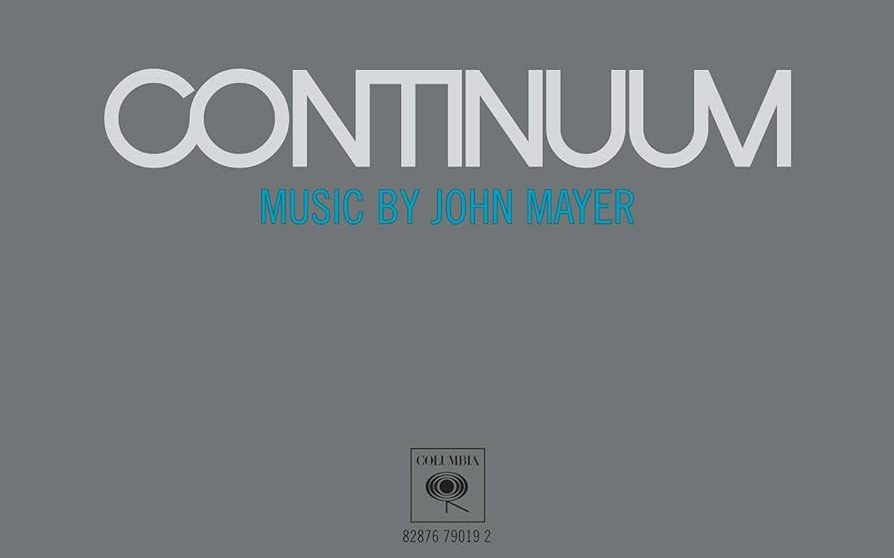
‘Continuum’: Mayer’s magnum opus twenty years on
By the mid-2000s, John Mayer was well established in the music industry as the next big pop star; his first two studio albums had earned massive commercial success, and he was well on track to be the next heartbreaking pop star for the world to fawn over, especially as he was largely rocketed to stardom by his song ‘Your Body is a Wonderland’. Despite this, Mayer yearned to be known for his musicianship, guitar playing and songwriting – he often states that he compromises when writing albums, giving his audience simple pop songs that the radio will love and then more complex songs that he enjoys writing and playing. So – in a seemingly bizarre move – he went on the road with the John Mayer Trio, playing original blues and covers with legendary session players: drummer Steve Jordan and bass player Pino Palladino. Soon after this collaboration, he wrote Continuum.
Continuum diverts away from the pop performances that had come to define Mayer’s image up until this point and towards a higher level of musicianship and instrumentation, combined with a more intimate tone. The album opens with ‘Waiting on the World to Change’, an upbeat opening track with a hypnotic groove provided by Jordan (who produced the album) and Palladino, beautifully understated guitar phrasings and a lyrical lament on the contemporary state of the world. This tune instantly sets the tone for the album as different to anything Mayer had created before.
He delivers acoustically masterful songs with profound, moving lyrics
Throughout the album, Mayer covers all the bases you would desire from an album; every track grooves like no other due to that aforementioned incomparable rhythm section – especially tracks such as ‘Vultures’ and ‘Belief’, with such beautiful musical integrity that the lyrics may slip under the radar when in fact they are expert from a songwriting perspective too. ‘Vultures’ notably serves as a critique of the greed of the industry machine Mayer found himself within with his newfound fame. Additionally, he delivers acoustically masterful songs with profound, moving lyrics in the song ‘Stop This Train’ where he metaphorically captures the fear of losing time and growing older alongside ‘The Heart of Life’ in which he optimistically asserts that he believes that everything works itself out for the best. Mayer also demonstrates his virtuosic guitar playing throughout, developing into iconic solos on countless tunes – ‘Gravity’, ‘Slow Dancing in a Burning Room’, as well as a cover of Jimi Hendrix’s ‘Bold as Love’. A combination of select songs, live performances and studio solos such as these were imperative in defining Mayer as what legend and hero of Mayer’s Eric Clapton called “a master of the instrument.”
A standout track from the album for Mayer is the track ‘In Repair’ which he cited as one of the best recording sessions he had ever had. The process was documented on his YouTube channel – bringing together the talents of Steve Jordan and an 8-string guitarist named Charlie Hunter (6-string guitar and two bass strings on the same body) who created the song purely from innate understandings of where each other were going musically. Whilst musically the track is undeniable from the riff to the groove to the soloing, lyrically it is so moving, Mayer stating that it is about how “people are always on the way down or the way up and you never really enjoy the moment where it is all put together because it never really is.”
The album has aged excellently; the sentiments reflected in many tunes are timeless
Continuum created what many will contest to this day as Mayer’s most complete, near-on insurmountable work – it encompasses so much of what has made him famous, propelling him into critical success as well as commercial, gaining him notoriety amongst musicians and constructing some of his most beautiful compositions to date, striking an emotional chord with listeners through his lyricism. Despite being written twenty years ago now, the album has aged excellently; the sentiments reflected in many tunes are timeless, instrumentation has been inspiring players since its release, and the production doesn’t sound dated at all. All of this culminates to create an album experience which is well worth a listen and may well encourage you to listen to more from John Mayer’s discography.
Comments