Boys of Tommen: A debate over adaptation
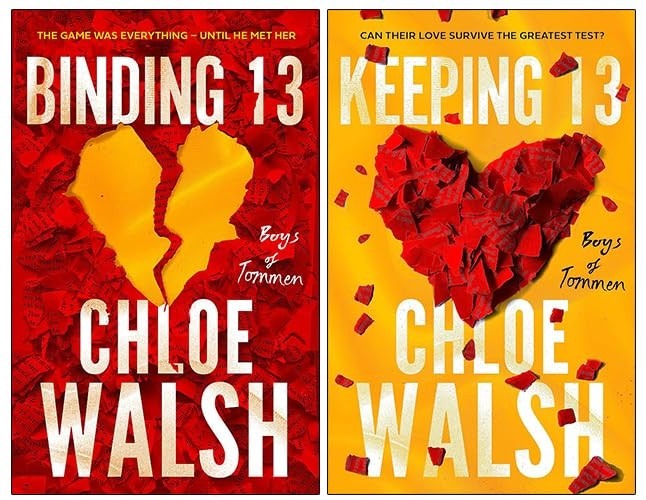
The adaptation of Chloe Walsh’s Binding 13 and Keeping 13 into a television series should have been a moment of celebration for readers of the Boys of Tommen series. Instead, the recent casting announcements and the wider trend of BookTok adaptations have created growing anxiety about whether the story will survive the transition from page to screen with its heart intact. Following the recent modernised adaptation of Elle Kennedy’s Off Campus, many readers are beginning to question whether streaming platforms truly understand what made these stories resonate with readers so deeply in the first place.
The central fear is that Boys of Tommen will become another marketable teen romance rather than the original emotionally devastating story that readers fell in love with. The books were never just about romance, yet the adaptation has already been marketed as a ‘forbidden romance’ – a description that many immediately rejected because it fundamentally misunderstands the narrative. Johnny and Shannon’s relationship is compelling because it is rooted in gentleness alongside trauma. This distinction is most significant because reducing the story to an assortment of romance tropes risks sidelining other non-romantic elements which made the series unique.
[Johnny’s] emotional restraint and helplessness are deeply internal experiences and without access to those thoughts, there is concern that audiences may reduce him to a flat archetype
As fans, we are mainly concerned about whether TV can portray the emotional depth of books, especially considering that much of the story relies on internal monologues that allow understanding of motivations that might otherwise appear irrational. Johnny is not just the stereotypical protective rugby boy associated with sports romance. Rather, much of his character is defined by internal conflict between his future in rugby and his overwhelming instinct to protect Shannon from the violence surrounding her. His emotional restraint and helplessness are deeply internal experiences and, without access to those thoughts, there is concern that audiences may reduce him to a flat archetype. The same fear applies to Aoife Molloy, with readers understanding her loyalty and love for Joey Lynch because the books allow access to her emotional reasoning. Without careful screenwriting, there is a real possibility she may be interpreted as naive or pathetic for staying by Joey’s side through addiction and chaos.
No character sparks more anxiety among readers than Lizzie Young who is deeply traumatised, emotionally volatile, and often cruel, making her appear as a bully. Readers instead understand that her behaviour stems from unresolved trauma, grief, fear, and emotional instability. There is concern that audiences within modern online fandom culture may strip away that complexity and reduce her into a simplistic mean girl. Similarly, there are larger issues surrounding modern fandom culture and consumption. Many readers are fearfully aware of how online discourse encourages characters to be categorised into heroes and villains. Whilst the books actively resist this moral simplification, the fandom itself is already largely divided over – and highly toxic towards – certain characters and opinions. Fans worry that, to make the story more palatable for Amazon’s viewers, the adaptations could lose its emotional ambiguity.
Contemporary media often mishandles domestic violence by either sanitising it, using it as shock value, or reducing it into an aestheticised trauma subplot
The books resonate with readers because they refuse to romanticise abuse or soften its brutality. The author Chloe Walsh portrays domestic violence as horrifying and all-consuming. For example, Teddy Lynch is not written as a misunderstood antihero. He is instead terrifying precisely because the books force readers to confront the reality of abuse without glamour or excuse. Many readers feel that contemporary media often mishandles domestic violence by either sanitising it, using it as shock value, or reducing it into an aestheticised trauma subplot. Boys of Tommen stood apart because it explores the complexity of abuse while simultaneously showing the devastating impact it has on victims.
As one fan Maja (@majastumblr) explained: “The main reason why I really love the books is [because of] how they manage to portray domestic violence as the true horror that it is. I find that many books on the issue tend to glaze over the horrendous violence and sort of sugar coat it or don’t really go into depth.” Her comment reflects a larger fear shared throughout the fandom that television may soften the violence to make the series more acceptable, ultimately undermining the very realism that made the books so impactful. That is why fans are so worried that the adaptation may dilute those themes. Due to screen regulations, age ratings, episode limitations, and commercial concerns, there is a fear that the abuse storyline will either be toned down or pushed into the background as a secondary plot beneath romance. But for many readers, this storyline is central to understanding the entire Lynch family. It also risks damaging the wider conversations around abuse itself which would undermine the brutal honesty of the books. This becomes even more concerning in the context of modern social media culture, where serious storylines are reduced to romantic edits and the common concept of ‘I can fix him’ surrounding abusive characters, such as Teddy Lynch and Mark Allen.
Many believe studios are rushing to adapt popular titles because they already come with guaranteed audiences
Casting has become another major source of division within the fandom. Whilst the recent casting fulfilled our hopes for unknown Irish actors, a major issue has risen surrounding the casting of Aoife. Her curvier body type matters to many because it offered representation not often depicted in romance media, particularly within a 2000s setting where thinness dominated beauty standards. For fans, changing her body type feels disappointing because she represented confidence, femininity, insecurity, and desirability outside the narrow standards portrayed onscreen. The structure of television itself also presents challenges. Binding 13 and Keeping 13 together span over a thousand pages of emotionally dense storytelling. Many fans simply do not believe eight episodes are enough time to properly adapt such expansive material without cutting major emotional development. As another fan Barb (@barbiesbookhouse) explained: “The series and its characters deserve justice… If too much gets cut or simplified for TV, it risks turning a deeply emotional and complex story into something much more surface level.” This concern ties into a wider frustration readers increasingly have with modern adaptations. Many believe studios are rushing to adapt popular titles because they already come with guaranteed audiences.
However, despite all these fears, many readers still acknowledge the potential positives of the adaptation. If handled with respect, Boys of Tommen could offer powerful representation rarely seen in mainstream television. Irish youth culture is still widely underrepresented on screen, and the series could portray working-class Irish teenagers with honesty, humour, vulnerability, and realism. It is also an exciting opportunity for a group of young, unknown actors to make their breakthrough.
Ultimately, the debate surrounding Boys of Tommen reflects something larger than casting complaints or fandom discourse. It reflects the fear of losing a story that meant something deeply personal to people. Readers are protective because these books were not escapist fantasy in the traditional sense. They were emotionally confronting and deeply compassionate. Fans do not want perfection from the adaptation, they want understanding.
Comments