Are we entering the downfall of the full English breakfast?
Britain’s most famous national dish since the Victorian era, the full English has long since been a source of pride for a country less than revered for its cuisine. However, in the new era of wellness influencers, the classic breakfast seems to be on the decline as it clashes with the focus on healthy eating. Is the full English dying out?
The history of the full English dates back to the nineteenth century, providing a source of comfort – as well as controversy – for many. The classic ‘fry up’ has consistently been the only dish that fully transcends class. Despite originating as a medieval peasant food, it quickly became a set piece of wealth in the Tudor and Stuart eras. Likewise, in the modern era, the price can range quite drastically from £5 to £20, providing a reliable option for all budgets.
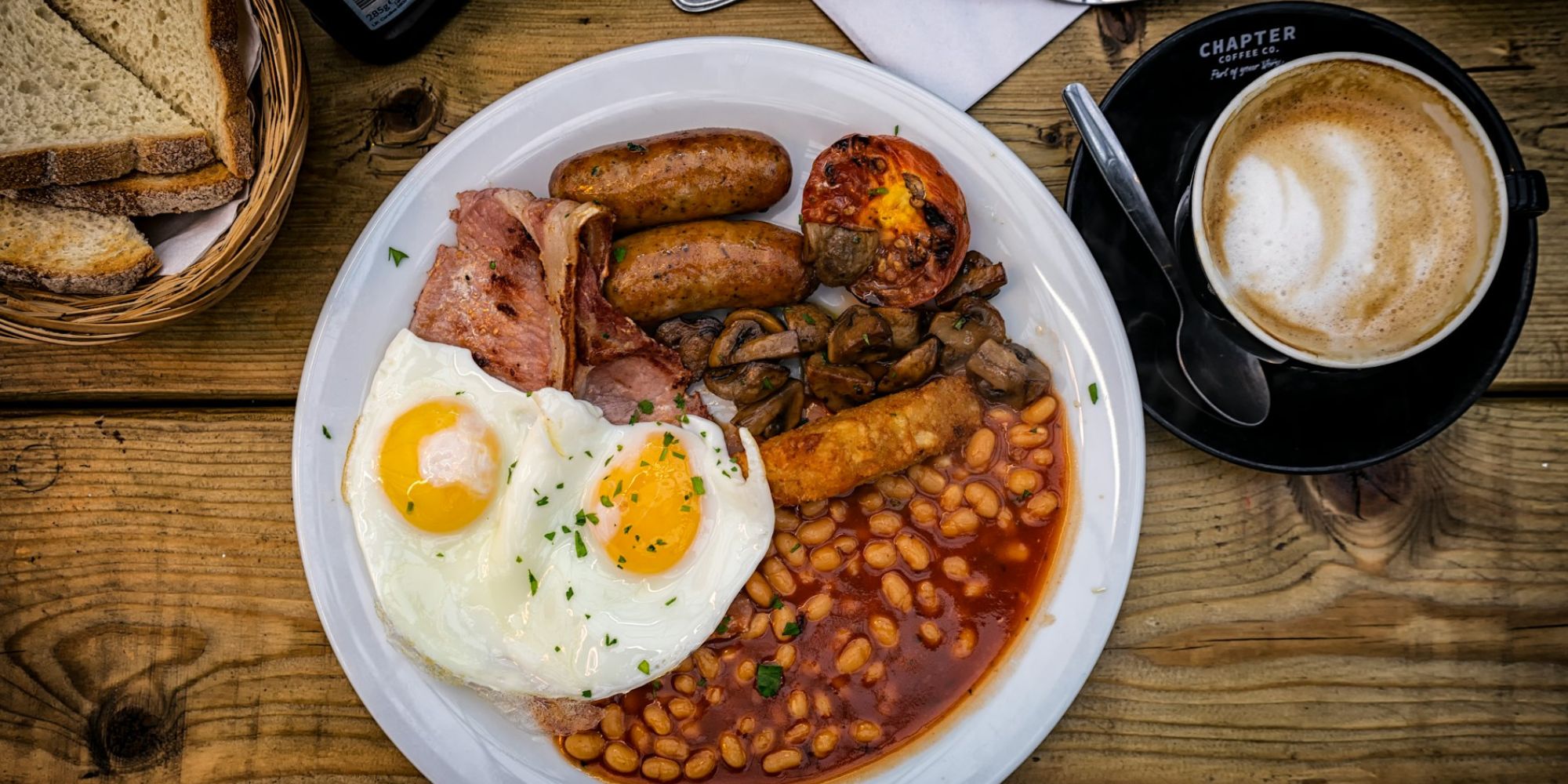
The full English, though varying regionally, tends to follow a typical formula. The core meats include sausages and rashers of bacon, accompanied by eggs, most commonly fried. Part of the foundation comprises buttered white toast and hash browns, followed by fried mushrooms and tomatoes. Common additions include the more controversial baked beans or black pudding, with places such as London tending to embrace more modern twists, such as grilled halloumi as opposed to bacon.
Our society is undergoing a rapid healthy eating movement, with health increasingly being considered a status symbol
Despite its long standing as the number one breakfast in England, a 2025 survey by Weetabix revealed that only 5% of the population now eat a full English on a weekday. But why is this?
There are multiple reasons that can be pinpointed for the fall of the full English, including health and wellness, rising costs, and preparation time.
Our society is undergoing a rapid healthy eating movement, with health increasingly being considered a status symbol. The emphasis on protein intake and gut health doesn’t blend with the greasy processed meats and fried foods that make the full English so iconic. While it used to be considered the prime hangover cure, the younger generations in particular now opt for ginger shots or vitamin-packed smoothies instead. As healthier alternatives overtake the world by storm, the full English has been left with only two options: to adapt or to die out.
Alongside this, daily consumption has become an inconvenience. With our fast-paced lifestyles, the UK now prioritises speed and convenience above all when choosing weekday breakfasts, with the full English considered more fuss than it is worth. Sadly for the ‘fry up’, M&S overnight oats or a simple slice of toast fit the brief more neatly.
Different cultural takes on the full English have been bringing it back into predominance
Despite this, the full English is undergoing an evolution of its branding as more of an indulgent weekend brunch than the Victorian working-class staple. To allow it to fit into a more health-conscious setting, many have taken to adapting it with healthier swaps, such as spinach rather than fried tomatoes, or poached eggs rather than fried. Focusing on alternatives such as leaner protein sources can adapt the national favourite to the new era.
Though it is so common that our eyes tend to slide over it when browsing the breakfast menu, different cultural takes on the full English have been bringing it back into predominance. A current TikTok trend centred around the full English has been remaking it as inspired by different cultures, such as polenta and pancetta hash browns for an Italian spin. This rebranding is essential to keep the full English afloat, ensuring that it is tailored to the more refined palettes of 2026.
While the components of the full English used to be a centre of fierce debate and national pride, now every mouthful feels radical in our new era. However, the trend towards more customisable breakfast options, with the full English even being made vegan on many menus, means that while the dish is changing, it will not die out entirely. The full English is undergoing a rapid evolution – while it remains a cultural icon, modern lifestyles and health consciousness have altered both how and when people enjoy it.
Comments