A new era of Austen
It is a truth universally acknowledged that Jane Austen’s novels are continually adapted and re-imagined for modern audiences. With the recent release of the BBC series The Other Bennet Sister and the upcoming Netflix series Pride and Prejudice, it begs the question: why is Austen’s work so well-loved by readers two centuries later?
With Pride and Prejudice being Austen’s most adapted novel, why has the story of Elizabeth Bennet and Mr Darcy bewitched us all, “body and soul”? As Netflix describes, it is “the most widely read [of Austen’s novels], remaining ever-relevant and entertaining”. From the witty Elizabeth Bennet, the yearnings of Mr Darcy, and the comical Mr Collins, to a depiction of sisterhood through the five Bennet sisters, Pride and Prejudice continues to be a beloved novel, over 200 years after its publication in 1813.
The recent BBC series The Other Bennet Sister, based on Janice Hadlow’s novel of the same title, presents a new perspective on the classic story through the eyes of Mary Bennet. Released in March, the series has already grown in popularity. Starring Ella Bruccoleri as Mary, Richard E. Grant as Mr Bennet, and Ruth Jones as Mrs Bennet, this new interpretation may prove to be the most significant yet.
Placing the character of Mary at the forefront highlights the importance of representing ‘socially awkward’ characters in modern media
With most adaptations of the novel focusing on Jane and Elizabeth, Lydia running off with Mr Wickham, and Kitty as a giggling little sister, Mary is left to her piano. One Independent article argues that, while Mary is “portrayed as socially awkward, bookish and attention-seeking in Pride and Prejudice“, she is “seen through a more sympathetic lens” in the series. Placing the character of Mary at the forefront highlights the importance of representing ‘socially awkward’ characters in modern media. In a BBC interview, Grace Hogg-Robinson, who plays Lydia, suggested that Mary is “much more relatable to a modern audience”, implying The Other Bennet Sister is a much-needed re-interpretation of Austen’s novel.
Now, let’s explore other adaptations from over the years. The 1995 BBC series of Pride and Prejudice, starring Jennifer Ehle as Elizabeth Bennet and Colin Firth as Mr Darcy, is a touchstone of modern adaptations of Austen’s work, and a firm favourite amongst Pride and Prejudice fans. One CBR article describes this adaptation as “famed for remaining true to Jane Austen’s novel”, therefore loyal readers may be inclined to prefer it to other adaptations.
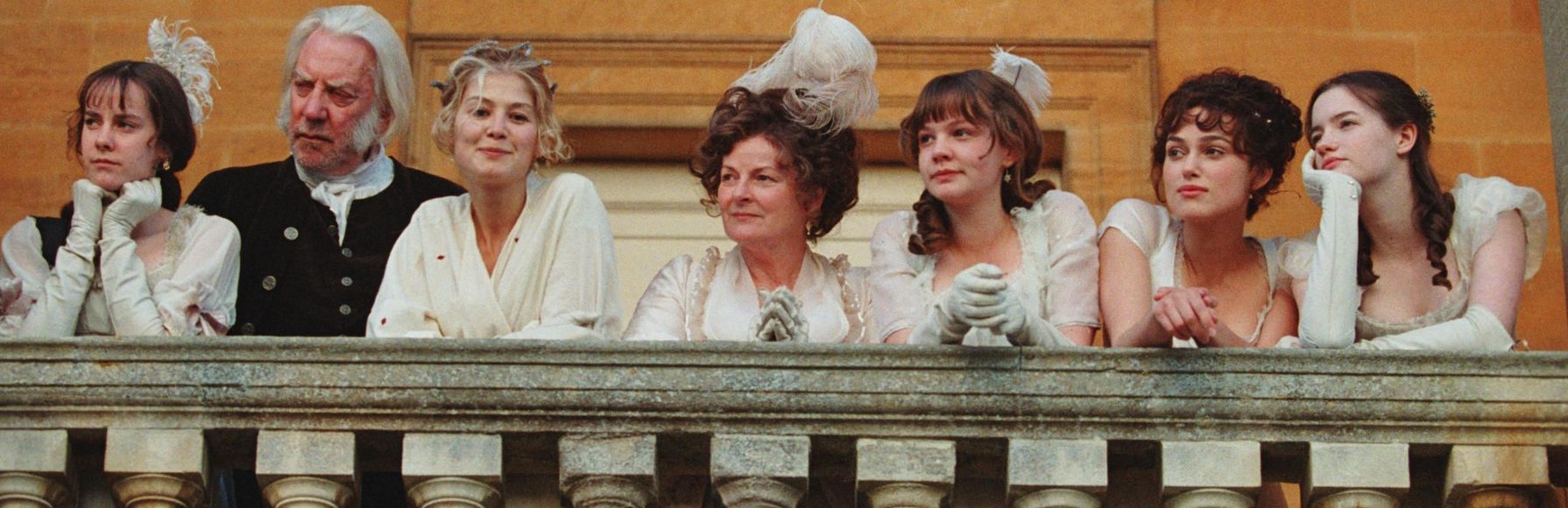
The 2005 film adaptation of Pride and Prejudice, starring Keira Knightley as Elizabeth Bennet and Matthew Macfayden as Mr Darcy is another fan favourite. I may be prejudiced (pun intended), as this is my favourite adaptation of the two. From the iconic hand flex scene to Mr Collins’ “what excellent boiled potatoes” line , Joe Wright’s adaptation of Pride and Prejudice leans into the romantic and comedic aspects of the novel. In fact, the CBR article describes it as a “soaring romance, faithful to Austen’s idea”. However, it nevertheless brought about some controversy upon its release, as a Bustle article describes: “Some purists were annoyed that the beautiful it girl of the day was cast as their beloved Elizabeth.” Knightley’s casting wasn’t appreciated by every fan.
Lizzy and Mr Darcy continue to have an impact on modern readers, with the upcoming Netflix adaptation of Pride and Prejudice […] set to be released later this year
Lizzy and Mr Darcy continue to have an impact on modern readers, with the upcoming Netflix adaptation of Pride and Prejudice, starring Emma Corrin and Jack Lowden as Elizabeth Bennet and Mr Darcy, set to be released later this year. The series’ screenwriter Dolly Alderton, famous for her novel Everything I Know About Love, has called Pride and Prejudice “the blueprint for romantic comedy”. Austen’s novel, she says, is “packed with drama and depth as well as comedy and charm”. With the cast consisting of Olivia Colman, Louis Partridge, and Jamie Demetriou, this series has piqued the interests of many Austen fans and will likely introduce others to the world of Pride and Prejudice.
A popular reference to Pride and Prejudice is Helen Fielding’s character of Bridget Jones who first appeared first in the novel Bridget Jones’s Diary, published in 1996, and then in the 2001 film of the same name. Author and screenwriter Fielding revealed that both the novel and film were based on Pride and Prejudice. She told to the BBC that she was “infatuated with [Austen’s novel], so I just stole the plot”, explaining that the novel is “full of themes and messages about human nature”.
Bridget Jones’s Diary is a classic English romcom that arguably established the ‘frazzled English woman aesthetic’
Starring Renée Zellweger as Bridget (based on Elizabeth Bennet), Colin Firth as Mark Darcy (Mr Darcy), and Hugh Grant as Daniel Cleaver (Mr Wickham), Bridget Jones’s Diary is a classic English romcom that arguably established the ‘frazzled English woman aesthetic’. Many Pride and Prejudice fans were pleased with the casting of Firth, having played Mr Darcy a few years prior in the BBC series. Fielding herself admitted “Bridget is much more chaotic” than Elizabeth, and I would argue that Bridget adds a modern humanity to her character.
Overall, Austen’s characters and narratives have survived two centuries as they are still relevant today. We continue to return to stories of family and friendship due to their messages reflecting in current society and, as The Other Bennet Sister proves, it’s not only the Janes and Elizabeth Bennets of the world who deserve the spotlight.
Comments