The prevailing scandal of John Singer Sargent’s ‘Madame X’
The first Monday in May is always bound to generate controversy. As our familiar-faced attendants usually conform quite liberally to the theme, which was Costume Art: The Human Body as a Canvas, it was a surprise to see the newly appointed Honorary Co-chair, Lauren Sánchez Bezos, and her friends at Schiaparelli, drawing directly from the renowned portraiture artist John Singer Sargent’s iconic representation of Virginie Amélie Avegno Gautreau.
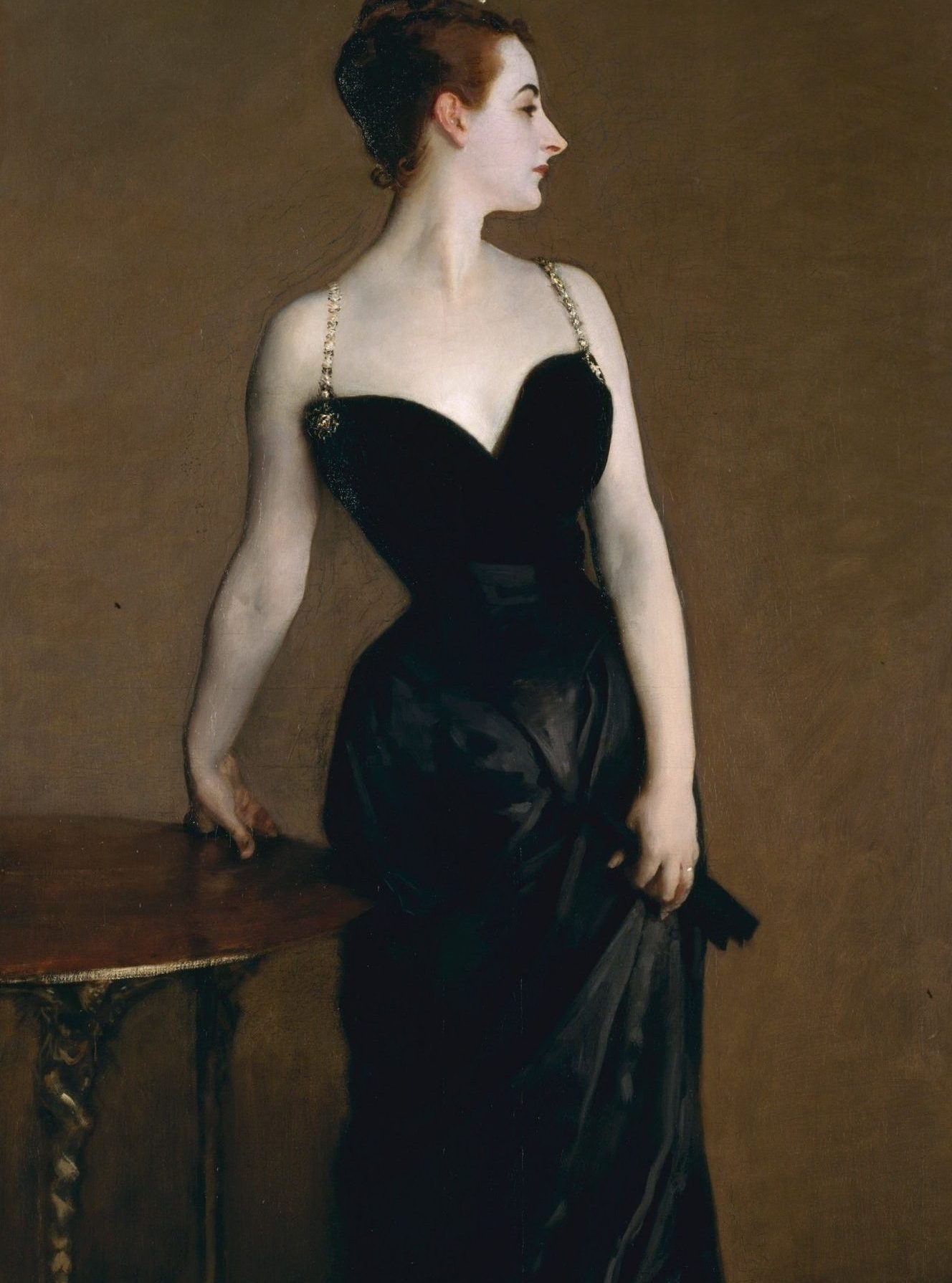
Madame X (1884) is a lasting testament to Sargent’s mastery of absolute realism, a painting that acts as a microcosm for concealed female sexuality and desire
Madame X (1884) is a lasting testament to Sargent’s mastery of absolute realism, a painting that acts as a microcosm for concealed female sexuality and desire. It provides a hushed insight into the inner workings of Gilded Age standards of beauty, allure, and perhaps most essentially the calumny and scandal held within the upper classes of late nineteenth-century society. The lasting legacy of Madame X lies in Sargent’s revision of his subject’s dress. In the first rendition, Singer leans into the innate sexuality of the female form as the jewelled strap of Gautreau’s dress gracefully falls out of place, inviting temptation and intrigue for spectators at the Paris Salon. Yet this was met with distaste and outrage, forcing Sargent to reclothe his subtly seductive female figure, leading to social repercussions and isolation for his sitter, Virginie Gautreau.
Sargent’s Madame X is comparable to feasting your eyes upon a hypnotic glimpse of soft yet illuminating moonlight, certainly far from earthly reach, but wholly undeniable in its serenity and ethereal beauty
The team at Schiaparelli, led by Daniel Roseberry and in collaboration with acclaimed stylist Law Roach, are responsible for the conception of this pastiche of Madame X. The intricate drapery and pleating of the gown, so skilfully captured by Sargent, is stripped back entirely, in favour of a more modern and minimal ‘snatched’ gown. In fact, the only direct translation that can be observed is the jewelled strap, which adheres to Sargent’s original rendition, as it falls over Sánchez Bezos’s shoulder. To me, and I am sure many others, what stands out about Madame X is the magnificent contrast of Gautreau’s porcelain skin and the rich depths of her black gown, which is accentuated by the flush shades of amber and copper caused by her Henna-dyed hair. And of course, her triumphant and defiant body language, as she turns away from us, the viewers, as though to capture her gaze and attention is a privilege we aren’t privy to. Sargent’s Madame X is comparable to feasting your eyes upon a hypnotic glimpse of soft yet illuminating moonlight, certainly far from earthly reach, but wholly undeniable in its serenity and ethereal beauty. A feat that Sánchez Bezos, Roseberry and Roach failed to reclaim.
Foy’s presence and success only reinforce and clarify the absence of imagination in Sánchez Bezos’s gown
Schiaparelli was not the only fashion house to attempt to reimagine Sargent’s Madame X. Emmy-awarded Actress Claire Foy, dressed by Erdem, also evoked the captivating portrait. Erdem Moralioğlu resurrects all the features that are notably absent in Schiaparelli’s attempt. As he satirises the purity culture that tainted painting’s original reception at the Paris salon, as Foy’s face is seen covered with a birdcage veil. By reviving the ruched quality, he adds a creative twist to achieve the crushed satin drapery seen in the portrait adorning Foy’s gown with a British stable, the Barbour jacket, an undeniably bold and memorable choice, as the fallen strap is just a footnote in her ensemble.
Foy’s presence and success only reinforce and clarify the absence of imagination in Sánchez Bezos’s gown. As a fashion house and charity event, it proudly references the begone opulence of the Gilded Age, an era that saw mass wealth acquisition and disparity, and the birth of the American Billionaire. This perhaps signals the downward path that artistic industries will have to endure as tech billionaires (and their wives) use our prestigious events as their playgrounds so that they can falsely pose as tasteful aesthetes.
Comments