Does Nintendo take risks?
Most companies take risks, but no other company in gaming seems more addicted to attempting something new and different than Nintendo.
It’s hard to think that one of gaming’s biggest and most innovative companies could either fall so hard or have one of its biggest breakthroughs because of one of these decisions. The market cannot always be smooth, and Nintendo seems averse to just producing simple consoles like those of Microsoft or Sony, which can be to their benefit or detriment.
Interactivity, motion, and portability have always been at the forefront of Nintendo’s unique selling point. While others favour high resolution and performance, Nintendo markets to unique audiences and game developers.
When the Nintendo Wii hit the market, it was unlike anything most gamers had seen before.
Even non-gamers began to buy the console, and children whose parents saw gaming as violent and addictive were able to experience family-friendly gaming with all their relatives.
Rather than exclusively catering to die-hard fans, Nintendo chose the risk of innovative expansion for the era of the Wii and the DS. This was one of the reasons for Nintendo outselling the other consoles of that generation.
The Wii was so successful that Nintendo even produced its own copycats in other companies, such as the PlayStation Move and Xbox Kinect.
Following this success, it only made sense to expect that the similar consoles following the Wii would garner similar popularity. However, what Nintendo considered a low-risk endeavour did not result in equal success.
We have seen Nintendo come into the market with risky ideas before. The Virtual Boy was Nintendo’s answer to VR two decades too soon.
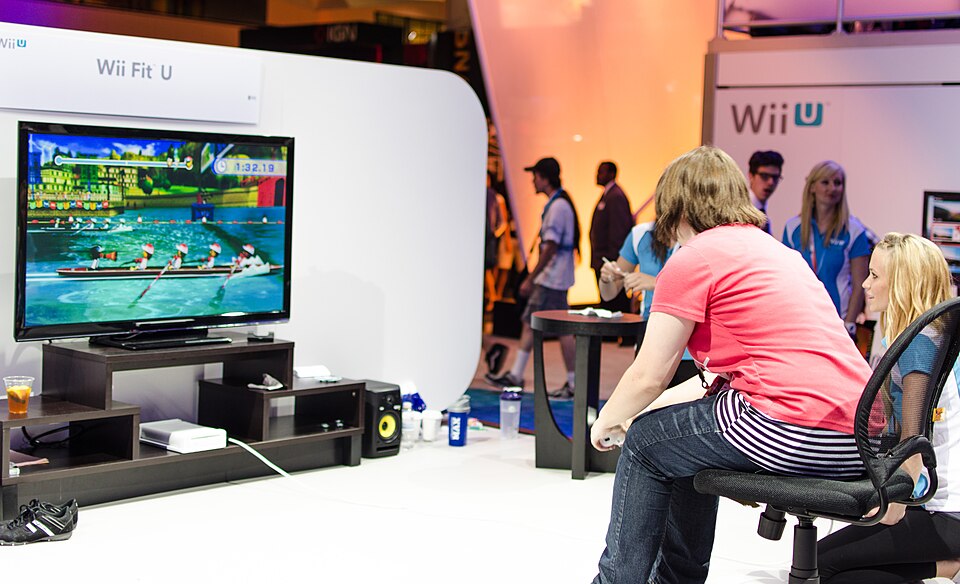
The Wii U, while a good idea in fusing handheld and home consoles, did not hit the market as well as expected.
Arguably, the Nintendo Switch would have been nothing without the failure of the Wii U. This idea of a portable home console was an infant in the Wii U and later grew up to be the successful Nintendo Switch.
Nintendo had understood the lesson that the Wii focused too heavily on the casual game market, which was being overtaken by mobile games. Everyone and their nan did not understand the need for a slightly different console, which basically does the same thing.
Gamers who wanted well-made games diverted to the Xbox and PS4, as the shop for the Wii and Wii U was packed with shovelware for casual gamers.
While Nintendo’s content was strong, with games like Skyward Sword, Mario 3D World, Mario Kart 8, and Splatoon, it only appealed to dedicated hardcore fans, not the wider market, which only played simple party games.
The Wii U was a risky age for Nintendo, not being able to guarantee the same success from a similar console release like its competitors – that is, until their next project was fully realised.
Project NX was a mystery for many gamers until its announcement in March 2017. Both their new consoles and their latest Legend of Zelda game, a risk in itself with its untraditional open-world style, shook up the gaming scene for good.
It’s arguable whether Nintendo took any risk at all in making these decisions. Some could consider these risks, but ones informed in the right direction. Usually, the technology or the vision was just not quite there yet.
Nintendo knew the strength of their own property, as well as their dominance in both the handheld and at-home motion control markets. So, combining these two console types made sense.
Splatoon was their answer to an online multiplayer shooter, and the open-world style game, a popular genre at the time, was looking for something new. Success was there for the taking. A multi-million dollar company like Nintendo is unlikely to take the risk without calculating it.
Comments