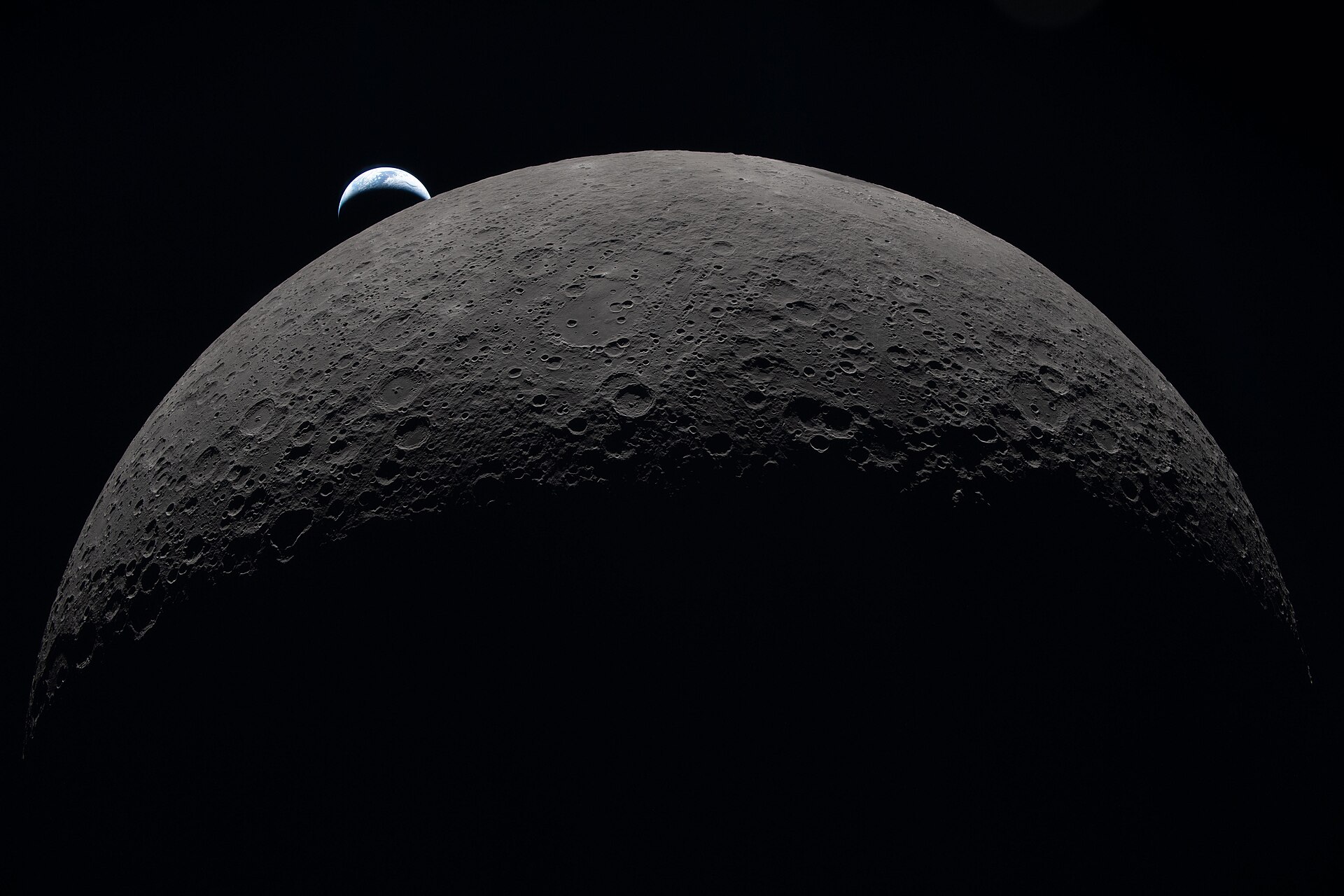
Stop looking at the moon and turn to the Earth: The Artemis II mission
Artemis II has not only launched physically, but it has also launched into our day-to-day lives. It is no surprise that a mass event like it has spiked such controversy. Is this truly beneficial for international collaboration and civilisation? Or is this mission non-justifiable? Who is benefiting from this launch, and who is not?
One BBC News article was titled: “‘We go for all humanity’ – emotional moment as Artemis II blasts off”. It is highly likely that if you watched this, you may have felt goosebumps on your skin as you watched your TV screen, anticipating what was to come. It could indeed have been an ‘emotional moment’. It is questionable, however, as to whether this is a mission ‘for all humanity’. Whilst this will be a memorable moment in history, evoking some emotion and awe amongst audiences, there is still a grey area within the question of who this mission is for, and what we are gaining from it.
Koch and Glover’s presence within this mission itself feels significant, especially within the current political climate which feels very tense, including the presence of ICE impacting communities
Many journalists have been in conversation with the crew members, and these moments have shown to be quite significant. For example, Christina Koch made homage to Katherine Johnson and Dorothy Vaughan. There is no doubt that this has been a special moment in history, especially for women, making the mission feel monumental for challenging patriarchal values and norms. Additionally, Victor Glover, the first person of colour on a Moon mission, made the statement that: “We are all one people,” – a strong message to give to people living in the US. Koch and Glover’s presence within this mission itself feels significant, especially within the current political climate, which feels very tense, including the presence of ICE impacting communities.
Whilst figures such as Koch and Glover feel monumental, there are still grey areas within this mission. In particular, why has this mission happened now?
Within news outlets there is no questioning the fact that there is an undeniable contrast between stories. Why are we told to focus on a space mission, which some people deem to be unnecessary, when there are conflicts and atrocities occurring across the Middle East? Perhaps this space mission is creating a spectacle to draw the focus, or at least try to dampen, the focus upon the US–Iran conflict. Although, this is also questionable, as after the Artemis II launch, Trump gave a speech congratulating them but shortly turned the conversation back to the conflict. Additionally, the 1968 launch, Apollo 8, occurred during the tense period of the Cold War. Apollo 8 reinforced pride and underlined the US’s impressive influence and technological position. One could therefore ask whether the Artemis II mission is an attempt to reinstate this sense of American pride, and if it aims for similar results to Apollo 8.
Should taxpayers be investing into NASA missions which will damage the climate and cost them money?
It is also important to discuss climate change and whether this mission is insignificant within the current fragile climate. This poses the question as to whether space missions, such as Artemis II, are truly beneficial, both financially and in terms of environmental sustainability. Should taxpayers be investing into NASA missions which will damage the climate and cost them money?
There is talk of the US wanting to build a base on the moon before China has the chance to. This aspect of the Artemis II mission can appear to be like Apollo 8’s mission of proving the superiority of the US’s technological advancements in comparison to the Soviet Union. If this were to happen, who would benefit? Would the working-class person feel the positive effects, or would it be the millionaires and billionaires?
All these viewpoints upon the spectacle of the Artemis II mission work together to create a complex perception. There is no doubt that the launch was a remarkable event to see, however, how are we supposed to receive this in comparison to the moon landing that we saw in 1968? What is Artemis II trying to gain in comparison to Apollo 8? Will we benefit from this, or will we face the economic and environmental drawbacks of this?
Comments