Protectionism: The death rattle of first-world industry?
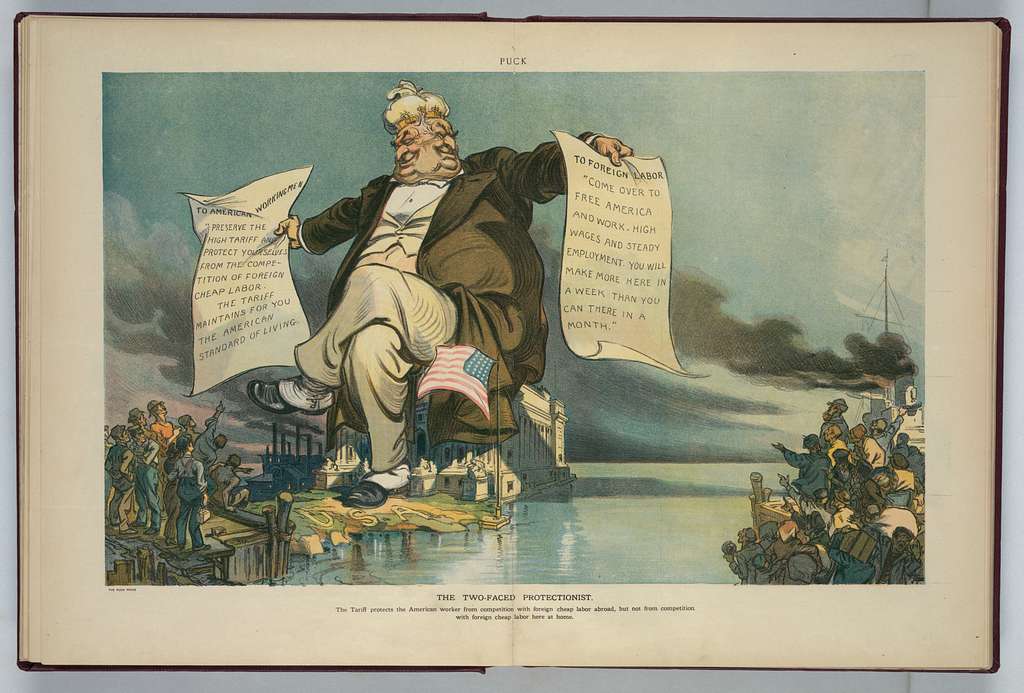
As economies ebb and flow, what once used to be a region’s way of life can shrivel into a memory of the past as industry dwindles. This is exacerbated by the ever-connected, globalised market we have experienced since the mid–20th century. To combat this decline, many nations implement protectionist policies that seek to bolster their own industries at the expense of certain free-market liberties. Achieving this happens through restricting imports, by means of tariffs and quotas, to shield the home industries from the strain of open competition in the free market.
In the wake of the First World War, the revival of European agriculture freed the continent from dependency on American produce. As the price of food dropped due to oversupply, the financial turmoil of the 1929 financial crash threatened the livelihood of one in five Americans engaged in agriculture. The Smoot–Hawley Tariff Act was passed to reduce the toll on America’s farmers, raising import tariffs by approximately 20%. In retaliation, other countries also hiked their respective tariffs, causing a 65% drop in global trade, plunging the world into the Great Depression.
For the better part of the following century, American economic isolationism was largely laid to rest in favour of free trade. In the 2010s, protectionism was ushered into a new renaissance under its strongest newfound advocate Donald Trump. Riding a wave of fervour for his own personal brand of national populism, seeking to put ‘America first’ by means of weakening the political bogeyman of the day, China, Trump threatened tariffs on anyone perceived as harming American industry or trading on an unfair platform.
Protectionism isn’t the cure-all its proponents purport it to be
Although it is plain to see now, these measures, whilst harming the target nation’s market share, don’t necessarily result in the desired flourishing of domestic companies. This reality was found by the original proprietor of the ‘Make America Great Again’ slogan, 40th President Ronald Reagan. A firm believer in free market values, Reagan reluctantly imposed 100% tariffs on Japanese electronics in 1987 as the US–Japanese trade war over semiconductors came to a head, stating during a national address, ‘Such trade barriers hurt every American worker and consumer’. Japan did lose its monopoly, but not to American manufacturers, as other foreign players such as Korea were able to gain more control over the sector.
Across the Atlantic, British economic policy had also been driven by free trade, only having revenue–motivated tariffs. Though at the start of the twilight years of the 19th century, economic growth began to slow. The cause of this ‘export–retarded growth’ was determined to be that Britain’s trading partners, by means of protectionist policies, had been encouraging their own industrialisation. Following this decline in production growth, Britain slowly implemented its own protectionist policies until eventually the 1932 Import Duties Act was implemented, cementing protectionism into our trade policy. Whilst high tariffs were commonplace in the 1930s, they were mostly shed by developed nations in the post–war period, with one major exception being Britain. These policies hindered productivity growth to such an extent that by the 1970s the economy had been eclipsed by that of both France and West Germany, leaving British manufacturing just a shell of its former self.
Though protectionism can shield growing industries and help them flourish, we tend to only see it used in developed nations as either a political tool fuelled by xenophobia, or to hold onto the final remains of something that’s already been lost. This is why despite Trump’s countless tariffs, America’s rust belt lies in economic ruin, much like the North. Whilst the notion of saving jobs and revitalising a region is one desired by many, protectionism isn’t the cure-all its proponents purport it to be. Perhaps these industries, such as Sheffield steel, should be allowed to follow their natural course in favour of encouraging a new regional economic landscape.
Comments