Project Hail Mary: Hope has returned to cinema
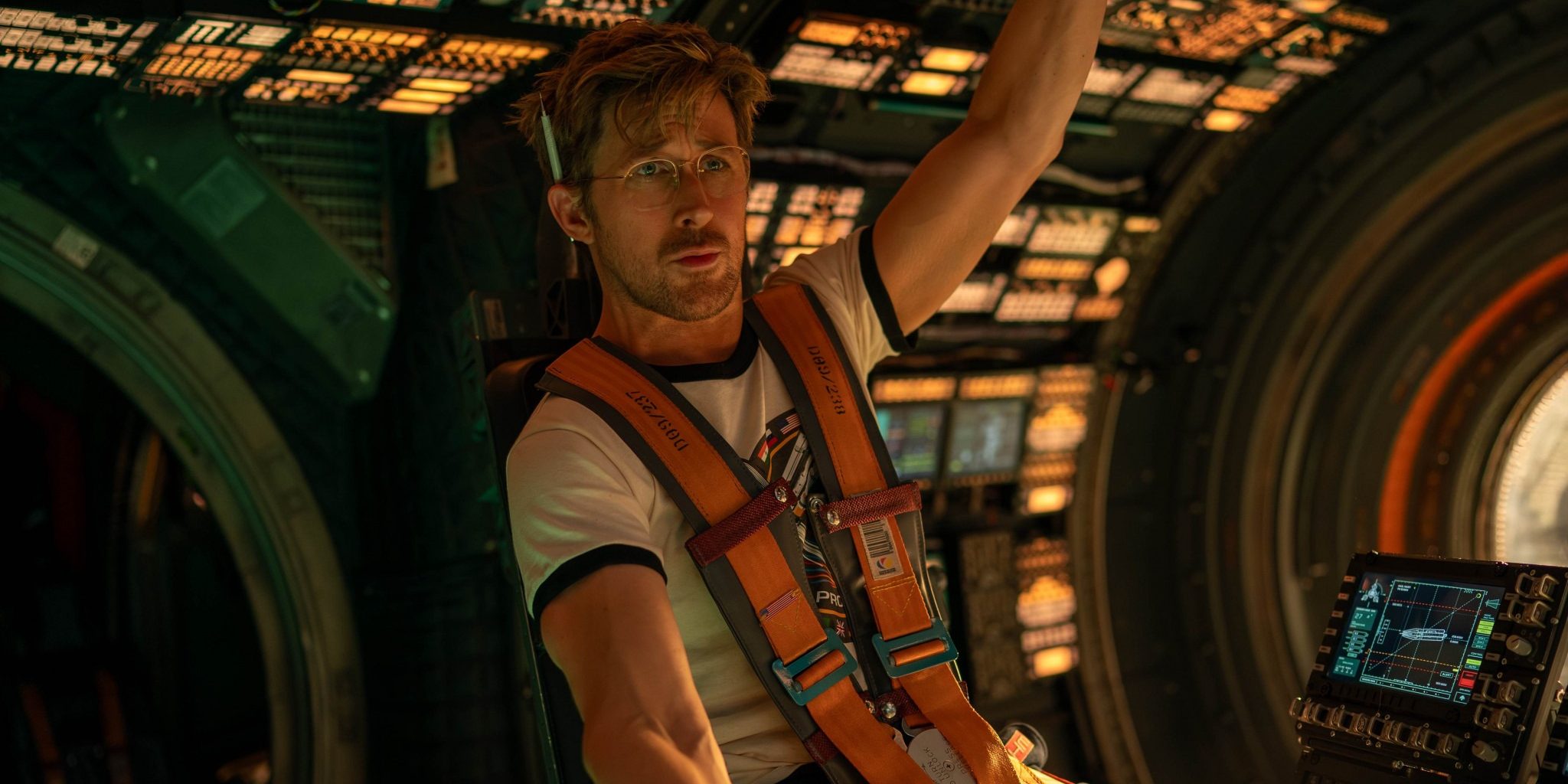
What would your first instinct be if you awoke from a coma and found yourself on a spaceship, lightyears away from home? Cry? Panic? Drown your sorrows in the ship’s personal stock of vodka? For middle-school teacher and molecular biologist Dr. Ryland Grace (Ryan Gosling), all of the above suffice.
This review contains mild spoilers for Project Hail Mary.
The impact Project Hail Mary has had on social media and ticket sales cannot be understated. Coinciding with NASA’s Artemis II launch and subsequent trip around the Moon, space lovers and film enjoyers have been able to experience the beauty of science fiction on the big screen. Amazon’s MGM Studios has taken in over $538 million in box office revenue from the film, grossing $31 million from its opening day alone in the US. It begs the question: do people just want more hope in media?
With wide, cinematic shots of space and emotionally moving music, sci-fi fans across the globe are wondering whether this is on par with Christopher Nolan’s Interstellar for its beauty, and I’m inclined to agree
Directed by Phil Lord and Christopher Miller, Project Hail Mary quickly became a testament to the love people still have for their local cinemas in an age of digital streaming. For a film as masterfully made as this, it is clear to see why a big screen would make for an overall better viewing experience. With wide, cinematic shots of space and emotionally moving music, sci-fi fans across the globe are wondering whether this is on par with Christopher Nolan’s Interstellar for its beauty, and I’m inclined to agree.
Based on Andy Weir’s 2021 novel of the same name, this film launches into its main character’s confusion right from the start. Viewers meet Dr. Ryland Grace aboard a space craft, waking from a coma, dazed and sick from the cryofreezing. Much like the novel’s opening, viewers are meant to feel lost alongside our main character, as we quickly realise Grace is suffering from amnesia.
In these opening scenes, the viewer gets to experience the magnitude of the film’s set design, created by Charles Wood and John Bush, who worked in conversation with NASA to ensure accuracy within the ship itself. This pays off completely, as the combination of scientific apparatus and Earth memorabilia create a unique feeling of homesickness within the film and within our protagonist.
We quickly learn that Grace is the sole survivor of a 3-person crew, set to save Earth from microorganisms – Grace names them ‘astrophage’ – which are dimming the sun. This would cause mass global cooling, freezing the Earth within 30 years, and so government agent Eva Stratt (Sandra Hüller) recruits Grace to study the astrophage.
It would be hard to follow the intricacies of the plot and the urgency of Grace’s mission had you not encountered the novel before. However, this doesn’t dim the overall pull of the film: Grace and Rocky
Despite this film’s heavy focus on molecular science, as Weir himself comes from a physics and engineering background with an interest in computer programming, it holds off from the intensity found within the novel. If anything, this is where the film lets itself down slightly: the explanations of each scientific endeavour are well described and fleshed out in Weir’s writing, but in the film, this is explained in one or two sentences.
After seeing the film with my family, who have all read the book, we agreed that it would be hard to follow the intricacies of the plot and the urgency of Grace’s mission had you not encountered the novel before. However, this doesn’t dim the overall pull of the film: Grace and Rocky.
Rocky, a five-legged rock-like creature from a planet called Erid, is the star of this movie, designed by Neal Scanlan and operated and voiced by James Ortiz. Like Grace, he is attempting to save his home planet from the astrophage. Rocky has also lost his crew mates to radiation sickness, creating a distinct parallel between the two main characters as they are each their home-planet’s only chance at survival.
Teaming up Grace’s biology knowledge and Rocky’s mechanical engineering skills, the two find a way to work together. Rocky can only see through echolocation, and the pair are unable to speak in each other’s language, but Grace’s machine translation turns Rocky’s musical note-speech into English, and they get by with laugh-out-loud humour. They’re an unlikely duo with everything to lose.
Throughout, multiple disasters impede the mission, and viewers follow the film’s non-linear storytelling as Grace slowly regains his memories. The film builds to an epic conclusion with a frantic race against time.
Alongside the stunning visuals, most of which are practical effects, this is primarily a film steeped in hope: for yourself, for your planet, for your friends. This, in my view, is why the film has become so successful. Ryan Gosling creates a character so deeply funny yet so desperate to keep trying, alongside Rocky, who ultimately makes a life in deep space worth living. With dynamics like these in our difficult times, it is easy to see that people want more love and survival in their cinema, and Project Hail Mary does just that.
Amaze, amaze, amaze!
★★★★★
Comments