Looking back across the decades, A trip down memory lane: Costume, controversy and consequences
For the final print edition produced by The Boar Music Team 2025/26, let’s take a walk down memory lane at some iconic eras of music. From political movements to defining moments, each decade comes with its own contribution towards music culture.
Manhaa Adley Ismail, Writer: 1970s
Flared jeans, thrift shopping, knee-high boots – the 70s is well and alive in fashion and culture today. But what about this decade made such a defining moment in music history?
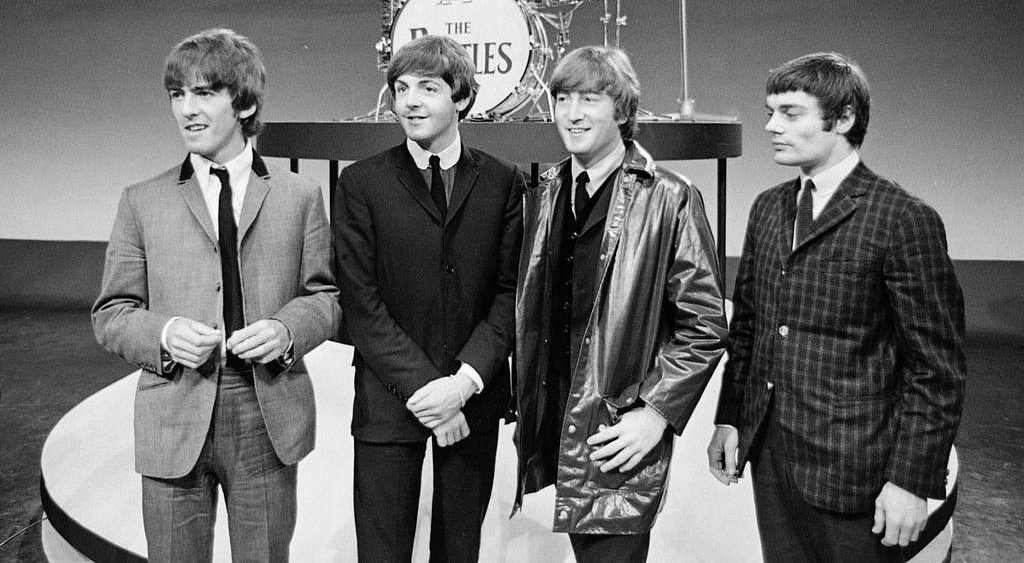
The 70s began with the breakup of The Beatles – one of the most impactful bands of all time. Their solo careers (especially Harrison’s and Lennon’s) popularised what we now know as the singer-songwriter genre, building on more personal lyrics. This influenced albums like Fleetwood Mac’s Rumours – largely focused on Nicks and Buckingham’s controversial relationship, and Carly Simon’s debut album, reflecting on her marriage to James Taylor.
The 70s also saw a rise in the cassette tape – making music much more accessible and easy to record. This was important for indie artists, and popularised genres such as post-punk and hip-hop, which were influenced by the anti-consumerist, anti-government “hippie” movement that had prolonged itself since the US’s contentious involvement in the Vietnam War in the mid 60s.
The social context of the 70s shaped music in other ways too. This era saw the second wave feminist movement, as well as the end of the civil rights era. Consequently, most industries and especially artistic ones became much more diverse and found room for representation – creating the flamboyant, unconventional, styles of music and completely new genres such as disco and funk – most famously, Bowie’s ‘Ziggy Stardust’. Ultimately, this was a pivotal moment for music that broadened the scene in ways that had never been done before.
Abbie Fox, Head of Social Media: 1980s
A decade often remembered for its upbeat dance hits, use of synthesizers, and MTV music videos, 1980s music was characterised by the influence of its turbulent political atmosphere. Songs increasingly became not just a form of escapism or artistic expression, but also a form of social and political commentary, in an era remembered for high levels of unemployment, riots, and the miners’ strike.
New genres emerged, with both punk rock and new wave music giving insight on social issues and inspiring political activism. Songs addressed global themes such as the oppressive Apartheid regime in South Africa, the Troubles in Northern Ireland, problems faced by the African American community, and fears surrounding the nuclear arms race.
MTV’s debut in 1981 also marked a turning point for music, visually intensifying the political messages at the heart of some songs. Music festivals played a similar role, raising awareness (and money) for international issues. In 1985, two billion people watched Live Aid on television, an event featuring more than 75 artists who were performing to fundraise for the Ethiopian famine. Raising £40 million on the day (more than £100 million today), this concert highlighted the transformative power of music.
An era defined by instability, it is unsurprising that the power of music to act as a form of protest became so evident in the 1980s. We still see this today, through modern artists like Kendrick Lamar, who continue to use music to illuminate social and political issues.
Ben Tanguy, Chief Sub-Editor: 1990s
90s music culture was, if nothing else, diverse. In the UK, the decade saw the sanitised optimism of the boyband golden era co-existing with the gritty psychedelia of trip hop, while rap continued to hit the mainstream. Britpop brought competing visions of modern Britain to the fore, culminating in the media-manufactured ‘Battle of Britpop’, while ‘Cool Britannia’ was quickly seized upon by politicians. The arrival of post-Britpop heralded a more subdued period of introspection, birthing art rock groups like Radiohead and, not much later, the monumentally successful pop rock of Coldplay.
Alternative rock experienced similar success across the pond, thanks to the meteoric rise of grunge spearheaded by Nirvana, whose Seattle sound knocked glam metal from its pedestal and created an enduring subculture. Noise rock morphed into shoegaze, a scene which has remained indie despite influencing the rise of nu-metal, which would then peak in the noughties. The 2010s EDM boom was equally made possible by electronic music pioneers like The Prodigy, while songwriters like Lauryn Hill took fusion in exciting new directions.
By the time of the new millennium, rock had arguably reached its pinnacle of mainstream success, fizzling out at much the same time as Top of the Pops, yet 90s developments left a lasting legacy. The signs of pop’s increasing prevalence were there already, in the chart-topping anthems of the Spice Girls and the Backstreet Boys; over 20 years later, this trend shows little sign of abating.
Aram Akbari-Madovi, Deputy Head of Physical Media: 2000s
With everyone yearning for a return to a Y2K aesthetic it is no surprise that the music culture at the turn of the century meant a new beginning in terms of revival and experimentation. With the rise of computer technology and the expansion of the internet, record labels and the rest of the industry were scrambling to utilise music’s newfound ubiquity and accessibility. With the release of the original iPod in 2001 – consumers possessed the ability to take highly curated collections of mp3s with them on go. This meant that a more universal system could be accessed from the comfort of your own living room. Capitalising on the nostalgia for older formats of physical media, music venues shifted their focus onto new revenues for fan investment: the music festival. Coachella, which had experienced a financially rocky start, by 2004 had become “a major cultural event that generated global attention” according to the Los Angeles Times.
The aughts also revealed a simultaneously progressive and regressive cultural consciousness regarding gender, sexuality, and identity. Especially considering heightened sexual ‘independence’ of solo female performers such as Britney Spears, Beyoncé, and Lady Gaga. Where the marketing of a resilient singular figure led to an onslaught of ‘bubble-gum misogyny’ resulting in the most notable act of personal autonomy where Spears shaved her head in February 2007. This alongside the popularity of commercially successful genres being shaken by female representation, challenged the predominance of male heterosexual identity in the unquestioned music scene.
Rhea Kapoor, Writer: 2010s
The decade began with me listening to CDs in my aunt’s Fiat and ended with me blasting Hamilton in my earphones on my way to school, ready to break out into song in the corridors with my friends. These two bookends communicate a massive shift in the way we consume music now but they both signal one thing: the 2010s was a time when music really felt communal. There was a tangible and collective excitement from everybody about all flavours of music, and a lot of it had to do with fan culture. To be a fan meant something different then, chiefly it entailed not being isolated from each other in metaphorical music booths where your favourite artist or genre were paramount and the rest was background noise. It meant being a fan of ALL music.
It was a decade where the biggest song was in Spanish, songs like ‘Whip/Nae Nae’ and ‘Gangnam Style’ could spark worldwide dance crazes and one-hit wonders like Gotye could be just as seismic as Coldplay or Rihanna. Genre-purism was deserted in favour of experimentation summed up best by outlandish features (the most bizarre arguably being Lil Nas X and Billy Ray Cyrus).
Furthermore, this needs to be said but…MUSIC VIDEOS!!! REMEMBER THEM? ‘Chandelier’? ‘Anaconda’? ‘Wrecking Ball’? Beyoncé dropping not one but two visual albums? This once-cherished medium used to rake up billions of views and become water-cooler conversations because, at our cores, we really craved moments of unity. We still do. And, if the 2010s teach us anything it teaches us to get out of our booths occasionally and to let yourself be seduced by any note, beat or invitation to the dancefloor.
Comments