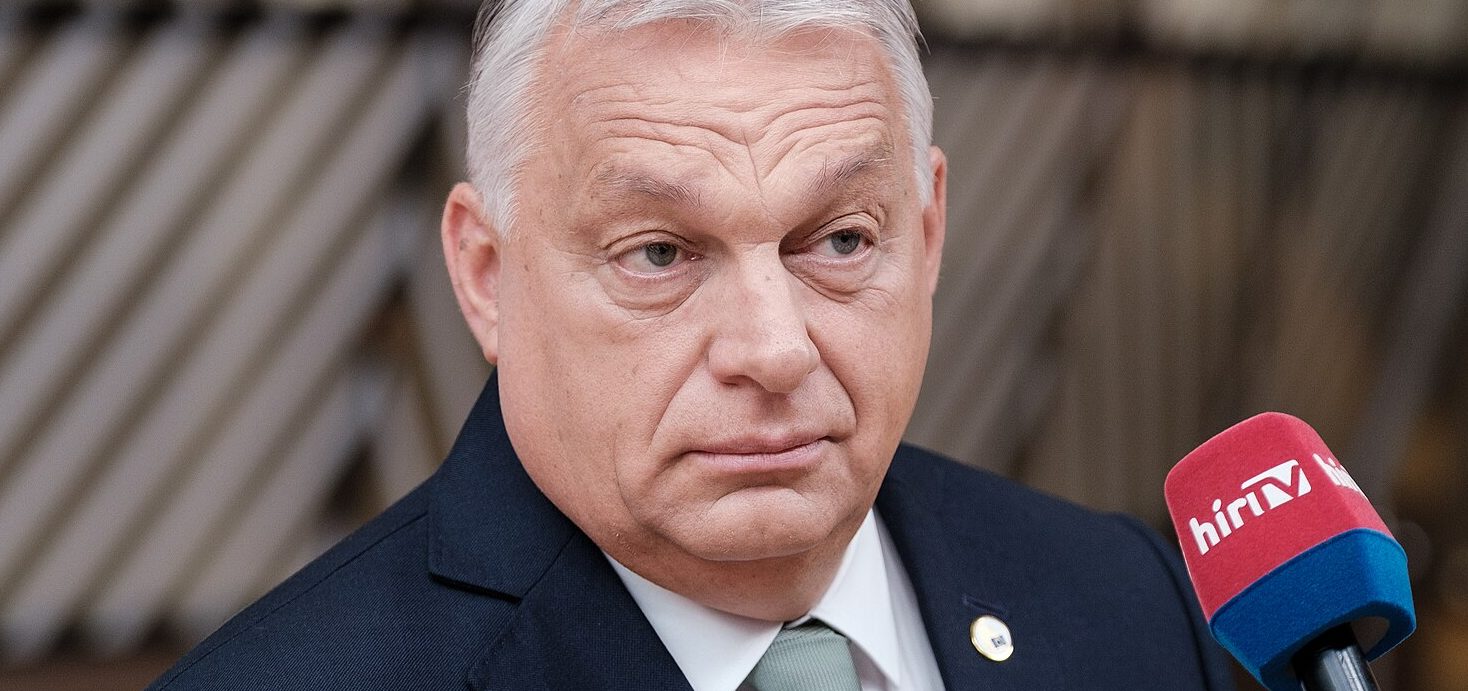
Farewell, Viktor Orbán. You will not be missed.
If the supporters of Péter Magyar were worried, they needn’t have been. In the end, it wasn’t even close. After 16 years of uninterrupted power, Hungarian Prime Minister Viktor Orbán suffered a humiliating defeat in Sunday’s election as the 62-year old’s grip on power came to a humbling end.
For years now, Orbán has been a seemingly unstoppable force in Hungarian politics. His Fidesz party has won the last four elections in the country, transforming the nature of the country’s government, culture, and even constitution over their decade and a half in power. In his first term, Orbán introduced sweeping constitutional reforms that included an outright ban on gay marriage, the tightening of laws on abortion, a dramatic increase in the powers of the executive branch, and redrawing Hungary’s electoral maps to hugely benefit Fidesz – so much so that in 2014, they won 133 of 199 seats despite winning just 44% of the national vote.
Yet whilst this nativist, racist rhetoric has been justified on the basis that it provides a safer and more prosperous country for Hungarians, Hungary has regressed under Orbán’s leadership
Orbán has not done any of this under the cover of darkness, instead championing Hungary as the model for other nations to follow. He terms his style of government ‘illiberal democracy’, which includes openly attacking the freedom of the judiciary and the press to consolidate more power within the government, as well as publicly attacking migrants as the root cause of the country’s problems. On the international stage, Orbán has been Europe’s leading voice against immigration, despite his support for Hungary’s membership of the EU, which has taken in millions of refugees over the last decade.
Indeed, Orbán has all but championed the idea of an ethnostate, saying in 2018 that “we do not want our own colour… to be mixed with those of others”, whilst labelling Muslim immigrants as “invaders” and migration itself a “poison”. Orbán has peddled baseless conspiracy theories that George Soros, who is both of Hungarian descent and (more importantly for his role as a Emmanuel Goldstein-type figure in Orbán’s propaganda machine) Jewish, was leading the effort to silence and worsen the lives of ethnic Hungarians to the background in favour of illegal immigrants (quite what Soros, the EU, Hilary Clinton or Bill Gates has to gain from this is anyone’s guess).
Indeed, there seem to have been only two key beneficiaries from Fidesz’s time in power: Orban’s cronies, and Vladimir Putin
Yet whilst this nativist, racist rhetoric has been justified on the basis that it provides a safer and more prosperous country for Hungarians, Hungary has regressed under Orbán’s leadership. In 2010, when Orbán came to power, Hungary had the fourth highest GDP per capita in Eastern Europe, yet today it flounders behind the Baltic states, Poland, Croatia and even the ‘poorhouse’ of the EU, Romania economically. A lack of confidence in Orbán led to an 11.3% decrease in foreign investment in 2024, whilst Hungary suffered the worst inflation of any EU member state in 2023, reaching a staggering 17%. Indeed, there seem to have been only two key beneficiaries from Fidesz’s time in power: Orban’s cronies, and Vladimir Putin.
Orbán’s friends and family have mysteriously accumulated immense wealth, with an estimated 11 figure sum having been stolen from the Hungarian people in the form of bogus government contracts. Orbán has also invested €370m into his boyhood football club Puskas Academia, including a new stadium built next to his childhood home in 2014.
Meanwhile, he has blocked EU aid packages to Ukraine in their fight against Russian invasion, accusing the West of prolonging the war by sanctioning Russia and providing military support to the Ukrainians. In October, Orbán told Putin “I am at your service”, and compared Hungary to a mouse ready to serve the Russian “lion”, and has publicly called on the EU to stop sanctioning Russia over its crimes in Ukraine.
Exactly what kind of leader Magyar will be is not fully clear; the bedrock of his campaign has been based not on his own policies, but opposition to Orbán on corruption, his closeness with Russia and his icy relationship with the EU
Finally, however, the Hungarian people have said enough is enough. Orbán’s vanquisher has come in the unlikely form of Péter Magyar, a man who was serving in Orbán’s government as recently as 2024, eventually resigning over his disgust at the corruption rampant within Fidesz. Magyar’s Tisza party, which he has led for close to two years now, enjoyed an unprecedented surge in support in the buildup to the election, so much so that the vast majority of the other (more established) opposition parties did not field candidates so as to not split the anti-Orbán vote, such was the strength and fervour of Magyar’s movement.
Exactly what kind of leader Magyar will be is not fully clear; the bedrock of his campaign has been based not on his own policies, but opposition to Orbán on corruption, his closeness with Russia, and his icy relationship with the EU (EU President Ursula Von De Leyen was amongst the first to publicly celebrate Orbán’s defeat). The voters that have installed him to power come from across the spectrum, united more by their hatred of Orban than their belief in Magyar.
Already though, there are signs he may move the country in a more liberal direction – in his victory speech, Magyar appeared to condemn Orbán’s anti-LGBTQ+ laws, whilst he has pledged to move away from Russia and closer to Europe when it comes to economic and military alliances. How quickly Hungary can shake off the shackles of Orbán’s rule – or if it can free itself from the 62-year old’s shadow at all – is yet unclear. Perhaps more fascinating, however, is the question of whether this election will have consequences far beyond Hungary’s future.
However, Orbán’s most notable political allies can be found in the Trump administration
Orban’s leadership of Hungary has acted as the blueprint for a new wave of alt-right populist movements across Europe seeking to establish their own ‘illiberal democracies’ – most notably including the AFD in Germany, National Rally in France, and Reform UK in this country. Nigel Farage has been a vocal admirer of Orbán and described him as “the future of Europe” in 2019. However, Orbán’s most notable political allies can be found in the Trump administration: JD Vance took the unusual step of openly campaigning for Orbán last week in the hopes of securing another term for the man his boss gave a “COMPLETE AND TOTAL ENDORSEMENT”.
Obviously, this failed, and Orbán suffered the same fate as Australian opposition leader Peter Dutton and Canadian Conservative party leader Pierre Poilievre, who lost his own seat just months after enjoying a 20-point lead in the polls, a defeat most analysts attribute largely to Trump’s attacks on Canada during his first year back in office. The question nobody can answer for sure is if Trump’s involvement simply failed to save Orbán, or if his defeat was in fact made worse by Trump’s backing.
The embattled US President’s war with Iran is directly responsible for the increase in energy prices across Europe – although Hungary itself was not sampled, a YouGov poll found in March that Trump was deeply unpopular in most major EU countries. Elections due later this year in Brazil and the United States will serve as a key litmus test for the popularity of illiberal democracy in the Western hemisphere, but it is notable that the Italian Prime Minister, Georgia Meloni, distanced herself from Trump this week over his row with Pope Leo XIV, describing his comments as “unacceptable”.
Only time will tell if Orbán’s defeat now serves as the catalyst for the end of ‘illiberal democracy’
Whether Trump’s unpopularity is a symptom or the cause, there is a growing school of thought that the ever-increasing unpopularity of the Trump administration is reflective of a wider backlash against right wing populism in the West. It was Orbán’s victory in 2010 that began the era of ‘illiberal democracy’ in the West, acting as the inspiration for a myriad of political movements across the world and a trend that has at times seemed unstoppable for the best part of a decade. Only time will tell if Orbán’s defeat now serves as the catalyst for the end of ‘illiberal democracy’.
Whatever the case, Orbán’s defeat is to be celebrated. The man who many assumed would only leave office on his own terms has been unceremoniously evicted from power by an electorate he believed would never turn on him. The fall of Orbán, a man who once seemed politically invincible, should serve as a reminder to all of us that no matter how bleak the forces of corruption and the politics of division may seem, they can be defeated. The Hungarian people have taken a decisive step towards reclaiming their own freedom. Let us hope, for all our sakes, they succeed – and that they are not the last.
Comments