‘We’re not discussing treaties or settlements; we’re focusing on the experiences of ordinary people’: In conversation with Oliver Ansell-Hodges
As the brutal war in Ukraine approaches the end of its fourth consecutive year, its future trajectory remains highly uncertain. While there is vague talk here and there of progress toward a resolution, many people have lost track of the conflict. Meanwhile, other areas demand attention. As Gaza and Trump’s threats now dominate the media headlines, some may well perceive that the Ukraine war has gone quiet.
The reality couldn’t be further from the truth. “The war’s not gone quiet, the media has. Today in Kyiv, homes have no heating, people are freezing to death, and temperatures are -10°C, because of Russian strikes on energy facilities”. Indeed, as this harrowing testimony accounts, the war is far from over, and the lives of ordinary Ukrainians continue to hang in the balance. “The political situation is very unstable; people have no certainty.”
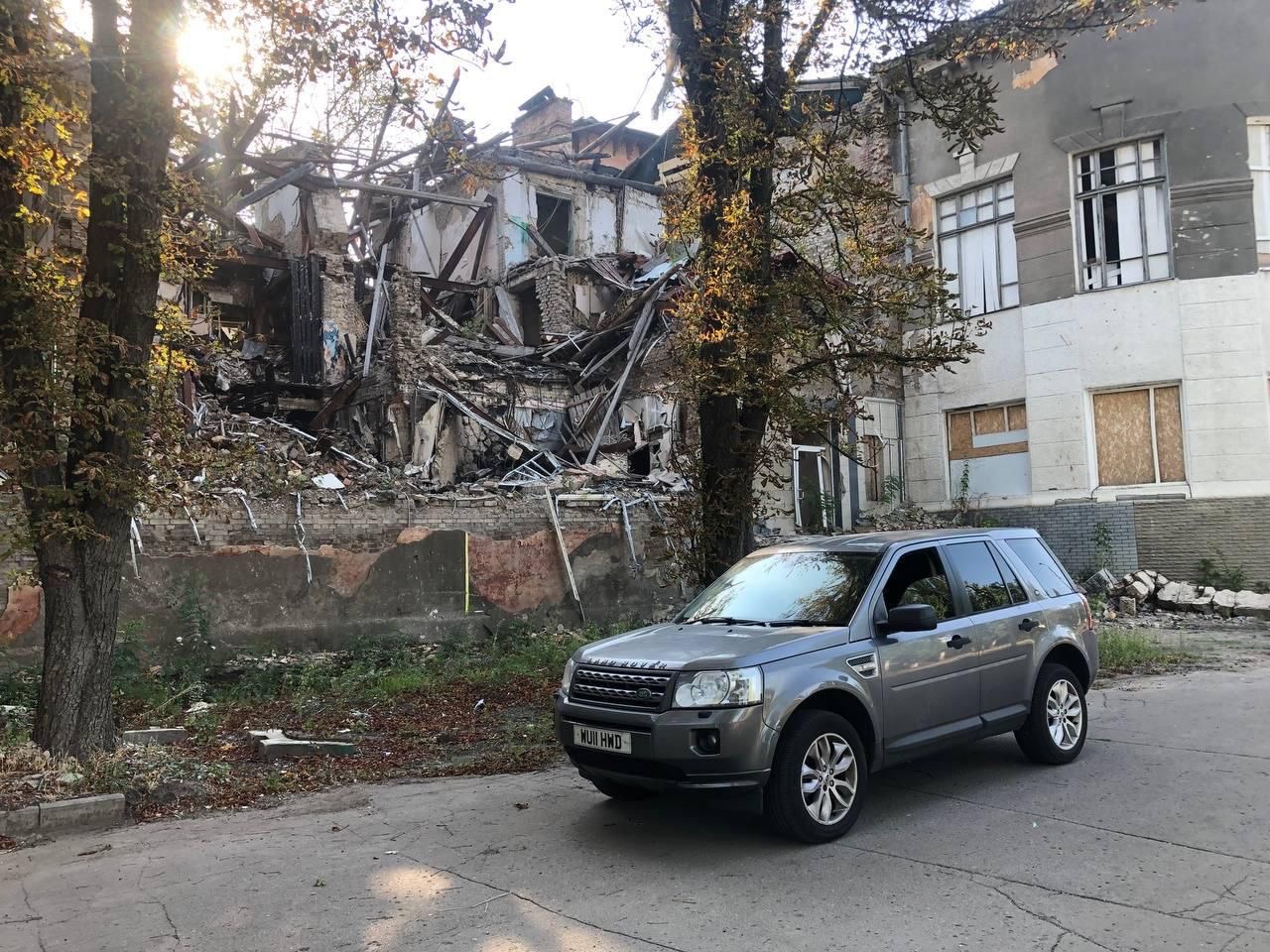
These are the words of Oliver Ansell-Hodges, a second-year History and Politics student at Warwick. Oliver is a man who is thoroughly committed to the plight of Ukraine and its people. Last year, he made headlines in The Boar for driving an SUV to Ukraine to deliver essential supplies. Oliver’s campaign received widespread support from the Warwick community, and the second-year student is one of many who remains determined to keep the lifeline to Ukraine going.
Now, Oliver is looking to build upon this humanitarian effort. The idea for Oliver’s next project came to him soon after the drive. Oliver was in discussions at Kraków airport with the former mayor of Leamington Spa, Susan Rasmussen. “What next?” was his big question. In the end, Oliver told me that he wanted to shift focus, to “go even further, slightly closer to home, to the Ukrainians around us”. That’s where the foundations for his upcoming exhibition began.
Since 2022, more than 280,000 Ukrainian refugees have sought sanctuary in the UK. Each of them has, as Oliver articulated, “a story to tell”, stories that he has been deeply touched by. To strengthen Britain’s solidarity with Ukraine, Oliver decided to create an exhibition, one focused not on treaties or settlements, but on the experiences of ordinary people.
We recognise that Ukraine is in a very unfortunate position, and that Ukrainians would rather go back to their ordinary lives
– Oliver Ansell-Hodges
Oliver told me that he wanted the British public to “actually recognise how difficult it is to check your bags and leave your entire life behind, leave your family behind”. Central to the exhibition are the testimonies of eight Ukrainian women who have come to the UK, stories of both “difficult and happy moments”. Oliver additionally noted that “a lot of the Ukrainian children we spoke to have struggled adapting to a new land. Psychologically, it takes a toll”.
Ukrainian refugees in the UK face numerous hardships. The presence of a language barrier means that many talented professionals are forced to take up jobs in low-skilled roles, which is further compounded by employers’ reluctance to hire Ukrainians due to uncertainty over their length of stay. Further still, Ukrainian refugees do not receive sufficient support from charitable grants. This lack of income exposes them, like the rest of us, to the cost-of-living crisis, making homelessness a real threat.
Clearly, it is imperative that support for Ukraine is shown beyond the dimensions of military aid and governmental gestures. Oliver believes that stigmas around Ukrainian refugees can be overcome with compassion. “We recognise that Ukraine is in a very unfortunate position, and that Ukrainians would rather go back to their ordinary lives”. Oliver also feels that “Ukrainians have been an enormous asset to the UK, while still maintaining their cultural connection to their homeland”.
Will it be possible for such compassion and understanding to filter through the British population? Recently, the rise of Reform UK has normalised a hardline stance against further immigration in British politics, including the arrival of refugees. Polling from Sky News in June 2024 shows that 43% of Brits view immigration as a net negative. Yet, Oliver is confident that this will not affect British support for Ukraine and its people. “The proudest achievement for this country in the last four years has been support for Ukraine across the political spectrum”, one that Brits should be “proud of”.
Referring to the Second World War, Oliver believes that this support “comes back to British history, we also endured a war at the hands of a foreign oppressor”. YouGov polling from August 2025 shows that just 11% of Brits want to see Ukrainian refugees forced out, indicating that a sense of shared struggle is well-understood. Nevertheless, opinion remains significantly less favourable towards migrants and refugees of other backgrounds, who are equally fleeing harsh conditions of war and destitution. This exhibition, focused on the raw human experience, could help to extend the “benevolence” of the British people to refugees of all backgrounds. Oliver also seemed to share this view, “When you talk to the average Briton on the street, he/she always looks out for their neighbours, hopefully this is something the exhibition is able to prove”.
In every society, I think we’ll encounter ill-informed people with very little understanding of the situation
– Oliver Ansell-Hodges
Meanwhile, on the British political left, criticism towards Ukraine has been growing. Your Party MP Zarah Sultana infamously stated that Ukrainian President Zelenskyy “isn’t a friend of the working class”, describing the ongoing conflict as a war between imperial powers. When I shared this view with Oliver, he thought that such narratives focus “too heavily on the high politics, rather than the personal experience of Ukrainians”. Oliver reiterated to me that “they are fighting an existential war for their survival, the country’s entire existence could end through a few circumstances”.
Ukrainians, even Russian speakers, are united in opposition towards Russia. Meanwhile, Russia has been accused of numerous war crimes during its occupation, such as the persecution of religious institutions and the deportation of Ukrainian children to Russia, all to erode the country’s independent culture and identity. “We need to look at this beyond statistics. Some people just compare the size of armies as if it’s a logistical conundrum; this is an event that will impact the lives of Ukrainians for generations”. Oliver highlighted that behind statistics lie individuals, and that the rhetoric from those like Zarah “does no favours whatsoever to Ukrainians that are freezing in their apartments, it helps them not one bit”.
Despite these challenges, Oliver is certain that Britain will remain a “true ally” to Ukraine. “In every society, I think we’ll encounter ill-informed people, with very little understanding of the situation”. Regardless of political rhetoric, I was reminded that “it’s not about what politicians want, it’s what the people want”. If the will of the British public is to support Ukrainians, it will be reflected, regardless of who’s in charge. Even Reform, which has faced past accusations of pandering to Putin, has tried to present itself as being for the Ukrainian cause. Meanwhile, on the left of British politics, the Greens under Polanski have started talking about a common European defence as an alternative means to support Ukraine.
While world leaders and armchair generals continue endless discussions, the reality of conflict is having stark consequences on the people in real time
Reaching a strong consensus on support for Ukraine at home has been more important than ever. “The sovereignty of Ukraine is resting upon the administration across the Atlantic, which is a very unfortunate situation”. The Trump administration has raised serious doubts about the continued support of Ukraine’s most important backer. Since February 2022, the US has supplied $188.2 billion in aid to Ukraine. Nevertheless, Trump has sent this aid on a sharp nosedive, going as far as to call Zelenskyy “ungrateful” to America in the White House.
Coupled with the anxiety of the war itself, “Ukrainians wake up every morning not knowing if there’s a peace deal, they are literally left in the dark”. While negotiations mediated by the US are currently ongoing, the unreliability of Trump’s diplomacy has forced Europe to step up its commitments to Ukraine. To Oliver, Ukraine should matter as much as defending Britain’s own soil: “This is a war in our backyard, we have a responsibility to care for our neighbours. Ukrainians are on a frontline, a shield for the rest of Europe”. Even though Putin has at multiple points downplayed the idea of further military action in Europe, such a threat cannot be ruled out.
Ultimately, Oliver’s exhibition hopes to bring a perspective to the invasion of Ukraine that is often marginalised by geopolitical chess matches: that of the Ukrainian people. While world leaders and armchair generals continue endless discussions, the reality of conflict is having stark consequences on people in real time, both on the frontlines and for Ukrainian refugees abroad. Through an initial goal of raising £10,000 for the support of refugees, Oliver hopes that this will foster a greater understanding of and support for Ukrainians, one that will look beyond the misconceptions of mere narratives.
As a closing remark, Oliver sends “gratitude to students and Ukrainians at the university who have given up time and effort” for Ukraine. “I strongly encourage them to come to Leamington to understand more about those living in their own community, and for them to reaffirm their solidarity and commitment to helping those around them, in the Ukrainian community affected by the war”.
The exhibition will be held between February 3 and March 3, at the All-Saints’ Church in Leamington Spa.
Comments