Dialogue in politics: Where to draw the line?
In the US, politically motivated violence is dominating the news. Public figures from both sides of the political spectrum have been assassinated in the past year, causing uproar from their supporters. In June 2025, Minnesota Democrat Melissa Hortman was shot and killed alongside her husband in their home in Brooklyn Park, Minneapolis. That same night, another member of the Democratic Party – State Senator John Hoffman – and his wife were seriously wounded in nearby Champlin in a connected incident. These murders, committed by Vance Luther Boelter, an evangelist preacher from Minnesota, were referred to by Governor Tim Walz as “politically motivated”, and the court documents stated his motive was “to kill, injure, harass, and intimidate Minnesota legislators”. A car found outside the Hortman’s home contained a hit list of nearly seventy political figures, mostly Democrats in support of abortion rights, including Hortman and Hoffman.
Perhaps the most widely covered assassination in the US in the past year was that of right-wing activist Charlie Kirk, who was fatally shot while speaking at a debate at Utah Valley University. This case is still ongoing, and the suspect has not yet entered a plea or confessed, but the motivation behind the killing is almost certainly related to Kirk’s contentious politics. As a prominent online figure, Kirk sparked controversy multiple times with his political statements; many have since pointed out the irony of his defence of the country’s relaxed gun laws, once stating, “I think it’s worth to have a cost of, unfortunately, some gun deaths every single year so that we can have the Second Amendment to protect our other God-given rights.” Discourse online exploded after Kirk’s death, with debates over whether he deserved such a death after years of spreading hate and bigotry.
While the news seems to predominantly focus on events in the US, similar acts of politically motivated violence do occur in the UK.
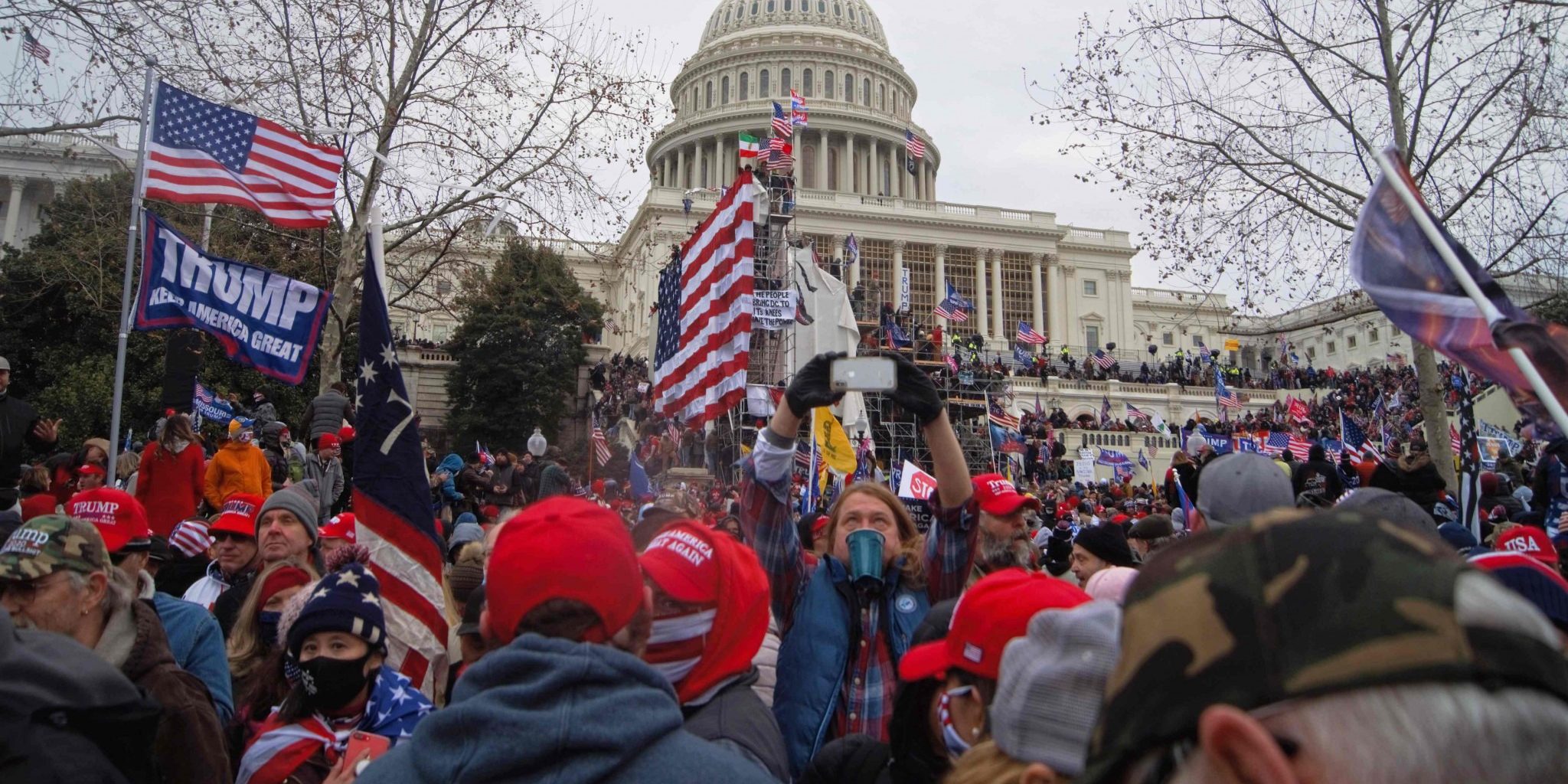
But this is not the first time hate speech has led to real-world violence. The January 6th attacks on the US Capitol in 2021 were triggered by Donald Trump’s anger at losing the 2020 presidential election. The previous month, he had tweeted that it was “statistically impossible” for him to have lost the 2020 election, adding, “Big protest in D.C. on January 6th. Be there, it will be wild!” He then gave an inflammatory speech on the day, urging his supporters to “save our democracy” and “fight like hell”. What followed was a riot, with demonstrators invading the Capitol building in Washington DC, overwhelming the defending police and sending the entire facility into lockdown; the event resulted in five deaths (including one at the scene), as well as hundreds of injuries among Capitol police officers.
While the news seems to predominantly focus on events in the US, similar acts of politically motivated violence do occur in the UK. Last summer, Reform UK leader Nigel Farage pronounced the country to be “lawless” and on the way to “societal collapse” and “civil war” due to the increase in crime rates over the past two decades under Conservative and Labour governments. This sparked a series of protests all over the country, often based around asylum hotels with racist and anti-immigration messages. Many of these protests were fuelled by the spreading of hateful rhetoric and misinformation on social media from figures such as Tommy Robinson and Elon Musk. These protests often became violent, such as the ‘Unite the Kingdom rally’ in central London on the 13th September, which saw 24 arrests for violent behaviour that injured 26 police officers.
It feels like political figures are no longer appealing to people through manifestos and promises to improve their lives, but rather disparaging their opponents in an attempt to rile up their followers
To list every instance of politically motivated violence in the past year would make for a very long article. But these examples make it clear that, wherever on the political spectrum you may lie, people of similar beliefs to you may have been the perpetrators or victims of such violence, from small acts of hate to public assassinations. It feels like political figures are no longer appealing to people through manifestos and promises to improve their lives, but rather disparaging their opponents in an attempt to rile up their followers and ignite violence. Politics seems to be drifting further and further away from what it should be: representing the people. All over the world, politicians aim to brutally displace their opponents, seemingly through any means necessary and with little regard for the lives that are affected or even ended in the process.
It is up to us to preserve our right to a political opinion, holding politicians accountable for their undemocratic actions
It is easy to feel like the ‘moral high road’ is no longer present in politics, with many choosing to bury their heads in the sand and disregard the deteriorating political climate. As tempting as this may be – and I have certainly been guilty of this ignorance in the past – if political figures are allowed to continue on this course, there may well come a day when we have no choice but to support whoever is left. We may simply have to follow whoever can conduct the most terrifying act of mass political violence. It is up to us to preserve our right to a political opinion, holding politicians accountable for their undemocratic actions and choosing to elect those who promise to maintain order, not those who encourage their followers to break into government buildings or murder their opponents. The world’s democracy is clearly fragile. If our politicians cannot be the ones who protect it, then the people must take on that role.
Comments