Twilight of Gods or Idols: The Bacchae Review
Euphoria, ecstasy– an abundance of amoral goodness is what comes to mind when I think of The Bacchae. Euripides’ last play is like many final works; radical, disjointed and at some points lacking the fire that earlier successes once had. The central anti-hero Dionysus pokes, prods and gouges out the mortal characters below him. He is lord of misrule and yet he decries a conservative authority over the very commune that he seeks to liberate. It’s from this tension that I went to see WUDS production, using David Grieg’s 2001 translation of the play. Directed by Dylan Oates, and done in a 70s, Studio 54 style, the show opens with the purely rapturous side of the play in mind.
Oates allows the comic to flow in naturally, warming up an audience to be struck with horrific yet inevitable tragic conclusion
Tragicomedy sums up this production, both in content and tone. It doesn’t take itself too seriously. Oates allows the comic to flow in naturally, warming up an audience to be struck with horrific yet inevitable tragic conclusion. For the comedy, the third scene serves as the standout, with the doddery old men of court, Tiresias (Max Green) and Cadmus (Izzy Marzolini) ponder about joining the revelry that’s gathered in the mountains. Green makes the generally drab and dower character into a manic, comic pensioner – the blind Hamm from Endgame comes to mind. Dionysus (Olly Cornish) goes through similar transformation. A Ziggy Stardust wig, shades of Tim Curry and Rod Stewart wash over Cornish performance that holds the show together whilst not drawing attention away from the narrative. The Bacchae themselves (Daniel Tope, Mira Baldwin, Albie McAllister, Tamara Mulaki, Max Green, Eleanor Rawlings, Martha Cherry) dance a unified melody, each individual performer providing a vital counterpoint to the play’s central force.
The tension that hangs above this drama, between the rights and autonomy of mortal characters, is key to this story. The overwhelming power of Dionysus who, as a god, demands recognition. Mortal figures, particularly Pentheus (Harry Hickles), assert human authority through law and order, portrayed as a perpetually furious Bullingdon Boy. Pentheus believes he has the right to govern Thebes, regulate religious practice, and protect social stability from what he sees as Dionysian chaos. His resistance is grounded in a very human impulse: the desire to control his city and defend rational norms against excess and irrationality.
However, Dionysus represents a power that transcends mortal systems of justice and governance. As a god, he claims the right to worship and obedience, regardless of human law. His punishment of Pentheus demonstrates how fragile mortal authority is when it conflicts with divine will. Dionysus does not negotiate with human rights or civic responsibility; instead, he exposes their limitations by manipulating perception, identity, and sanity. The god’s power forces mortals into submission, often through suffering, revealing the imbalance between human freedom and divine dominance.
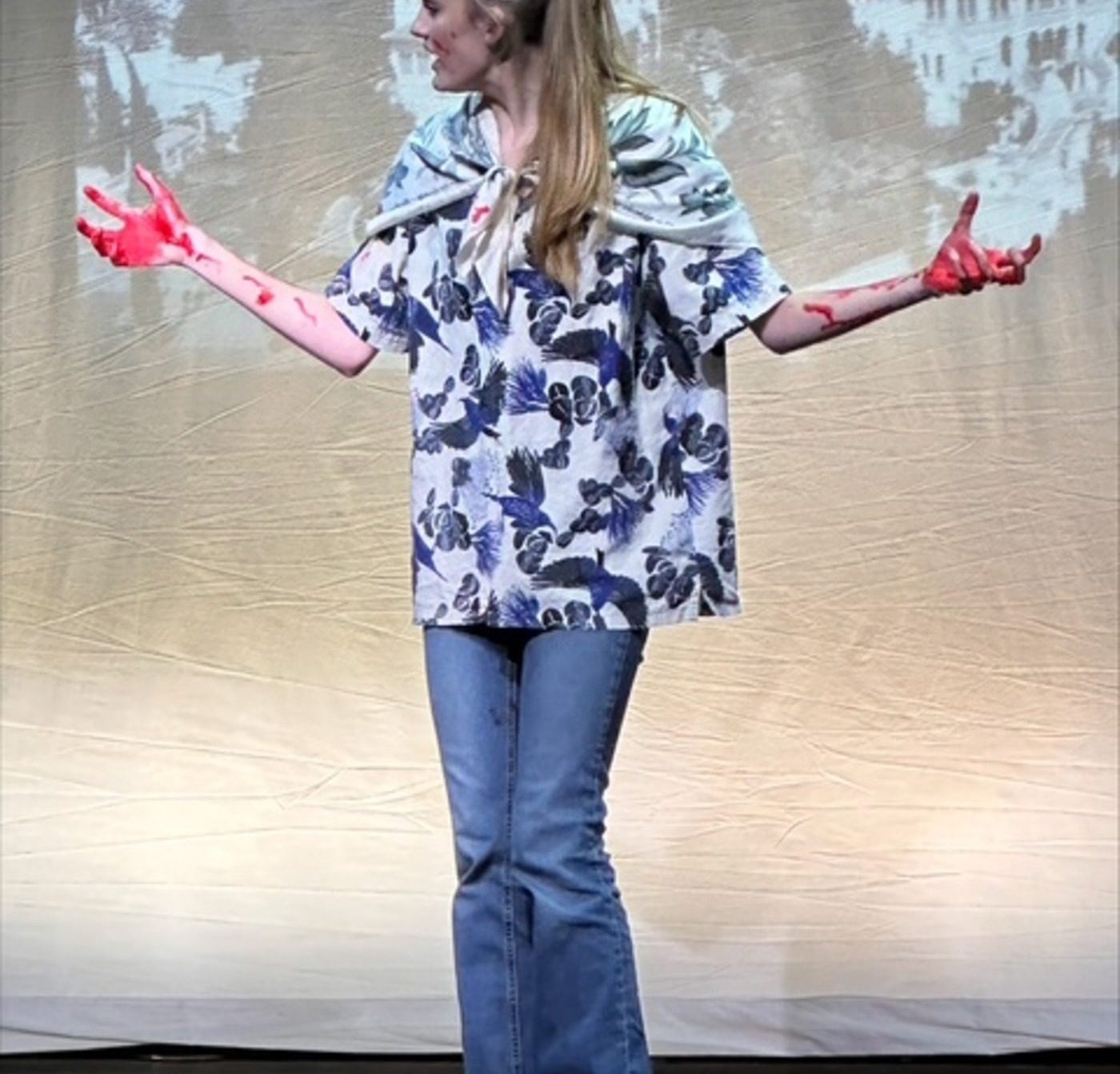
His shattered, half grieving half guilty daughter Agave (Martha Cherry) wails over the son she has butchered. In a play that prides itself on immorality, holding no fixed moral framework to go by, this scene is powerful yet cold awakening to reality
Dionysus becomes both a wronged god and a cruel avenger. While mortals may seem justified in defending order and autonomy, the play suggests that denying the divine–forces tied to nature and instinct—invites catastrophe. The tension ultimately underscores the precarious position of humanity when caught between reason and the irresistible power of the gods.
It’s an unexpected heart wrencher, with the two performers turning it into the play’s most kinetic scene
Thebes is no country for old men, and yet it’s the old codger Cadmus who gives a heart-wrenching eulogy. His shattered, half grieving half guilty daughter Agave (Martha Cherry) wails over the son she has butchered. In a play that prides itself on immorality, holding no fixed moral framework to go by, this scene is powerful yet cold awakening to reality. Cherry and Marzolini pause the partying, delivering a devastating eulogy, cut off by a mother’s madness as she stares at her son’s body bag. It’s an unexpected heart wrencher, with the two performers turning it into the play’s most kinetic scene.
This production asks all the right questions, throwing up the audience high up and not giving them a safe place to land. Is Dionysius really a god, all powerful and worthy of total worship? Or is he merely a pop idol, another Bowie-like era which, after it fades away, leaves a wasteland? Giving you something to think about, all that a great play can do.
Comments