“King Hamlet RIP” Hastie’s reinvention of Hamlet on NT Live: A new take on Shakespeare’s classic teenage tragedy
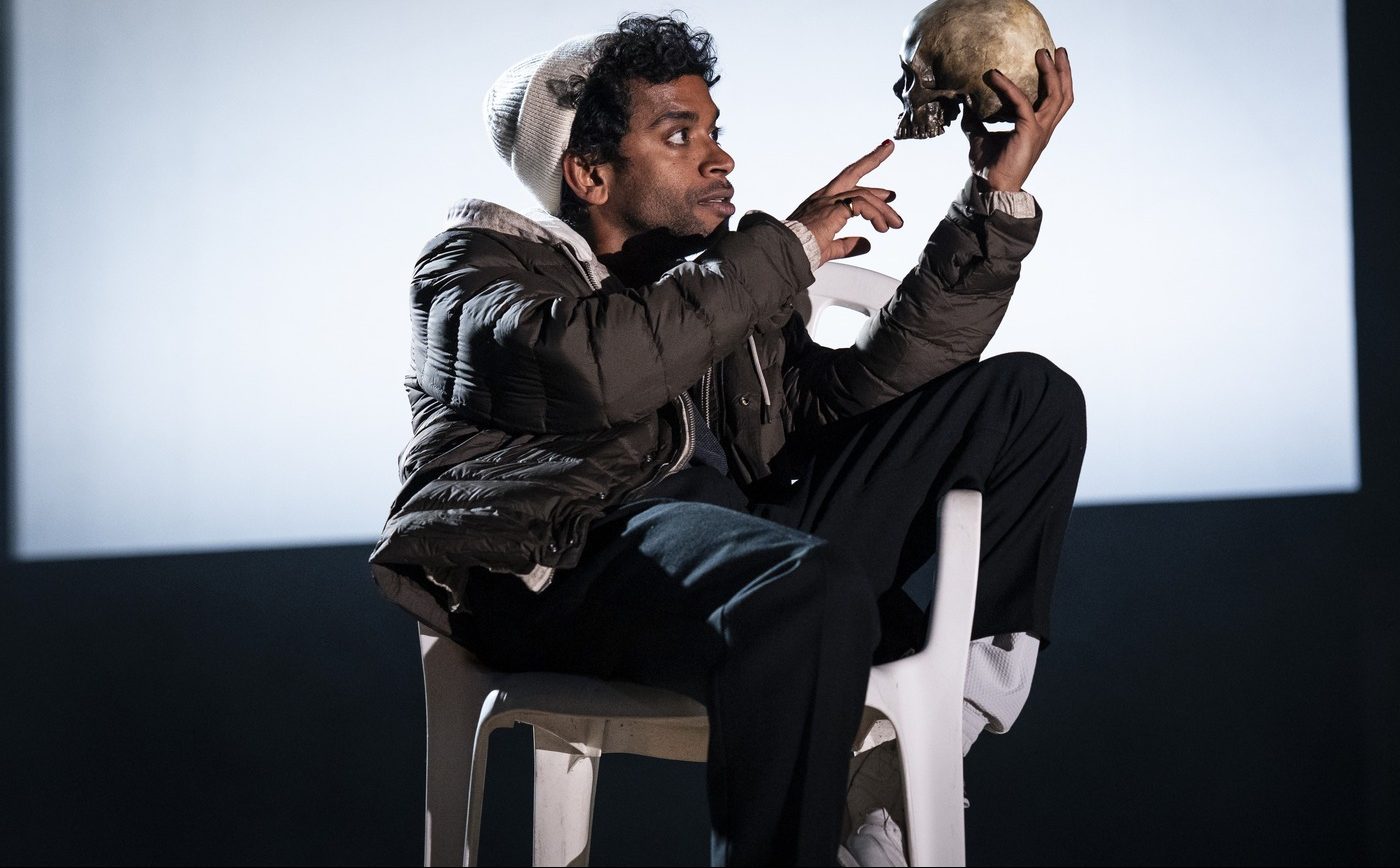
What’s a teenager supposed to do when his dead dad’s ghost comes back and asks him to avenge him? Well, this is exactly the question that Robert Hastie asks in this hilarious, fresh version of Hamlet. Hastie is able to take Shakespeare’s best-known play and create a modern, light-hearted story which seems unique and fresh, with the filming creating a new angle with which to watch it. With shoeys, boxes of love letters and cheeky insults to their elders, Ophelia, Laertes and Hamlet all seem to be real teenagers struggling with love, grief and growing up.
The characterisation of Ophelia frees her of the traditional view that she is simply a heartbroken young girl
Opening in a blackout, apart from the light of a few torches directing our view across the stage, we are quickly transported into the world of Hamlet, feeling as if we are in the same room as Horatio and the soldiers and helping them look around for a ghost. It almost seems like a murder mystery to begin with, trying to find King Hamlet and who killed him. This seems to remain one of the themes of the play with Claudius, Alistair Petrie, only letting on his evil intentions at the very end of the play when he convinces Laertes to kill Hamlet. In this production, we really see Hamlet as a teenager, confused and mourning the death of his father. With costumes that hark back to Young Royals, he seems to be around 16 or 17 as the events occur. As well as this, Hiran Abeysekera approaches the role with a youthful wit which keeps most of the first act reasonably light-hearted. Especially in the “words, words, words” scene, where his teasing of Polonius is pure comedy. This doesn’t distract from the tragedy of the second act, where we see Hamlet fall from a funny, witty young man to one undone by everyone else around him when he needed them most.
Ophelia and Laertes’ acting also stands out, and they appear to be just as young as Hamlet through their immaturity at the party and their relationship with their father. Ophelia’s last scene before her death was phenomenal, with Francesca Mills handing out flowers, running around the stage, and singing. This is also aided by Ophelia and her father’s relationship, Polonius, being a standout in this production. The love between them is clear, with Polonius seeming a very caring, if a little overprotective, father. This is something that is missing in many productions, but actors Francesca Mills and Geoffrey Streatfeild bring this relationship to the forefront. The characterisation of Ophelia frees her of the traditional view that she is simply a heartbroken young girl, but she is intelligent and has strong relationships with her family and friends; she is no longer just ‘Hamlet’s girl.’
The filming of this production also adds a new layer to what you would see on stage. It is framed as if it were a movie, directing the viewers’ attention to certain things and covering others up
The real love that all of these characters seem to have for one another makes the tragic ending all the more devastating. This performance really is a tragedy of love and life through the eyes of a teenage Hamlet, one who is trying his best to do the right thing but can’t because of the people he is surrounded by. The set creates an oppressive atmosphere from the outset, no one can escape their fates. Even Ophelia is laid to rest in the middle of the same room that started as the setting of a party. The three walls surrounding them have a similar impact to the boat on which Rupert Goold set his Hamlet at the Royal Shakespeare Company, namely that the characters are trapped and cannot escape each other and their fate. Both the costume and the set bring this play to the modern day.
Whilst it can feel a little long at times and the dynamic between Gertrude and Claudius can be a little underdeveloped, the overall experience of watching the filmed version of this production is fantastic
The filming of this production also adds a new layer to what you would see on stage. It is framed as if it were a movie, directing the viewers’ attention to certain things and covering others up. This really helps it to translate to the screen in a better way. I would say that watching theatre online is never quite the same as it is in person, however, the set and acting lend themselves very well to the screen. The camera work is a performance in itself, ensuring that we see what we need to see, and do not get too distracted looking at the stunning painting on the walls. It really grips the viewer from the start, with the words “King Hamlet RIP” appearing on the screen until the end, where Fortinbras takes control of the state of Denmark.
Everything in this production is fantastic, from the mock performance of ‘The Murder of Gonzago’ by the players, to Hamlet’s comedic insulting of Polonius, to Hamlet’s death at the end of the play. Whilst it can feel a little long at times and the dynamic between Gertrude and Claudius can be a little underdeveloped, the overall experience of watching the filmed version of this production is fantastic. The set, costume and camera work all flow together to create a very impressive story, which still seems new and current despite the script being hundreds of years old.
Comments