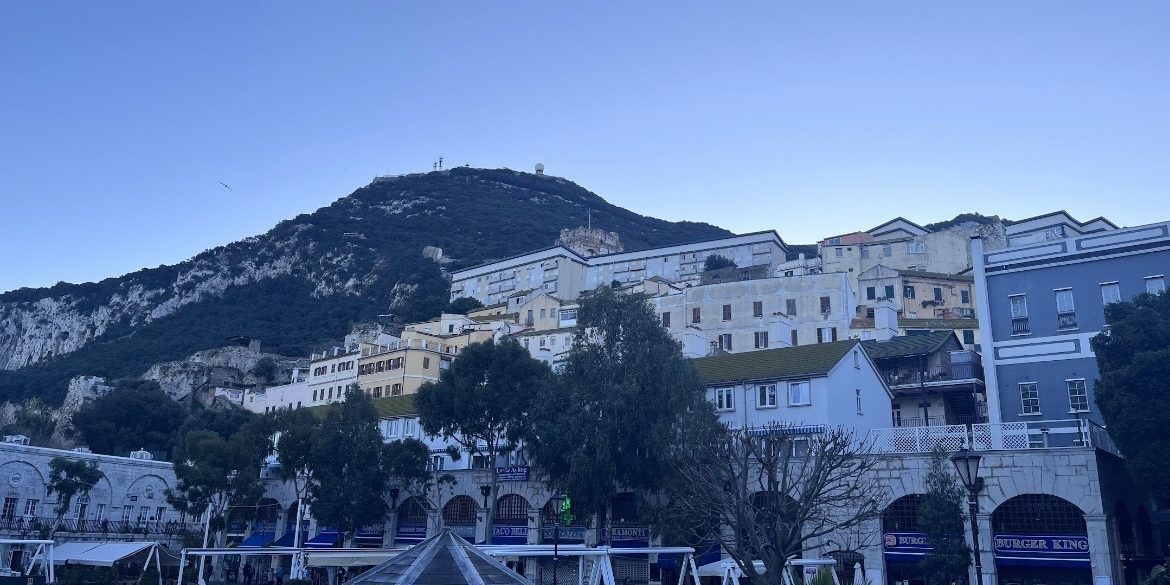
Is Gibraltar worth visiting during winter?
Gibraltar is a British Overseas Territory and headland on the south coast of Spain. It’s highlighted by the Rock of Gibraltar, a 426 metre high limestone mountain. Gibraltar is typically overlooked by UK university students when it comes to planning a trip, especially during winter, as highlighted by a friend of mine; Ryan, who asserted: “Gibraltar just doesn’t have much to offer compared to the other options in the area.”
But how true is that statement? The Boar visited it during the low season to see if it really is worth visiting, especially during winter.
Upon arrival at Gibraltar International Airport, the pilot informed us that Gibraltar is the only place in the world where you can walk on an active runway. After having my passport stamped, I embarked on the journey through Gibraltar.
I was greeted by Napoleonic-era tunnels to get you to the city. Each tunnel had its own story told through labels plastered inside the tunnel, such as the Landport Tunnel. For centuries it was the only land entrance into the fortified city. It wasn’t just a tunnel; it was where battles took place, during the Siege of 1779. In the 18th century, the tunnel was defended by a drawbridge, and cannons pointed directly at the entrance. The rest of the day was spent sightseeing, such as the Gibraltar Museum, with artifacts dating back to the 5th century BC and fossils that date back over 50 thousand years ago. The Gibraltar Museum offers artifacts from the Islamic period of Gibraltar all the way to British rule, which started in 1713.
The Gibraltar pass grants you access to every major attraction within the Upper Rock Nature Reserve, including St Michael’s Cave, the Great Siege Tunnels, O’Hara’s Battery, and the famous Apes’ Den
The next sight to see was the Cathedral of St. Mary the Crowned, the principal church of the Roman Catholic Diocese of Gibraltar and a historical landmark in Gibraltar. Originally a mosque, it was converted to a cathedral after the Spanish Reconquista, and its current Gothic-style structure largely dates from the 18th and 19th centuries renovations of the church. The church even has iconography of the world’s youngest and first millennial saint; St Carlo Acutis.
The rest of the first day was spent taking a stroll through the picturesque old town blending traditional Iberian architecture, in the town centre with modern British architecture in places like Ocean Village. Whilst visiting Ocean village it is worth having dinner at Bianca’s, a restaurant that leads the way to higher quality affordable dining. Bianca’s blends Mediterranean flavours such as Iberian and Moroccan flavours with British flavours, giving it its own unique taste and style of food.
Despite the lack of activities during winter such as jet skiing, I was determined to make the most of my trip, that means finding hidden gems. The first hidden gem I stumbled upon happened accidentally. As I was having a night stroll through the Marina Bay of Gibraltar, a group of strangers who accidentally bumped into me invited me to their run club called Strive, which offers hybrid training sessions, and running sessions. The run session was social and catered to all age groups which is a common sight in Gibraltar. Furthermore Strive runs daily sessions with different intensities and forms of exercise to ensure even participation from all types of people.
The second day was the highlight of the trip, as it was time to climb the Rock of Gibraltar. Prior to climbing the rock, visitors are required to purchase the Gibraltar pass for £30. The Gibraltar pass grants you access to every major attraction within the Upper Rock Nature Reserve, including St Michael’s Cave, the Great Siege Tunnels, O’Hara’s Battery, and the famous Apes’ Den. While the upfront cost might sting a student’s budget, it acts as an all-inclusive key to the territory’s history, ensuring that once you pass the gates, you are free to explore the network of fortifications and viewpoints without constantly reaching for your wallet.
In total, the journey of exploring every attraction of the rock, took 5 hours and 24 minutes, 91 stories, and 24,504 steps
To summarise what each attraction is in a sentence or two:
St Michael’s Cave is a natural limestone cavern network that historically served as a wartime hospital and shelter, and now functions as a unique underground auditorium, with lightshows occurring every 30 minutes.
The Great Siege Tunnels are a set of man-made tunnels, extending for 34 miles, carved into the cliff face by the British Army during the 18th century. Their purpose was to house artillery guns for defense during the siege against the Spanish and French forces.
O’Hara’s Battery is an artillery fortification located at the highest point of the Rock, housing a decommissioned 9.2-inch naval gun originally designed to target enemy ships in the strait, providing panoramic views of Gibraltar and the Mediterranean Sea. Ohara’s Battery also offers another set of tunnels and provides insights of how soldiers lived during the Second World War.
The Apes’ Den is the primary habitat zone for the Barbary macaques, where the monkeys congregate to be fed and monitored by conservation staff. The monkeys were trained to know which territory belonged to them and which belonged to the tourists.
In total, the journey of exploring every attraction of the rock, took 5 hours and 24 minutes, 91 stories, and 24,504 steps.
The final day of the trip required something less active to recover from the previous day. I went to the beach to meet with the fishermen of Gibraltar and here is what one of the fisherman had to say: “Today is a slow day, but we will take anything that we catch. So far we only caught Sea Bream and Red Porgy.”
I spent the day learning about their techniques and the fishing community in Gibraltar, which has members as young as 14 partaking in fishing. An hour before sunset, I visited the Europa Point Lighthouse, which offered a cinematic view of the sunset on the Mediterranean Sea.
All in all, it was a great trip filled with a mix of sightseeing and activities. The answer to “Is Gibraltar worth visiting during winter?” is a definite yes, especially if you’re someone who’s physically active.
Comments