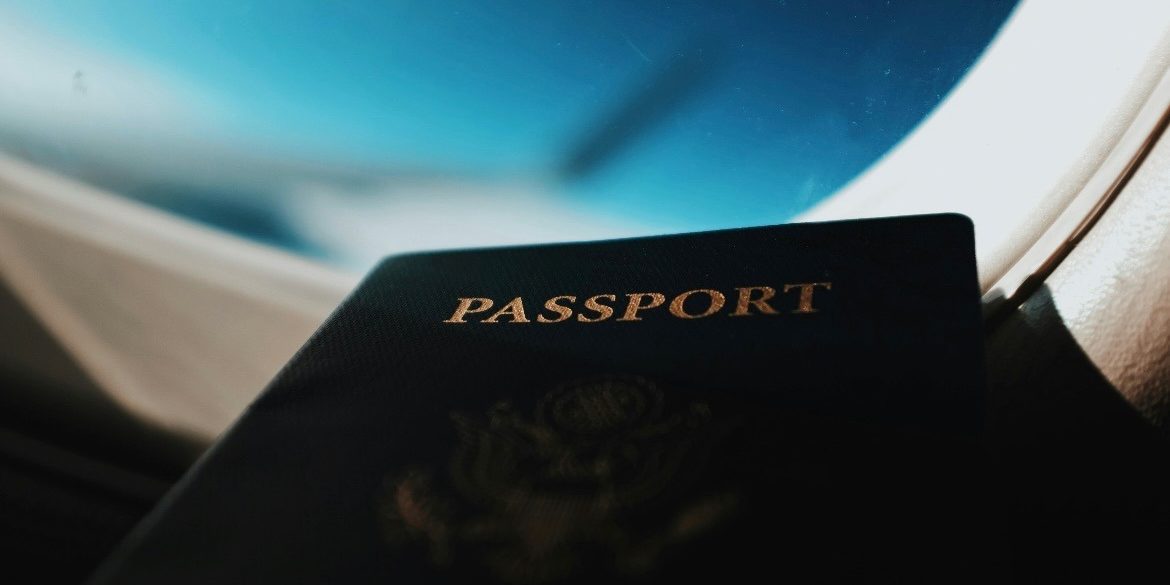
Should travel be considered a privilege or a right?
“Travel is fatal to prejudice, bigotry, and narrow-mindedness……“
This quote by Mark Twain suggests that travelling is a necessity to mould oneself into an ideal human. But how viable is this claim?
The rise of social media has brought with it, a disguisedly joyous exposure to the experiences of humankind. Today, you will see someone on Facebook trekking the Swiss Alps, while tomorrow, Instagram reels show how beautiful rural Kyoto is. As a consequence, you feel an urge to go on your own adventure, only to realise that obtaining a Japanese tourist visa warrants a waiting time of two weeks, and a double room sets you back $150 each night. Suddenly, you neither have the time nor the money to go on a journey.
So, the nature of travelling is clearly not ubiquitous. More often than not, it is dependent on the lottery of birth, fueled by the power of the economy
So, the nature of travelling is clearly not ubiquitous. More often than not, it is dependent on the lottery of birth, fueled by the power of the economy. If you are born in the United Kingdom, you can travel visa-free to 185 countries, while for Bangladesh, the same service is available for only 15 countries. On the other hand, the cost of tourism itself comprises a substantially lower proportion of income for the average Brit compared to the average Bangladeshi. Avid travellers claim that a luxurious trip to Thailand costs on an average of two-thirds of the monthly UK income, while the same number equates to nearly 10 months of the monthly earnings in Bangladesh.
However, this is not exclusively an international problem. Consider students who opt for a study abroad year, a decision that costs an additional £22,137 to your tuition fees, a reality which for many is impractical at best and impossible at worst. Even in the unlikely scenario that a university student works and saves for six straight months without needing to pay any bills, this is an unviable outcome, evidenced by a 2020 study from Teaching Abroad, which revealed that one in five young people in the UK rely on their parents to fund such endeavours.
It is not that people shouldn’t travel when they have the ability to, but rather that they should acknowledge the fact that they have that capacity
In spite of the statistics, enthusiasts of the ‘Travel is a Right’ agenda often ask, “So, why should someone miss out on experiences just because of their privilege?” Complementing this question is often a reference to Article 13 of the Universal Declaration of Human Rights, ‘Freedom of Movement’ and how recent tariffs in the USA curb said movement.
However, this reflects a shift away from the problem at hand. It is not that people shouldn’t travel when they have the ability to, but rather that they should acknowledge the fact that they have that capacity.
When we ask someone, “Oh, you have never been abroad?” there is a risk of invariably invoking an emotion of being trapped in one’s own country not realising that for some, the circumstances simply do not exist. Even if someone tries to save and invest, accessing the opportunities to cause that influx of money is a phenomenon which has disparity embedded in itself. Let’s consider the case of Kotu, a 17 year old in Ethiopia who became the head of her household after both of her parents died in 2003. Her only concern is to sustain the well-being of her siblings using the house, land and cattle inherited from their mom and dad. For her, travelling does not exist, even as an agenda. In comparison, the average tourist could likely envision a world where they saw themselves in a particular location thereby having that psychological edge to search for jobs, solely for the purpose of funding the trip.
But inside that thrill of tourism, it is critical to remember how lucky one is to be in such a position in the first place because a large number of people, for one reason or another, can never have the opportunity to do so
That is not to say that everyone should stop going on tours. If it is something you are passionate about, exploring the world is the best thing you can do. It has been medically proven to reduce stress and anxiety, improve well-being, cultivate inter-cultural understanding, encourage environmental care etc. But inside that thrill of tourism, it is critical to remember how lucky one is to be in such a position in the first place because a large number of people, for one reason or another, can never have the opportunity to do so. As Professor Marina Novelli, Chair of the World Committee on Tourism Ethics, stipulates, “The global majority in this world don’t travel not because they don’t want to travel, but because they cannot travel.”
In conclusion, the issue of tourism being a right or a privilege is not a black and white problem. It is a contextual quandary that paints the subject of travelling as a right but forgets to treat itself as a privilege for those blessed to relish such an experience.
Comments