Warwick commemorates 60th anniversary with new legacy poetry trail
The University of Warwick has recently unveiled a brand-new poetry trail to coincide with World Poetry Day, which falls annually on 21 March.
The trail consists of fourteen different poems by Sujatha Menon, most of which are inspired by both female researchers and technicians who worked at the School of Life Sciences, at the University, to help promote women in science.
Menon is a poet and musician based in Warwickshire. In October 2022, she was appointed as the Poet in Residence in Warwick’s School of Life Sciences for a yearlong residency. She was the first to have this title, and was commissioned by Professor Emeritus Kevin Moffat, former Director of Outreach.
We’ve loved the opportunity to bring science and art closer together on campus – the collaboration has opened our eyes to the powerful ways the two interlink
Miriam Gifford
Menon has been widely published in magazines and journals and is the author of three poetry collections. The most recent, ‘Microscopia’, was published in 2025 and contains the sixty-five poems she wrote during her role as the Poet in Residence.
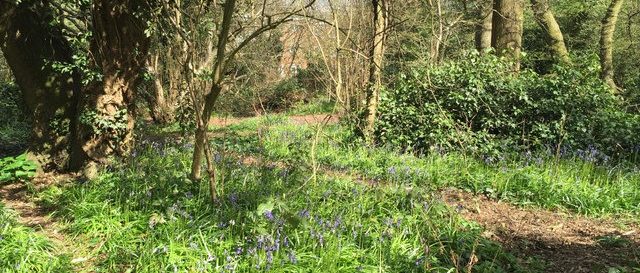
The poems will be on permanent display through the ancient Bluebell Woods and paths near Gibbet Hill campus. Both visitors and students can enjoy this nature walk as both a celebration of biology and literature.
Professor Miriam Gifford, Head of School from the School of Life Sciences, commented that: “Bringing these poems to life has been a process fuelled by imagination, bringing all kinds of creative ideas into both our labs and our conversations.
“We’ve loved the opportunity to bring science and art closer together on campus – the collaboration has opened our eyes to the powerful ways the two interlink.”
With each poem centring on the voices and work of female researchers and technicians at the University, the trail is set to provoke reflection about the importance of both female identity and science.
Menon added that: “Collaborating with the University of Warwick has been a wonderful way to explore how science and poetry can speak to each other.”
Comments