The UK’s end of trial by jury?
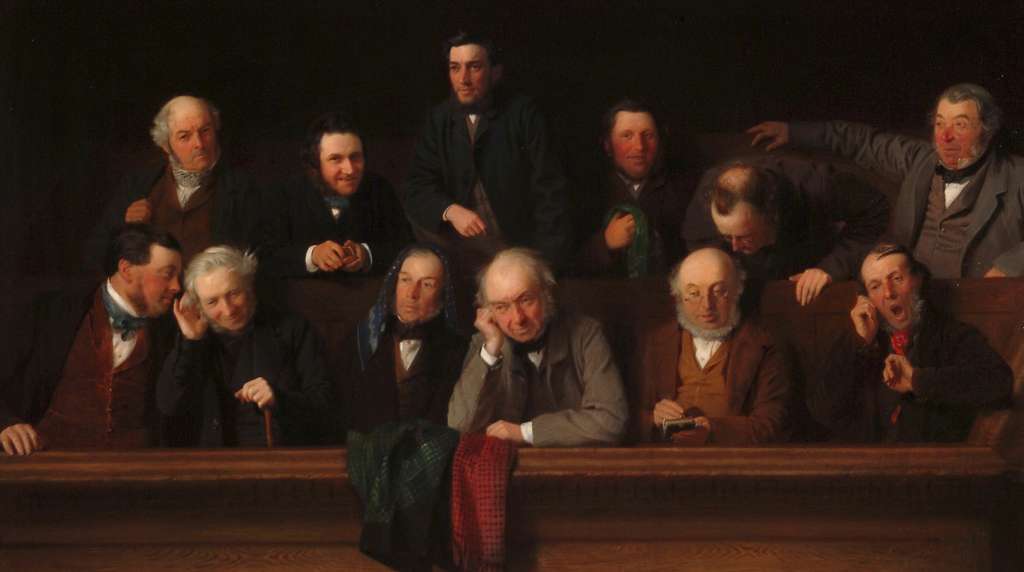
Juries are a well-established component of the UK justice system. However, Justice Secretary David Lammy has recently proposed reforms which would significantly restrict jury trials in England and Wales. The aim of these reforms is to use the implementation of new ‘Swift Courts’ to tackle court backlogs. The changes have already generated backlash, raising concerns about the future of the UK’s already struggling jury system.
So, what do the proposed reforms actually involve
Historically, jury trials have played a crucial role in the justice system, with Henry II (1154-1189) establishing a jury of twelve local knights to settle land ownership disputes. With this in mind, the idea of restricting their use in modern society seems absurd and could be interpreted as a backwards step for democracy, marking a regression in the UK justice system. So, what do the proposed reforms actually involve? Firstly, it is important to note that they would only impact cases likely to result in a sentence of three years or less. Such cases would be heard by a judge alone, and the use of juries would be restricted to more serious offences, such as murder, rape, robbery, or complex fraud. There would also be an increase in cautions and other out-of-court settlements.
Although these restrictions would not include offences which are classed as more serious, they have caused a fair amount of controversy. The initiative aims to fast-track justice, attempting to act as a solution to a current dilemma. Since 2023, the Crown Court backlog has been at a record high, and, according to the Ministry of Justice (MoJ), it is on track to reach 100,000 by 2028. As of December 2025, over 79,600 criminal cases in England and Wales were caught in the courts backlog.
Out of the 1.3 million prosecutions which occur in England and Wales annually, 10% of these cases appear before a Crown Court
The impact of these delays is clear, as it is said that six out of 10 victims of rape are consequently withdrawing from prosecutions. As a result, the Lord Chancellor asked Sir Brian Leveson, a retired Court of Appeal judge, to design proposals to lessen the court backlog. This followed Sir Brian’s claim in July 2024 that “fundamental” reforms were necessary to “reduce the risk of total system collapse”. Out of the 1.3 million prosecutions which occur in England and Wales annually, 10% of these cases appear before a Crown Court. From these, three out of ten go to trial. Under the new jury trial restrictions, more than two out of ten would still result in a jury trial.
In contrast to David Lammy’s description of the reforms as “bold” but “necessary”, critics are labelling the plans as an attack on a fundamental right. Conservatives have described the plans for reform as the “beginning of the end of jury trials”. Indeed, these measures, having caused concerns amongst students as well, are worrying, and it is essential that we consider the possible implications for the UK judiciary.
While it could save money and speed up the overall judicial process, it also opens the floodgates to other, more concerning reforms
When asked about the proposed reforms, Tyler Loh, a third-year law student at Warwick University, claimed that: “The proposed reforms are a dangerous overreach of judicial discretion where juries can be arbitrarily skipped based on importance, which ultimately removes the individual’s right to a fair trial in the criminal justice system. While it could save money and speed up the overall judicial process, it also opens the floodgates to other, more concerning reforms. In the UK’s current political climate, especially with other freedoms that the government is trying to restrict and regulate (such as the Online Safety Act), this is one of many concerning changes that aren’t beneficial to the citizens of the UK.”
Although there is an argument to be made that this decision has been undertaken in order to prevent “system collapse” by alleviating pressure, the public perception of fairness is also centred around the idea of jury trials. Therefore, the proposed reforms are likely to exacerbate feelings of discontent towards what is already perceived to be a flawed justice system. It has also been proven that ethnic minorities believe they receive a fairer hearing with juries rather than just magistrates. Critics additionally claim that cuts to the Ministry of Justice are “the real problem”, suggesting that these jury trial restrictions will be fruitless.
I understand the potential benefits, saving money, time, etc., but trial by jury is the cornerstone of the justice system, and regardless of the crime, people should have the right to a fair trial
When asked why trial by jury is being scrutinised at the moment, Nikhil James, a third-year law student, replied: “I can see the goal being to speed up the criminal justice system, which is suffering from a huge backlog of cases. But by removing the jury system, it infringes on people’s rights to a fair trial. I think it’s a balancing act which works against ordinary people. I understand the potential benefits, saving money, time, etc., but trial by jury is the cornerstone of the justice system, and regardless of the crime, people should have the right to a fair trial. The power of these measures, their potential to cause significant harm to democratic participation and erode civic trust, could have serious long-term consequences. This suggests that the reforms may be too extreme.
He attributes this to the lack of enough discussion about “the surge in online and digital content, mainly from social media, that lawyers and judges have had to address in cases over the past decade or so”
Sir Robert James Buckland is a British politician who has served as Lord Chancellor and Secretary of State for Justice. Buckland believes that it is the failure of the criminal justice system to keep up with technology which has caused such backlogs. He attributes this to the lack of enough discussion about “the surge in online and digital content, mainly from social media, that lawyers and judges have had to address in cases over the past decade or so”. Buckland has also expressed concerns about the practicality of these reforms as a solution, because judge-only trials require “more judges, more courtrooms, and more specialist training” and since judges having to provide reasons will increase their workload and “create more points of appeal.” Considering the unique ability of juries “to interpret” what Buckland describes as the “contested narratives and social standards” involved in “[many] either-way offences, including lower-level dishonesty, assaults involving credibility disputes, and certain sexual offences.” Instead, Buckland recommends that there should be reform, but that it “should seek to deal with the real causes of delay, namely an analogue court system that should be using assistive technology and agentic AI to perform many administrative tasks and to help with the assessment of digital material.”
A petition has been released with the aim of counteracting the Ministry of Justice’s attempts to restrict the right to trial by jury, claiming: “We believe it [the right to trial by jury] is an ancient right allowing us to be judged by our peers and this right must never be lost.” The petition currently has over 6,500 signatures with the deadline to sign is 18 June 2026, after six moths of activity. In accordance with standard procedure regarding petitions, the government has to respond to this petition if it reaches 10,000 signatures, and to consider it for debate in Parliament at 100,000.
The petition also references the Magna Carta (1215), internationally known and well-respected as a symbol of liberty, where the charter states that: “No free man shall be taken or imprisoned…except by the lawful judgment of his peers or by the law of the land”.
The petition against the new reforms states that to lose the right to jury trials would be to break British justice completely, highlighting the purpose of juries in preventing injustice and persecution, and in protecting citizens and societal liberty and democracy.
While it remains to be seen whether these contentious reforms will be introduced in the UK, it is certain that they have the potential to cause more harm than good, causing disruption to an already-flawed justice system placed under extreme pressure.
Comments