The Magic Faraway Tree: An enchanting adaptation
As a childhood classic, The Magic Faraway Tree arrives on screen with a weight of expectation that very few film adaptions can comfortably carry. With writer Simon Farnaby at the wheel, whose past work includes the beloved Paddington 2 and Wonka, and a cast led by many British favourites, the film promises warmth, humour, and childish imagination. For those who grew up reading Enid Blyton’s stories, this is more than just another children’s film: it is a return to something deeply nostalgic and personal.
Rather than radically reinventing the story, it focuses on preserving the thrilling feeling of stepping into the unknown
That sense of personal connection is exactly why this adaptation feels so significant, at least to me. Blyton’s Faraway Tree series has endured not because of intricate narrative, but because of its pure, accessible sense of wonder and whimsy. The idea of a tree containing endless magical worlds is the kind of concept that digs its claws directly into childhood imagination. The film perfectly understands this: rather than radically reinventing the story, it focuses on preserving the thrilling feeling of stepping into the unknown, where each new land explored offers curiosity and comfort.
At its core, the narrative follows a modern family who are disconnected and absorbed by the technological age, relocating to the countryside. They return to Timothy’s (Andrew Garfield) childhood village, home to the enchanted tree. From here, the narrative follows the family’s desperate attempt to make a new life in the hills, and the children’s adventures within fantastical lands. Whilst these adventures are delightful, and the story itself is a very poignant one about connection and childhood, it does at times lack strong narrative momentum.
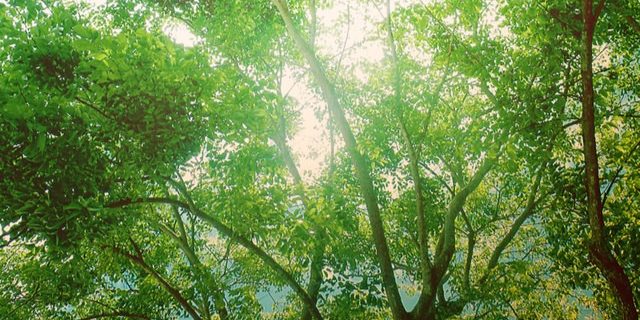
However, what the film lacks in structure, it more than makes up for it in atmosphere: visually, it is enchanting. The soft, golden pallete, with dappled light and detailed natural sets feel straight out of the storybook. There is an almost Wes Anderson-inspired attention to symmetry and colour, particularly in the enchanted lands and involving the magical friends met along the way. The pink, sweet-filled land Fran visits on her first adventure is a standout sequence, feeling reminiscent of The Grand Budapest Hotel, bursting with stylised charm. The Faraway Tree itself is beautifully realised, captured as vast and brimming with possibility, just how a child might imagine it. It’s the kind of set that instinctively made me want to fall straight into the screen.
The costume design is another major triumph. The Thompson family’s wardrobe grounds the film in a distinctively Blyton-esque aesthetic: striped jumpers, dungarees, warm reds, and knitted jumpers that perfectly match their countryside barn. Andrew Garfield leans fully into dad-core, while the children’s outfits feel authentically nostalgic. Fran’s first visit to the tree is particularly memorable for me: a striped cardigan, blue jeans, Mary Janes, and plaited hair, all an image of pure, idealised childhood. Silky’s (Nicola Coughlan) flowing green costume is ethereal and fairy-like, while Moonface’s (Nonso Anozie) deep blues and white, moon shaped hair add a sense of quiet magic. Every design choice contributes to a world that feels both whimsical and tangible.
The family dynamic is also updated from the novel, with Polly (Claire Foy) no longer Bylton’s housewife, but an engineer and breadwinner
Where the adaptation distinguishes itself clearly is in its modernisation of Blyton’s themes. As noted by the Guardian, the film “distils the Blytonesque spirit of adventure…and transfers it to a new world in which all generations are longing to escape electronic devices and AI.” This is felt from the very beginning, with the children initially disconnected from nature, each other, and their own imaginations. A clever recurring prop is the ‘no device’ bag, which becomes a physical symbol of their gradual re-engagement with the world around them. The family dynamic is also updated from the novel, with Polly (Claire Foy) no longer Bylton’s housewife, but an engineer and breadwinner of the family. This change feels natural rather than forced, grounding the story in the contemporary world while still maintaining its nostalgic core. This results in a film that resonates with modern audiences, particularly through its message about rediscovering presence and imagination.
Performance-wise, the cast is faultless. Garfield brings sincerity and emotional grounding, ensuring that the film’s sentimental moments land effectively. The enchanted friends add humour and warmth as Coughlan’s Silky is perfectly humorous and endearing, and the blunt, Northern performance of Dustin Demri-Burn’s Saucepan Man landed very well with the adults in the cinema. Billie Gadson’s Fran is also exceptional, capturing the tension between imagination and the modern world flawlessly.
Whilst being heartfelt and visually beautiful, the film falls short in comparison to other recent British films, making it a lovely watch, but nothing exceptional. Ultimately it is an easy watch, but not one that lingers long afterwards. Despite this, there is a special capturing of the simple joy of imagination that has become increasingly rare in modern cinema. It powerfully reminds all spectators of a time when climbing trees and believing in magic felt entirely natural. It may not be perfect, but it is a film that leaves you wanting to step outside, wander into the trees, and quietly say ‘I believe in magic.’
★★★ ½
Comments