The Bride!: Unrealised ambition and wasted potential
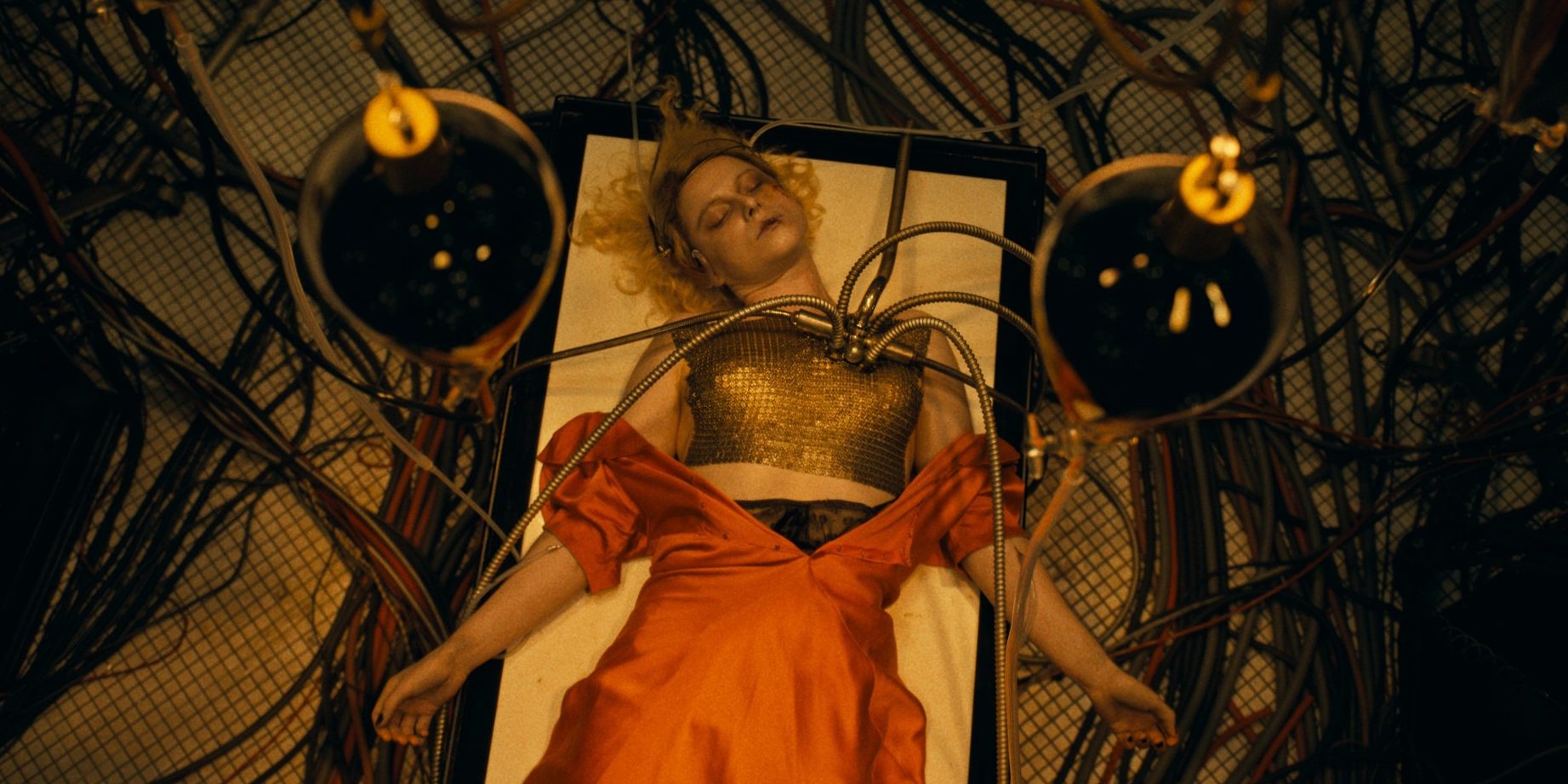
In The Bride!, Ida (Jessie Buckley) faces death after having been possessed by the ghost of Mary Shelley. Her carcass is dug up by a lonely and tormented Frankenstein, (Christian Bale) and Dr. Euphronius (Annette Bening) who has been persuaded by Frankenstein to help him bring Ida back to life. This sets off a chain of crime and turns into a Bonnie and Clyde-esque cat-and-mouse chase story. The film asks: does being alone justify violating someone else’s body?
This review contains mild spoilers for The Bride!
The Bride!, alongside its stellar performances, aims to address issues of consent by deploying a feminist lens. This tricky conversation around consent and re-animation honours a part of Mary Shelley’s original novel as it cleverly tackles the ethics of creating someone outside of natural birth. However, Maggie Gyllenhaal’s adaptation carries this further, and the tension of consent arises here; Ida’s dead body is assaulted when she is revived against her will for the sole purpose of becoming a sexual and romantic companion for Frankenstein.
When … exploitative acts made by Frankenstein pose critical ethical questions, the film acknowledges them, but it does not address them adequately
Furthermore, Frankenstein exploits re-animated Ida’s lack of memory and injects a whole backstory and personality into her. When all these exploitative acts made by Frankenstein pose critical ethical questions, the film acknowledges them, but it does not address them adequately.
The film tries to tackle this by turning the anger around women’s bodily violation into an overarching theme of sexual assault. Throughout the film there are long, intelligent monologues delivered by Ida and the ghost of Mary Shelley which condemn sexual violence and inspire rebellion against perpetrators.
This becomes a theme in the movie, a covert metaphor for the violation of Ida’s bodily autonomy. However, other than a few scenes of tension and arguments between Ida and Frankenstein, there is little to no accountability on Frankenstein’s part. In fact, the film is directly about their romance.
The very heavy ethical questions the film asks are left unanswered, and the crucial details – particularly in relation to Frankenstein – are overlooked
With the film set in the 1930s, the character of Frankenstein would at this point be more than a century old, yet the film still infantilises him. This is likely due to how Frankenstein’s monster is treated in the book; his many crimes are looked at with a certain touch of sympathy because the monster is a newborn trapped in the body of an adult. Yet in The Bride!, he is over a hundred years old and although the film doesn’t exalt him, it also doesn’t present him as a villain.
Overall, the very heavy ethical questions the film asks are left unanswered, and the crucial details – particularly in relation to Frankenstein – are overlooked. Regardless, Gyllenhaal’s ambition in trying to tackle them should be applauded.
The other key reason that The Bride! fails to address these issues is its jumbled-up plot. The film tries to interact genuinely with a valuable form of feminism, and there is an important question here. It is fresh, especially in comparison to other ‘feminist’ movies of the decade. However, Gyllenhaal’s ambition suffers from Hollywood’s over-plotted style of writing.
In an interview with Deadline, Christian Bale calls The Bride! an “indie film”. I can very much see his observation reflected in the thesis of the film, but not the end product. The story combines multiple plotlines, characters and twists, begging the question: would it benefit from being totally ‘plot-less’?
I find that the thematic and sociological focus of the film would’ve been supported much more with a ‘slice of life’ indie focus. The crucial thematic focuses lose themselves in side characters and side plots. Surely a story about loneliness, sexual assault and bodily autonomy is interesting enough.
Why do we need so many different plotlines? In a world of moviegoers whose attention spans are getting shorter and shorter, films with immense potential such as The Bride! lose a lot of what would have made them so special. Although it is exciting to see new and original scripts on the big screen, in the case of The Bride!, Maggie Gyllenhaal’s vision is a martyr to her writing.
★★⯪☆☆
Comments