The Boar takes on Prague Comic Con 2026
This year, The Boar was invited to take advantage of a unique opportunity to cover Prague’s Comic Con as journalists, granting access to press conferences and one-on-one interviews with some of the convention’s biggest stars.
Walking around the event, you got a real sense of the immense passion of those in attendance, on both sides of the many stalls, panels, and shows on display. People from across all forms of media coming together to share their interests and love for pieces of art on a huge scale.
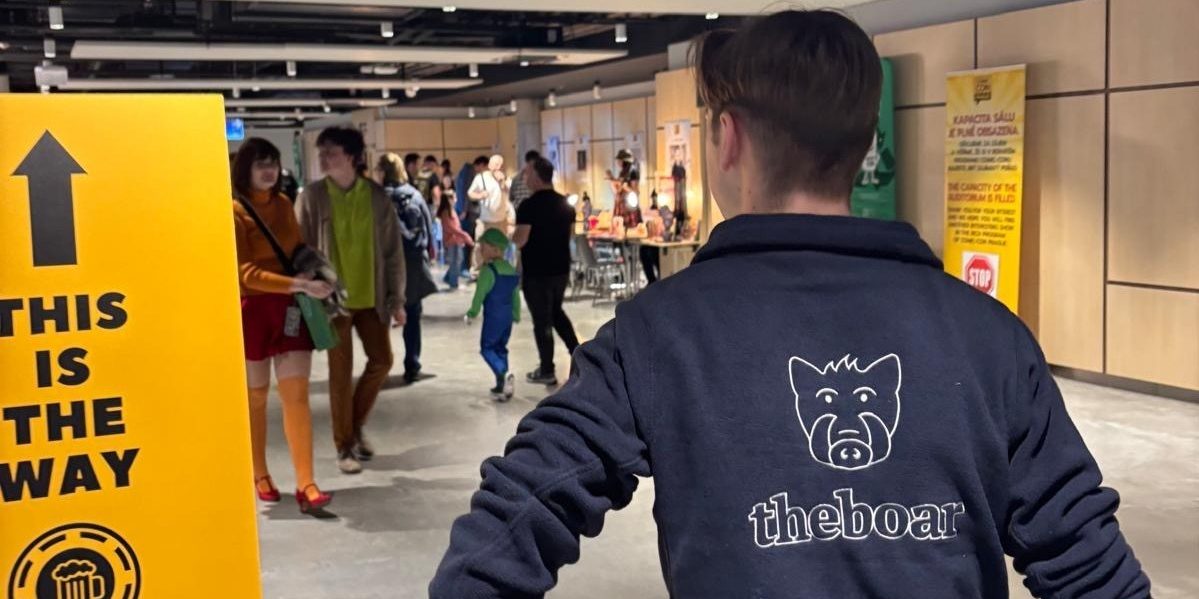
Image: William Moores
Our time at Prague Comic Con began with a press conference with Michael Winslow, star of the Police Academy films and famously known as the ‘Man of 10,000 Sound Effects’. Though I must concede to not having watched the Police Academy movies due in large part to my being born in 2005, there is no doubt his character ‘Larvell Jones’ made a significant impact on the public consciousness of the 1980s. The press conference saw Winslow reflect on his childhood, spent moving between army bases and struggling to make friends as a result, and I was able to ask a quick question about whether there had ever been a sound that took a particularly long time for him to master.
He noted the challenge of recreating music, saying, “you’ve got to be on key. You have to have perfect pitch, and you’ve got to be in sync,” adding that “samplers are a big thing now…rappers and beatboxers are using samplers. I didn’t start using samplers until three-four years ago. I didn’t even bother because I didn’t need it. Now, the technology has caught up to me, so I have no problem with using the technology. So, now, I’m going to take those noises and give them to DJs. That’s the direction now.”
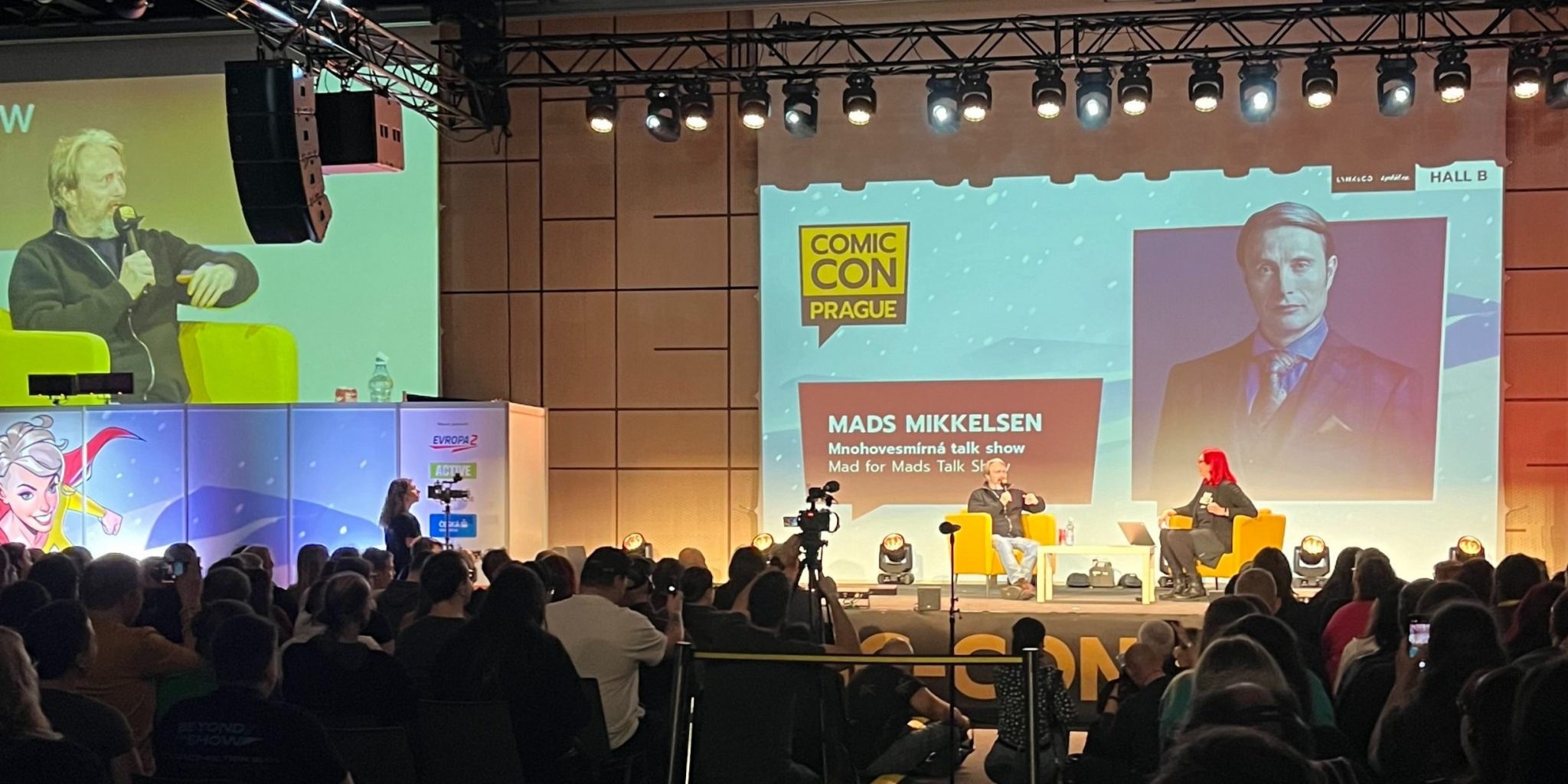
After this, it was off to that day’s biggest event, a sit-down with actor-extraordinaire, Mads Mikkelsen. As a big fan of Mikkelsen’s ability to elevate anything he is in through his amazing performances, with my personal favourites including his portrayal of Le Chiffre in Casino Royale and Martin in Another Round, I made sure to queue up to ask the great man a question.
Struck by his comedic skill during the panel, aware of his range as an actor, and knowing his villain-heavy CV, I managed to squeeze in a question as the panel neared its end, asking whether he’d ever felt typecast into playing villainous roles and how he’d dealt with that across his career.
If I had to choose between doing nothing in America and doing the bad guy, I’ll go for the bad guy
Mads Mikkelsen
Mikkelsen stated, “Obviously, I am typecast in America. On the other hand, I think that the bad guys I have played have been so different from this guy (pointing to Hannibal on-screen). He’s very different from Kaecilius in Doctor Strange and very different from Le Chiffre in Casino Royale. So, I’ve been very lucky. They’ve been different bad guys. Do I wish that they would cast me as something more recognisable as an average human being, main character? Yeah. And I have done a few of those things.”
He added, “If I had to choose between doing nothing in America and doing the bad guy, I’ll go for the bad guy. I mean, I get a lot of cool stuff here in Europe. So, I find myself very fortunate that people see me with different eyes.”
I followed up by asking if he had a favourite villain from his extensive catalogue, internally hoping he’d say Le Chiffre. Mikkelsen said, “There was no way around this guy,” pointing again to Hannibal, and made sure to add dryly that he didn’t see him as a villain at all.
The next morning, we were off to Billy Boyd’s press conference, an actor most famous for his portrayal of Pippin in the Lord of the Rings trilogy. My first question saw me note the significance of friendship in the trilogy, both on and off screen, noting that Boyd and nine others who’d worked on the film had got a tattoo to remember the experience, and asking after his relationship with his co-stars.
Boyd responded by recounting the story of the famous tattoo, noting that he remembered it originating from Dom Monaghan and Viggo Mortensen wanting something to remember the experience. With tattoos being quite a significant thing in New Zealand, they kicked around several ideas for what it should be, such as Gandalf’s signature or the word fellowship, before coming up with the number nine in Elvish script. Near the end of filming, eight of the actors from the fellowship and John Rhys-Davies’ stuntman, Brett Beattie, got the tattoo. Since Sean Bean’s character was already dead, they met him in a press junket in New York and took him to a tattoo parlour there, and he got one too, with the rest having got theirs on one Sunday in Wellington. The tattoo artist who drew up the design was, as Boyd notes, a very famous one, called Roger, who had basically retired. Boyd adds that Peter Jackson heard about all this and got himself a number ten tattoo.
I followed up this question by remarking on the gamble of filming the Lord of the Rings trilogy back-to-back, asking whether it felt like a creative risk at the time or if there was already a sense on set that they were part of something really special.
Boyd responded, saying, “There was a strange feeling of… almost theatrical. That we were just a theatre troupe creating something. It felt like… guerrilla filmmaking. It didn’t feel like a big studio movie. Not that most of us knew what that was… maybe Sean Astin, but we were all young actors in New Zealand, who were all very passionate because of Jackson and his team making this sort of history movie. We were very passionate about trying to make this real. And I don’t think anyone really thought about if it was going to be commercially successful… because it was a fantasy movie and they were never big, so it was only when we went to the Cannes film festival, and they showed two minutes of footage, and it went really well. It was the ‘Moria’ and Pippin dropping the thing down the well, and people seemed to love it and we thought, wow this might be a bigger success than we thought.
That evening saw a run-in with the characteristically frank Peter Weller, star of RoboCop, a clip of which you can see on our Instagram, along with questions put to Lateef Crowder and Diana Lee Insonanto the previous day.
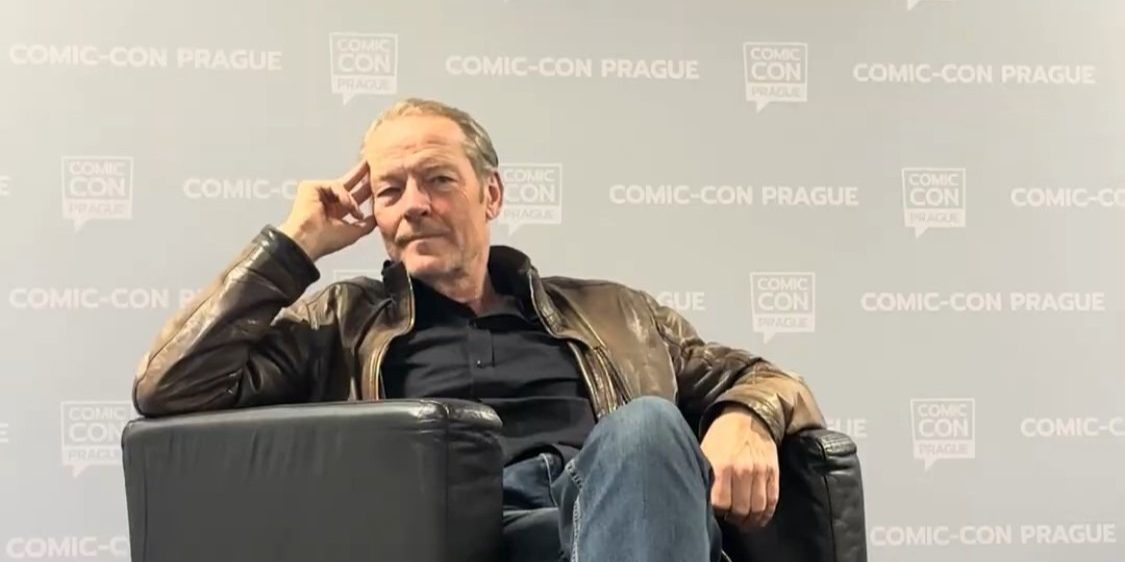
Image: William Moores
The next morning, we were off to a press conference with Iain Glen, most famous for his portrayal of Sir Jorah Mormont in Game of Thrones. I asked Glen, given his extensive experience with theatre, most notably Shakespeare, and the sharply written, literary aspects of Game of Thrones, whether his experience on stage informed his approach or if television requires a different kind of approach.
Every role that you do, at the risk of sounding pretentious, does have some kind of story arc and character arc and theatre and plays do require you to invest in it: you get the chance to rehearse it, it’s very demanding
Iain Glen
Glen responded, ‘Yeah, I think it did. Listen, all demanding roles develop you as an actor. The great thing that theatre does, and certainly Shakespeare does, is increase your ability to structure a role. Every role that you do, at the risk of sounding pretentious, does have some kind of story arc and character arc and theatre and plays do require you to invest in it: you get the chance to rehearse it, it’s very demanding, physically, vocally, and every way. The investment that you have to give to a role like Hamlet or Henry V is total in a way that a film often isn’t, because you’re just asked to do little bits here and there. But being able to look at a part, whether it’s Hamlet or Game of Thrones and see a journey through it and be able to structure it. And I think particularly a long play like Game of Thrones, an acting arc going to go over 80 hours of television, you have to make sure you don’t give too much too early or you have to have a strong sense of where things are revealed, or not to overcook that because you’ve got that there, it’s a shaping of a role.
But in terms of the language and different things like that. I mean, honestly, I would say not specific to Game of Thrones, but I would say to any young actor, in a slightly annoying older actor way, do theatre if you can and do Shakespeare if you can, because the demands it makes on you are like nothing else. You investigate a text and speak in front of 1500 people on the Royal Shakespeare stage and be audible. It’s just a demanding thing to do. And I would say honestly, probably a lot of my most fulfilled acting experience has been on a stage.”
I then followed up with a question about Glen’s relationships with his Game of Thrones co-stars, remarking on the show’s uniquely large ensemble cast and asking if there were any actors he was particularly close with on set and in the years after.
“Yeah, Emilia (Clarke). I met her on it, and she was a young actress, and we formed a very close relationship very quickly. And she’s spoken about this, that she came to look to me in a way, and she didn’t need my guidance, but she asked for it at times. And, you know, she was thrown into the deep end, and it was really hard for her to take on, and she did brilliantly well. So, we became firm friends very quickly and remain so. Conleth Hill was a good friend.
What was nice about Thrones was that you really went from actors in their nineties to actors in their teens, and so there was a big range. We all got on really, pretty well. Storylines tended to keep people together. So, the lovely Khal Drogo, we hung out a lot. He’s a very fun guy. He played the guitar, I played the guitar. Lots of singing sessions. And Harry Lloyd in that first season, but throughout… Conleth, I got along really well with. Kit (Harington), everyone, we all hung out at various times and Dan and David, as our showrunners, who were constantly there, were much loved.”
Glen was a real gent and a pleasure to hear from. His passion for acting and humble, good-natured manner made for a really engaging and relaxed press conference.
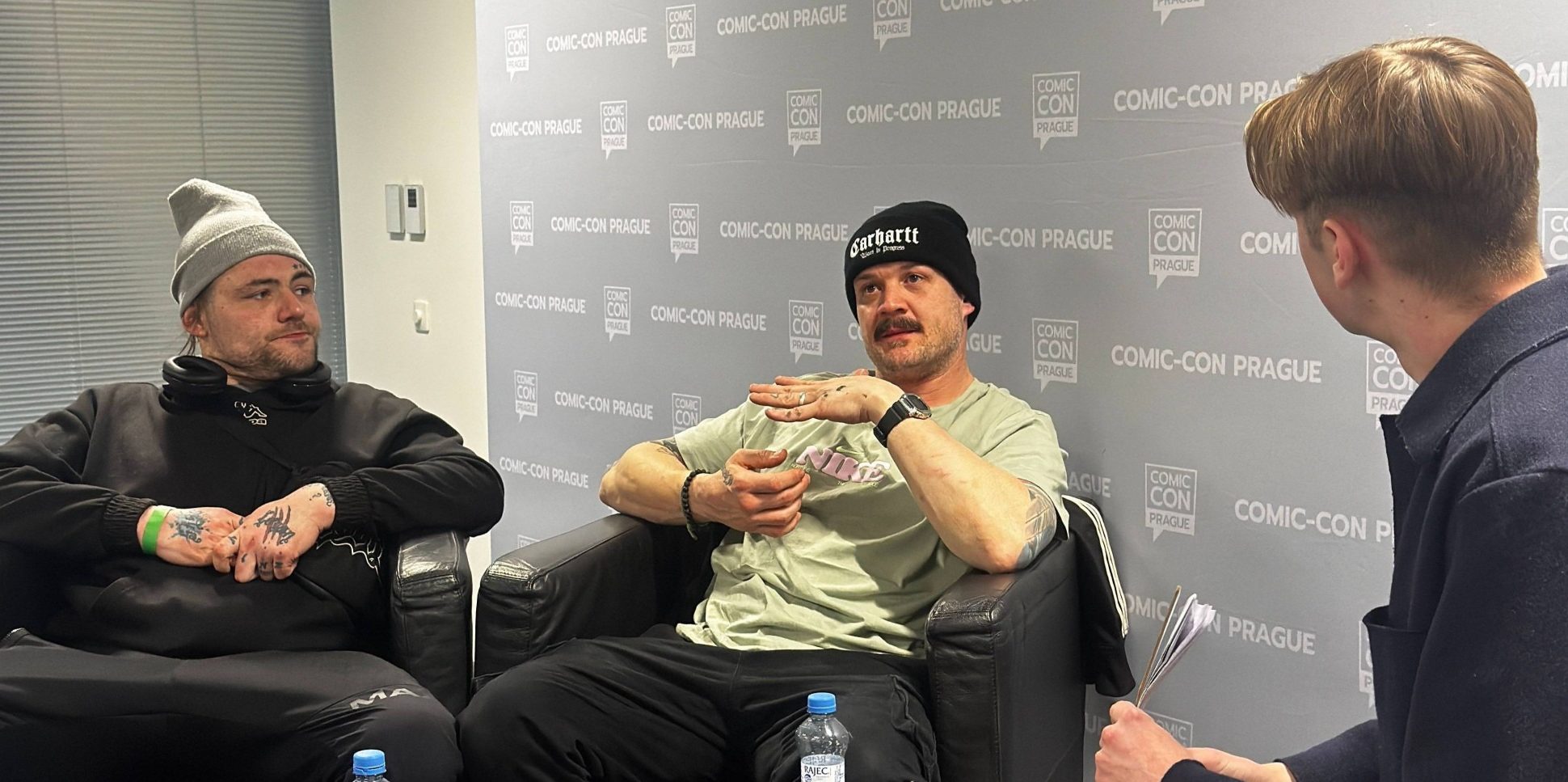
Image: William Moores
We were then off for a chat with Jamie Waylett and Josh Herdman, most famous for their roles as Crabbe and Goyle in the Harry Potter films. This was a really interesting conversation, covering everything from the dynamics on set to the lack of support around them as child actors. It would be too much to condense here, but I would recommend checking the full interview out on YouTube now.
We spent the rest of the final day wandering around the convention, soaking up the atmosphere, surrounded by cosplayers on all sides and rows of stalls full of people talking about all forms of media, from comics to movies to television. The whole experience was very rewarding, providing a window into the work of media journalists, access to a variety of extremely talented actors, and the opportunity to watch some well-hosted panels. The sincere passion for all forms of media on display across the convention and the joy everyone had in sharing those interests was a privilege to see and report on.
Comments