From broadsheet editors to influencers: How has control over the media shifted?
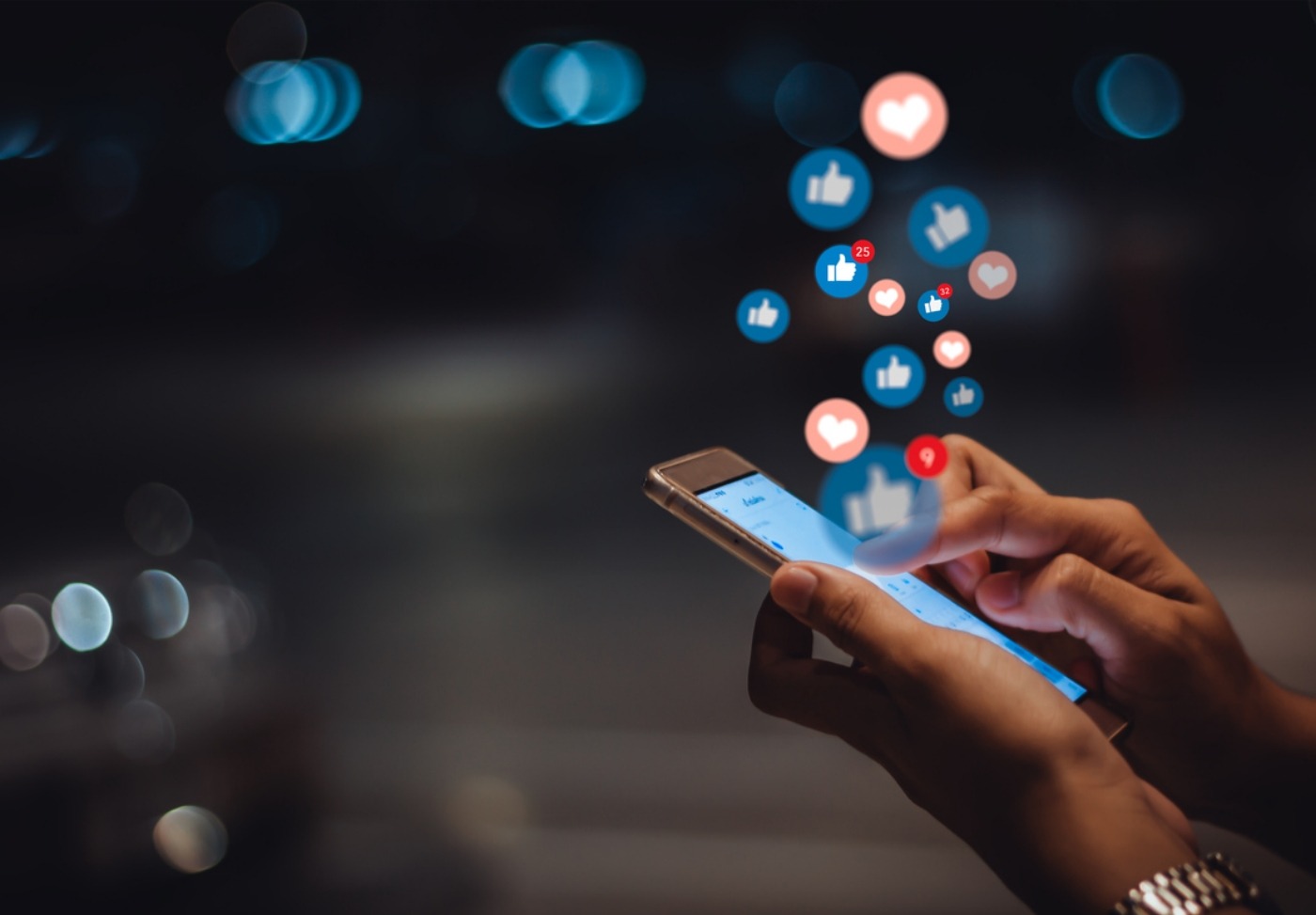
People have forever held opinions. Everybody thinks they know better. The world will always be, and has always been, filled with know-it-alls. Once upon a time, these ramblings were confined to those unfortunate enough to find themselves sitting next to the wrong person at a dinner party or stuck in a particularly long queue at the post office. There was little chance of these attention-seekers being granted a platform by traditional media. Since the turn of the century, the explosion of content-sharing apps like Instagram, Facebook, and TikTok has removed obstacles previously imposed by the hierarchies of a conventional media ecosystem (print newspapers, cable news TV channels, radio broadcasts). Nowadays, our media is shaped not by editors or producers, but by influencers and ‘insta-experts’.
The democratisation of media has given rise to a phenomenon known as the ‘insta-expert’
Technological advancements have shifted the balance of control away from big-shot media bosses towards everyday people. With this newfound agency, anyone can download an app, upload a video, and contribute to cultural dialogue. The democratisation of media has given rise to a phenomenon known as the ‘insta-expert’. In the online sphere, the lines have been blurred between ‘influencer’ and ‘expert’, with knowledge and expertise taking a back seat in favour of outrageous ‘hot takes’ and virality. To post a video commenting on political instability in Venezuela, the average social media user has no need for a PhD in Latin American politics (as perhaps a newspaper columnist might), simply a Wi-Fi connection, a charged phone, and a belief that they know best.
A lesser awareness of our own ignorance gives rise to baseless self-confidence, which floods the feeds of social media users day in, day out
The forces driving this constant proliferation of opinions can best be explained by the Dunning-Kruger effect, a phenomenon characterised by the British Psychological Society (BPS) as “unknowledgeable people lack[ing] the very expertise they need to recognise their lack of expertise”. Unable to identify the knowledge they do not have, people take to social media and, in the absence of gatekeepers, post in these open, accessible spaces with little accountability. A lesser awareness of our own ignorance gives rise to baseless self-confidence, which floods the feeds of social media users day in, day out.
The sheer volume of this stream of user-generated content creates a climate of ‘disordered attention’, whereby it becomes impossible to keep up with social media’s constant barrage of information. To provide a sense of the scale, almost 90% of the world’s data has been created in the last two years. It has become impossible to keep up – our brains simply cannot handle it. In conversation with a Warwick student, they identified with this sense of fatigue, reporting that “There’s just so much stuff out there really, there’s no way you can keep track of who’s saying what”. The student went on to explain, “Because everyone has an opinion on everything, it doesn’t really matter what anyone says online, it’s just about who can shout the loudest”.
If success is quantified by user engagement, someone’s online following may act as a false indicator of expertise. In this environment, ‘insta-experts’ and influencers are encouraged to produce sensationalised and polarising content
Social media’s ‘attention-economy’ creates a market largely governed by ‘clickbait’ and virality. What matters is views, likes, comments and shares – rarely facts or figures. In competition for attention in an increasingly crowded online space, the potential for misinformation increases. If success is quantified by user engagement, someone’s online following may act as a false indicator of expertise. In this environment, ‘insta-experts’ and influencers are encouraged to produce sensationalised and polarising content. As a profile’s influence grows, accuracy and nuance may go out the window.
The recent developments of AI have exacerbated this climate of scepticism, outrage, and mistrust. Users are no longer confident about whether content is genuine or just more AI-generated ‘slop’. Yet, far from turning people away from social media platforms, videos of cats morphing into cakes (and God knows what else) only seem to be pulling users in, creating a culture known as ‘brainrot’. This is characterised by mindless scrolling through fast-paced, short-form, and often inane content. Despite an apparent detrimental impact on attention span, emotional intelligence and overall mental well-being, Meta CEO Mark Zuckerberg hailed the development of short-form content as the glorious third phase of social media, with “yet another huge corpus of content”.
Where influencers and so-called ‘insta-experts’ are free to post, they do not command authority
At the outset of this digital revolution, many held hopes that the increased accessibility enabled by social media would lead to a more diverse and representative engagement with news and culture. Whilst this has undoubtedly been the case, with examples like the Arab Spring and Black Lives Matter protests demonstrating the power civilians can channel through social media, tech bosses and media tycoons remain in seats of control over the levers of power. Where influencers and so-called ‘insta-experts’ are free to post, they do not command authority. Instead, billionaire owners like Mark Zuckerberg and Elon Musk or private tech conglomerates such as ByteDance and Microsoft call the shots. Ultimately, control over algorithms, the promotion of sponsored content, and regulation remain in the hands of tech CEOs. Where social media is presented as the people’s means of reclaiming media from the newspaper oligarchs and broadcast empires of the past, the overriding influence wielded by these select few seems ironic and, to a large extent, self-defeating.
When prompted on which media form they trusted most, Warwick students opted overwhelmingly in favour of conventional media institutions such as the BBC and print newspapers like The Guardian and The Times. When questioned as to which types of media they consumed most often, however, the interviewed students reported that they used social media and online news sources as frequently as every hour, looking to legacy media (newspapers, TV, radio) as scarcely as once or twice a week. The reports fall in line with Ofcom’s data, which reveals that as much as 63% of 16-24-year-olds use social media as their primary news source, with Instagram (44%) as the most used single outlet, and BBC One (33%) as the only traditional media platform to feature in the top five. In spite of confirmed trust in traditional sources, ‘convenience’ was most commonly cited by Warwick students as the reason for their preference for social media as a means to consume news and culture. One student reported that social media apps were “more handy”, “if I’m already on the app to see friends’ posts and sports and stuff, it becomes a habit to check for news on there as well”.
Once users are sucked in, they consume content created by self-righteous ‘insta-experts’ and brand-endorsing influencers
‘Handiness’ and ‘habit’ are the two core components of social media, and features like infinite scroll and auto-play remove any natural stopping points, creating endless cycles of mindless consumption of content. Once users are sucked in, they consume content created by self-righteous ‘insta-experts’ and brand-endorsing influencers. No matter how much you may wish to avoid them, they become part of the scrolling experience. When asked whether they would ever consider posting ‘insta-expert’-style content, students responded with a unanimous ‘no’. One even went so far as to say, “There’s only so many hours in the day, I’ve got a life to be living in the real world”. The student’s statement makes clear the perversity of our relationship with social media in the 21st century. Even so-called ‘digital natives’ in the 16-24-year-old age bracket feel alienated by the ‘insta-experts’ and AI ‘slop’ which fills their feeds. Yet, these platforms function as a central faucet from which young users access everyday news and culture. Students know that there is no barrier to contributing to these platforms, but they feel reluctant to do so.
While many are wary of influencers telling them what to think and buy, users tend to accept this commerciality, appearing reluctant to seek out the verifiable, high-quality journalism of days gone by. Consumer habits are an unmistakable sign of the tides, and the more users continue to depend on social media platforms, the more the power of ‘insta-experts’, influencers, and ‘tech-bros’ will continue to multiply.
Comments