“Focus on what you can learn”: Blair Strevens on short film Afterwards at Warwick Filmmaking’s film festival
Warwick Filmmaking Society have been making leaps and bounds in their position as a multifaceted yet incredibly new society. Alongside career panels held by students and industry professionals, they also organise skills workshops, filmmaking and music video challenges and free screenings for students wanting to get involved in the field of film and television.
This year, Warwick Filmmaking took on a new challenge, organising the first Warwick Student Film Festival. This involved a panel of professional directors, producers, screenwriters and journalists sharing their career advice and offering networking opportunities, whilst also celebrating the diversity of student productions.
Displayed at the festival were short films, documentaries, and music videos, all submitted by Warwick students. These included three Warwick Filmmaking-funded films: Love Bites (directed by Tara Oyefeso), At The Bedside (directed by Tom Swift), and Afterwards (directed by Blair Strevens).
James Leonard, events officer for the society, told The Boar how these films were selected, with director, writer, and producer applying as one team for the funding: “They pitched their concept and their production timeline in an interview with the exec and 3 films were granted £100.”
I spoke to Afterwards director and scriptwriter Blair Strevens about his student film to gain some insight on the challenges and realities of creating it, and his advice to new filmmakers.
We started our conversation discussing how Blair gained his funding from the festival to create the film. Hearing about how Filmmaking Society were offering to give £100 to help individuals make their short films, Blair signed up for the funding offer near its final deadline.
As filming developed, it became clear that the final product would not look like this original idea due to the realities of filming
“The whole thing was a bit sudden,” Blair explained, “because it was something I kind of wanted to do, but I wasn’t too sure of what I wanted to do. So, I just came up with a very, very rough concept and submitted it.” The idea behind Afterwards was not fully fleshed out at that point, and after finding out that he had been awarded the funding, it was a big surprise. He said: “The aims and intention were just to make something good.”
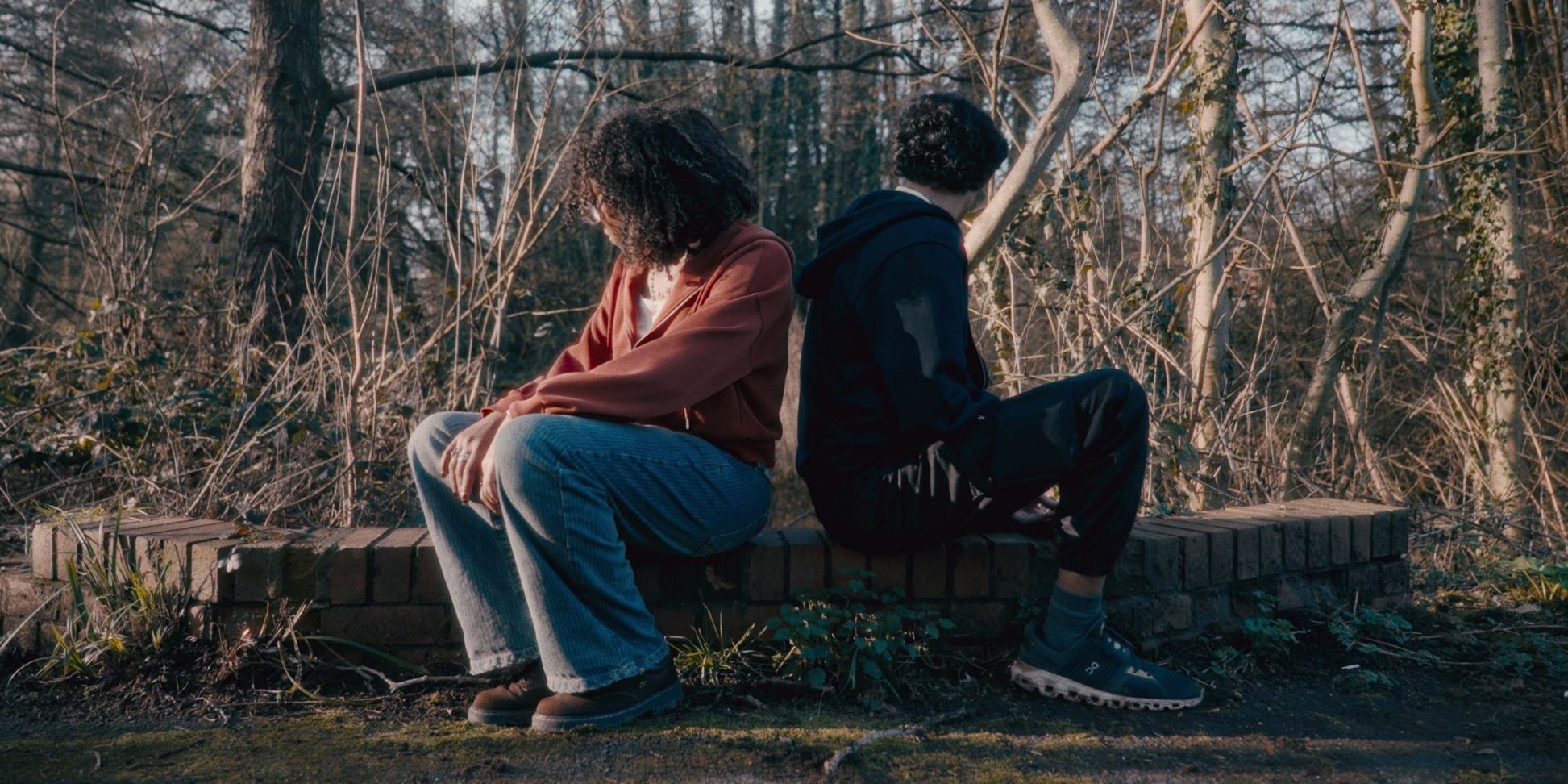
The initial idea for Afterwards fell along the lines of a short film with two separate timelines following an accident: one timeline where the person lives and the other timeline where they die. However, as filming developed, it became clear that the final product would not look like this original idea due to the realities of filming.
“In terms of aims and intentions, it was very fluid.” Blair told me, “There were ideas and those ideas were played around with, but it was ultimately just trying to make something that wasn’t embarrassing in the end, and I think we achieved that.”
Boasting a phenomenal cast of student actors, with Grace Hosannah playing Olivia and Daksh Banerjee playing Henry, Blair explained that assembling a crew and actors for the project involved a mix of sending emails to Warwick University Drama Society and asking individuals from Warwick’s Film Studies course.
The casting phase held a unique set of challenges, as there were issues finding an actor to play Henry almost up until filming was set to start. Thankfully, producer and editor of Afterwards Ailbe Draper was able to introduce Daksh Banerjee into the project and filming could commence.
As with any project, challenges are inevitable. For the crew of Afterwards, along with the casting for Henry, the main struggle was scheduling.
“I’d been wanting to hit the ground running at the beginning of term 2.” Blair explained, but it ended up being delayed until after Week 6, which meant that “half the film we ended up shooting on one incredibly intense day, like four days before it got showed.”
“It’s good we were delayed because the script got a lot better over this period of time.”
Especially with night shoots, Blair admits that the reality of filming was also an unexpected challenge as the technical aspects were completely new
Despite the stresses of timing and scheduling, especially with night shoots, Blair admits that the reality of filming was also an unexpected challenge as the technical aspects were completely new to him. “What you do is film the entire scene from every angle you want it to be from,” Blair clarified. “It means you can play so much more with it and be so much more creative there because you’ve got so much stuff to work with.”
Blair also continued to say that the original plan may not be the best plan, and that fluidity is key in the latter stages of a creative piece, which meant that there were sudden changes whilst filming.
Blair explained how he and his cinematographer Nils Megret-Leander worked through these unforeseen changes: “I think it’s going to get really boring if we do another scene in the kitchen, and also the lighting’s really bad at the moment. We should probably do it somewhere else, which means kind of spontaneously we’re like, ‘Right, where can we film these scenes?’”
With the constant reminders that Christopher Nolan and Martin Scorsese started in student film circles, it’s easy to think that the first short film you make should be an impressive and phenomenal piece of art.
I asked Blair if he had any advice for first-time student filmmakers. “Be incredibly unambitious.” He said: “If you’re making a film for the first time, it does not need to be a masterpiece.”
A first film “doesn’t need to be pushing the boundaries or doing anything particularly interesting,” Blair explained, “I think I was kind of approaching it like, oh, this needs to be novel.”
Lowering your expectations is a key part of the first filmmaking process, and Blair stresses the need to “just focus on learning how to do it, so then you can maybe expand on to doing something a little more ambitious next time.” It’s about learning and getting to grips with the ideas and techniques which become the most important for experimenting in the future.
The creative process can be gruelling, but Blair claims that his favourite part was the editing stage of the film: “Seeing it all come together finally, after not being very confident if it was good because there were so many stages, I thought: ‘this is just going to be terrible’,” Blair admitted, “there is just something incredibly satisfying about that.”
“You’re not really able to see it as a full piece until the very end.”
As our conversation came to a close, I asked about his involvement in Warwick Filmmaking Society prior to submitting his film.
Throughout term one, Blair had attended some society events, but, when it came to making a film from scratch, says: “I never thought I had the ability or resources to sort of do anything myself.” Blair explains that he was slowly learning filmmaking tips, but in the end, submitting a rough idea for the grant “was really just a case of, you know, why not?”
Despite Warwick Filmmaking being so young in its time as a society, the enthusiasm and adoration they have for supporting new filmmakers is clear in their successful endeavour to host the first Warwick Student Film Festival. Regardless of your position in your filmmaking journey, their workshops and challenges are open for all who want to create and share their passion.
Afterwards is a student film directed by Blair Strevens, written by Blair Strevens and Ailbe Draper, produced by Ailbe Draper, edited by Ailbe Draper, and with cinematography by Nils Megret-Leander, and is available to watch on YouTube.
Comments