Does Dhurandhar: The Revenge justify the hype?
Ladies and gentlemen, make no mistake – Dhurandhar: The Revenge is the biggest Hindi film of 2026. After Dhurandhar unpredictably sent shockwaves around India upon its release, the nation was left worshipping Akshaye Khanna, playing its album on repeat, and cooking up theories for the sequel. So has Aditya Dhar delivered?
The film is a blockbuster from start to finish. At a running time of 3h 55m (a runtime I personally had no issue with), it largely leaves you hooked and includes some truly excellent twists. The success of the Dhurandhar series is particularly pleasing given the redemption it has served up for both Dhar and Singh. Aditya Dhar spent five years working on his dream project, The Immortal Ashwatthama, only for it to be shelved, and has faced countless rejection during his time working in the film industry. Ranveer Singh’s post-pandemic filmography has been commercially disappointing: despite a convincing performance in 83, the project, along with Jayeshbhai Jordaar, Cirkus and Singham Again have all flopped. The success they are receiving with Dhurandhar is immensely deserved.
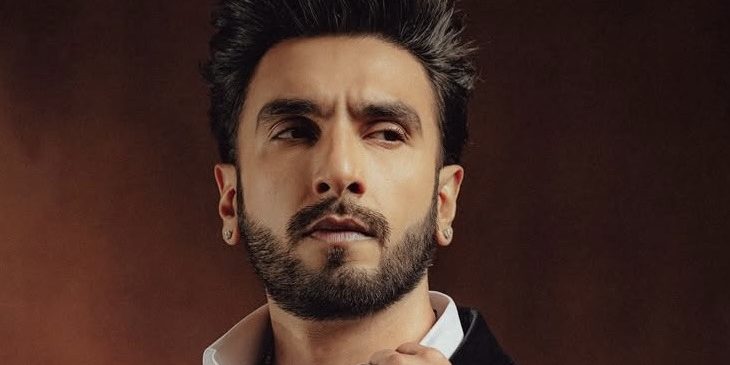
Ranveer Singh is outstanding, looking fantastic in action shots and fulfilling the promise of his character
The acting performances once again are strong. Ranveer Singh is outstanding, looking fantastic in action shots and fulfilling the promise of his character. Whether it is the factory scene of him in a cape, his emotional discovery in the first half an hour during his backstory, or the film’s final scene, he nails everything. He expertly emotes with his eyes, giving the performance of 2026 so far. Arjun Rampal does okay, and Sara Arjun impresses with her maturity in emotional scenes. Rakesh Bedi and Sanjay Dutt deliver entertaining one-liners, although the latter appears a little lazy. A special mention must go to Mukesh Chhabra, for impeccably handpicking the forever typecast Gaurav Gera to play Aalam Bhai, and assembling a plethora of actors that perfectly embody the political figures they are based on.
Dhurandhar: The Revenge, is full of wonderful full circle moments when dealing with political villains introduced in Dhurandhar. The resolution of one involving a face time call is particularly satisfying. The action scenes are well-choreographed and the twists are unpredictable (although it does seem far-fetched for an Indian spy to intentionally leave a key target alive).
Shashwant Sachdev’s album doesn’t quite reach the unscalable heights of Part 1, but ‘Aari Aari’, ‘Main Aur Tu’ and ‘Jaan Se Guzarte Hain’ are great inclusions, along with the voices of Arijit Singh and Satinder Sartaaj in ‘Phir Se’ and ‘Jaiye Sajana’. However, ‘Reble’ and ‘Hanumankind’’s lyrics are not as impactful, and ‘Tamma Tamma’’s execution is a far cry from ‘Hawa Hawa’.
It seems as though certain technical elements were rushed in order to meet the film’s release date, as Dhar wanted to maintain the film’s hype
The action scenes are slick and visually engaging, but, despite an excellent sequence where Jaskirat storms a house, pale in comparison to Dhurandhar. Hamza’s crowning as Sher-e-Baloch is nowhere near as impactful as Akshaye Khanna’s. The editing throughout the film is not as clean and there are mistakes. For example, we see a cameraman appear during a tussle in the bathroom. Finally, the sound design of the climax scene is completely off – the gunshots are too loud (in keeping with other action scenes in the film) and are not timed correctly. It seems as though certain technical elements were rushed in order to meet the film’s release date, as Dhar wanted to maintain the film’s hype, differing from Dhurandhar’s meticulous execution.
Akshaye Khanna as Rehman Dekhait was sorely missed at times during Dhurandhar: The Revenge. Major Iqbal was not given ample time to develop the sheer nastiness Rehman did, and the big reveal involving the ultimate villain hinted at in Dhurandhar was also underwhelming, given speculation of who Bade Sahab could be, and who could play him. Iqbal’s introduction scene in Part 2 is menacing, but there is nothing that horrifies us as much as that scene in Dhurandhar. It doesn’t help that he is constantly berated by his father, as if Dhar wants us to feel sympathetic towards him, a far cry from the terrifying monster. By painting him as a failure, he becomes less imposing as a villain, and this is an odd directorial choice.
It is imperative not to take the film as gospel. Modi, like every leader, is not perfect and the film paints an idyllic image of a strong India that is only undone by its corrupt officials. Demonetisation is shown to be an overwhelming success, with its downsides (the circulation of guns and death of countless Indians) ignored. For more information, see 19:45 onwards of this video. It is telling that Neeraj Ghaywan was blocked from using a clip of Modiji talking about the Coronavirus pandemic for Homebound, but when Dhar wants to use a clip of Modi talking about demonetisation in a film affirming his leadership, it is permitted. The film is inconsistent: it passionately condemns the Mumbai 26/11 attacks in Part 1, but barely mentions the 2014 URI attacks. Given Sanyal and Hamza’s reaction to 26/11, it is inconceivable that they would react so passively to URI.
It’s a worrying messaging that’s becoming increasingly prevalent within Bollywood, […] where a one-sided story is told from a nationalist perspective, inciting patriotism, but hate towards a certain group
Whilst patriotic, the film is unfortunately divisive too. Hamza says his fight is against terrorists in Pakistan, but we are not introduced to a single Pakistani with peace-harbouring intentions, and Dhar doesn’t do enough to distinguish the two. It’s a worrying messaging that’s becoming increasingly prevalent within Bollywood (see Chhaava, Emergency, or The Kashmir Files), where a one-sided story is told from a nationalist perspective, inciting patriotism, but hate towards a certain group. As Dhar is undoubtedly a talented filmmaker, he’ll be rewarded with projects that justify his talent and receive backing. Hopefully he can also spread messages of unity between India and Pakistan.
Dhurandhar: The Revenge isn’t as good as Part 1. But that’s okay, because it was never going to be. Dhar successfully provides a fitting conclusion to the Dhurandhar story, containing gripping action scenes and a stunning soundtrack. Dhar’s direction across both parts is brilliant, and Ranveer Singh and Akshaye Khanna stand out across the eight-hour saga. Dhurandhar: The Revenge doesn’t disappoint, but it doesn’t marvel as its predecessor did.
★★★⯪☆
Comments