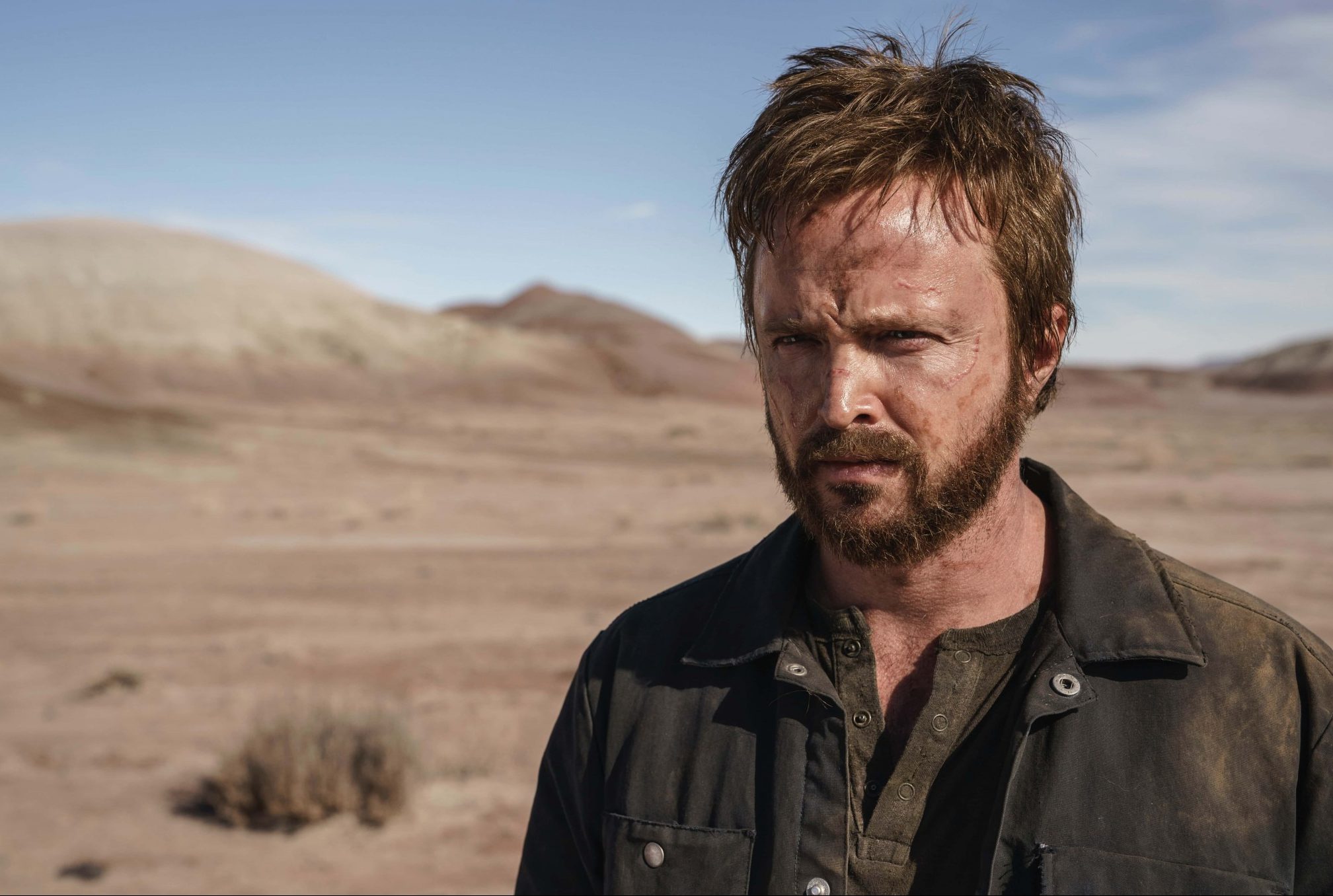
Cancer, cliquism, and crime: Lessons for America from the Breaking Bad universe
Walter White is an overqualified high school chemistry teacher. When faced with a sudden lung cancer diagnosis and an unplanned second child, he turns to cooking methamphetamine to pay the bills. In the process, he undergoes a Kafkaesque metamorphosis, his worst traits exacerbated as he becomes an infamous drug kingpin.
Jimmy McGill is a down-on-his-luck lawyer. Despite his best efforts, he’s unable to pull himself up by the bootstraps, suffering from a deep-seated Darwinian worldview and a young offender history he can’t quite escape. Tragically, amid the woes of his turbulent life, McGill opts to embrace his criminality. Renaming himself Saul Goodman, he becomes a criminal lawyer (not a lawyer in criminal law, but a lawyer for criminals), willing to serve anyone who slips a dollar into his pocket, from the cartel to Walter White himself.
Though these synopses of Breaking Bad and Better Call Saul are broad and omit many of the respective show’s captivating nuances, they depict the central theme of both revered shows: the transformation of everyday people into monsters. White and McGill are by no means innate saints, one maliciously prideful and the other morally warped; however, their flaws are fanned by the shortcomings of American society, setting into motion chain reactions, which leave only devastation in their wake. While the Breaking Bad universe is dramatised, it never veers into absurdity, instead painting a cold, harsh picture of how the morally mediocre can slip through society’s cracks into the depths of the criminal underworld.
The first domino to fall as he becomes increasingly desensitised to his own immorality
White’s first steps into criminality occur because of his lung cancer. On a high school teacher’s salary and suffering from a lack of state healthcare, treatment is unaffordable. Facing the solemn acceptance of his imminent death unless he can obtain a sudden influx of cash, White turns to cooking meth: the first domino to fall as he becomes increasingly desensitised to his own immorality. Somewhat unsurprisingly, debt is strongly correlated with criminal activities, and medical debt is particularly complex and widespread in the United States.
It is doubtful White would have turned down such a dark path without his looming healthcare situation, and as almost half of criminals released from prison reoffend in the US, crime is evidently extremely challenging to escape once you’ve started. White is himself trapped in this cycle, and though he is not caught during his first forays, a mixture of desperation, arrogance, and an apathetic ‘I’ve started, so I’ll finish’ attitude leaves him unable to draw himself away. Given that polling indicates increased crime-derived insecurity across the States, it’s crucial that all triggers of criminality, particularly those rooted in medicinal desperation and recidivism, such as White’s, are carefully considered.
McGill’s downfall is comparatively harder to trace. There isn’t a single cause wherein the rug is pulled from under his feet, and the show is itself remarkably nuanced and artistically delivered. However, from his very upbringing, he is taught by experience to view the world as ‘wolves’ and ‘sheep’, which a pessimist could explain as America’s rugged individualism in action. What some see as individualism and opportunity, others see as callous atomism. Watching his parents’ gas station be robbed on a frequent basis (including by himself), he then vows never to be a sheep, turning to a life as a con artist, which, although he eventually tries to escape, he can never quite manage to.
So used to failure and the inescapability of his past mistakes, McGill feels he can never escape society’s barriers on fair terms
In one of Better Call Saul’s best episodes, titled ‘Winner’, McGill sits on a scholarship board and vouches for a candidate who has a previous history of shoplifting. Though she fails in getting the scholarship, McGill feels the need to explain to her why: “You made a mistake, and they are never forgetting it. As far as they’re concerned, your mistake is just, it’s who you are”. Though McGill is referring to the scholarship candidate here, he is really holding up a mirror; the vague ‘they’ referring to anyone who can help or hinder your dreams. In McGill’s case, he feels his delinquent past has only blocked him from everything he’s ever wanted, a widespread narrative amid the US’ incarceration crisis, which only deepens economic inequality.
McGill is a gloriously complex character who is given opportunities to thrive despite his pleading that he’s only ever been looked down upon. Put simply, he can never quite fit into the world of thousand-dollar suits and cushy boardrooms; conditioned to feel like an outsider, no matter how ‘inside’ he really is. McGill is perhaps the embodiment of what the American Dream has become in the eyes of many: a longed-for vision where dreamers are predestined to fall short, unable to escape their class status. So used to failure and the inescapability of his past mistakes, McGill feels he can never escape society’s barriers on fair terms.
Amid a turbulent period in US history, wherein law and order appears, at best, perplexing, the Breaking Bad universe is a powerful, well-written, and ultimately compelling reflection of where American society has ended up: restrictive, stressful, and shaped by unpredictability and fervent glass ceilings that drive ordinary people to do things they could never have imagined. While the vast majority won’t go as far as White or McGill, they remain striking allegories. Both shows are well worth your time, and one of the many reasons they are so compelling is how they effectively bring many problems facing the US to the fore. Though they have now concluded, for onlookers present and future, huddled around their television sets, the political messages they convey have never been more timely.
Comments