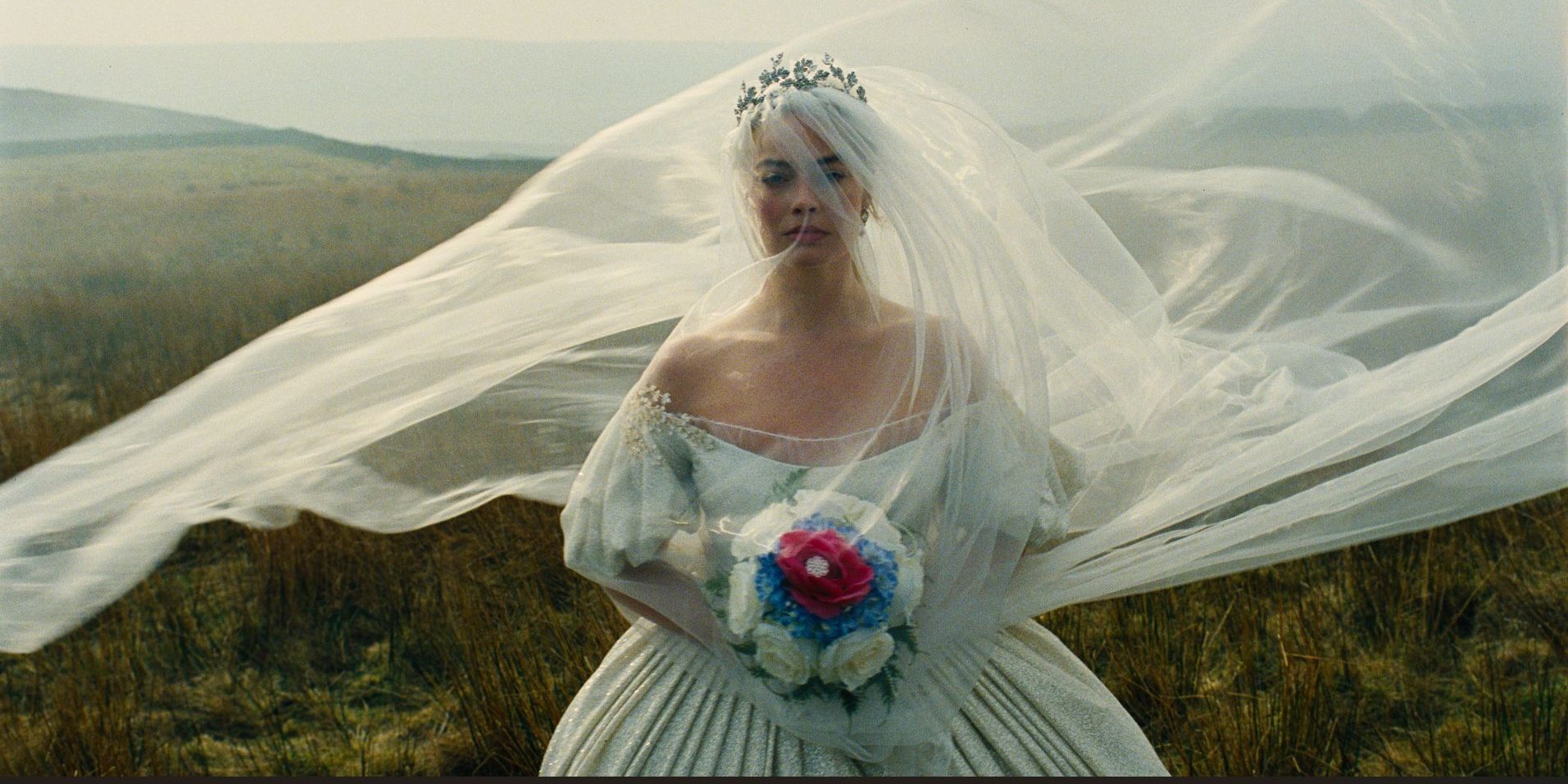
“Wuthering Heights” is a far cry from its source material
Before even going to the cinema, the casting choices and costumes seen in the trailer for Emerald Fennell’s “Wuthering Heights” were enough to lower my expectations. Whilst the disturbing and eerie vibes are reminiscent of the general atmosphere in Emily Brontë’s 1847 novel, not much else seems to have been preserved from the original book.
Margot Robbie and Jacob Elordi act well, despite seeming unusually old to portray the characters of Catherine Earnshaw and Heathcliff. More importantly, it would be impossible to write this review and not discuss the casting choice of Elordi for the character of Heathcliff.
Heathcliff is described in the novel as a “dark-skinned gypsy“, which contributes heavily to his severe mistreatment and the abuse he endures at the hands of Hindley and Joseph. This othering causes him to wish for Linton’s “light hair and fair skin”. However, Emerald Fennell appears to have “solved” the problem of addressing any race concerns by eliminating the character of Hindley and transferring the violence enacted by him and Joseph onto the character of Mr Earnshaw.
I was shocked at the complete disregard for the novel’s central themes
Despite how interesting the latter events of Brontë’s story are, the exclusion of the second half of the novel seems fair, as it would be quite difficult to pull off for a film. However, I was shocked at the complete disregard for the novel’s central themes. Instead, we are given a bizarre “skin room” and a latex ballgown (which isn’t actually made from latex).
Fennell responded to comments about her bold casting choices in an interview, arguing that she created the Wuthering Heights she had imagined when she first read the novel. However, this begs the question: did she actually read the same book? Projecting yourself onto a novel somewhat or changing minor details seems fairly normal, but I’m not sure about completely eliminating a plot in which questions of race, class, and gender are entangled…
On that note, another character who is unrecognisable from the book is Isabella Linton. Fennell turns Heathcliff’s abuse of Isabella into a kinky sex-play, portraying her as submissive in an attempt to add some sort of humour to the plot. This is a far cry from the strong-willed domestic abuse survivor from the novel.
People who haven’t read the book will come away from this film with a completely different view of the story
The reduction of the novel to a story of toxic love means that people who haven’t read the book will come away from this film with a completely different view of the story. Although the unsettling atmosphere might still be present, the characters seem completely different (Elordi’s Heathcliff would never have dug up Cathy’s corpse).
All this being said, I did still cry at the end when (spoiler alert) Cathy dies.
There are some good costume choices. Heathcliff’s outfit upon his long-awaited return is my favourite, and doesn’t seem out of place, unlike some of the music choices. I think I could have recovered from my disappointment about Kate Bush’s song ‘Wuthering Heights’ not appearing in the film if it still felt like Fennell had kept the core of the novel intact. But I suppose Charli XCX will have to suffice…
★★ ½
Comments