
Will’s Word On Warwick: The BNOC hypothesis
Opinion Comedy Column
“You can’t teach BNOC.”
– Bryn Baber-Day, Warwick Overhead’s Most Quotable Person On Campus 2025, and Warwick Tea BNOC Competition Quarter Finalist 2025 and 2026, April 2025
Both embarrassing and alluring, the title of ‘Big Name On Campus’ continues to capture the imaginations of many a fresher and finalist alike. The term is quite expansive and can be employed in a variety of contexts. Perhaps your friend doesn’t get out much and is impressed that you know more than six people: BNOC. Maybe you’re a first-year, and you need something to put in your Instagram bio: BNOC. Or perchance you’ve just won a campus-wide competition: BNOC.
Of course, many BNOCs are self-proclaimed, merely speaking it into existence through the power of vicious self-promotion and just saying it a lot. However, it’s possible that you are, indeed, a legitimate, bona fide BNOC, with a name known far and wide, within this specific area of the West Midlands. But how would you prove this to your fellow students? Luckily, a few scientific, peer-reviewed processes exist to test the claims of your friends or the overambitious proclamations of people in your course. Competitions. Chiefly, the ones run by key institutions of hearsay: the Warwick Tea, the Warwick Grapevine, and the Warwick Tab.
It could be productive to standardise the different types of BNOCs, if you employ a particularly generous definition of the word productive
Last year, Kiam Films dominated, as he triumphed in the Warwick Tea’s 2025 BNOC Competition. Beating out such veterans of the BNOC game as Lewis ‘Tinder Tuesday’ Day and Noah Parsons, circling’s chief arbiter of the spillage is lickage doctrine. The previous year, VP of Societies, Max Pike, cruised to victory in Warwick Grapevine’s Most Aura On Campus Competition 2024, beating out titans of the 24/25 BNOC period, such as Cllr Grace ‘for Westwood’ Lewis. The Warwick Tab hosted a BNOC Competition in 2023, though this was fraught with accusations of bots, voting scripts, and “desperate narcissism”, so it is generally viewed sceptically by experts in the field of BNOC. However, in the winter term of 2025, the Warwick Tab returned to bring a much smoother competition, crowning Alex ‘Funny Lord’ Prepelita (the guy who ran at Cllr George Finch with a shoe) as the winning BNOC. Most recently, Warwick Tea’s Biggest Big Name On Campus 2026 competition saw Women’s Football president, Izzy Bushen, come out of nowhere to defeat big favourites Alex Prepelita and Kiam Films, despite their attempted battery of local councillors and curiously well-timed concern for the student body’s wellbeing, respectively.
Of course, the term ‘BNOC’ can be employed in many uncompetitive, amateur situations, as well. For instance, you may have a course BNOC who only wears a suit or is consistently attractive in lectures. Many a student house or kitchen will also have their own BNOCs, Warwick students of note, who are posited as a massive deal, such as the former VP for PPE Society, Dylan Ireland.
It’s important to remember the term is steeped in irony: you probably don’t want to be a BNOC. It can look sad, desperate, and narcissistic, reflecting poorly on you as an individual. Alternatively, being known does not necessitate acting crazy; you can garner this title by simply being a fun presence who puts themselves out there. It’s also important to note that the term ‘BNOC’ is not viewed as a moralistic, value judgement, but rather an assessment of a student’s general notoriety. Ultimately, as Plato and Spider-Man’s Uncle Ben said, respectively, ‘He who does not desire (BNOC) power is fit to hold it’ and ‘with great (BNOC) power comes great (BNOC) responsibility.’
You also have social media BNOCs, sometimes posited as ‘industry plants’ and possibly selected by focus groups before the new year, their fame is rooted in an online presence and can see their appeal extend beyond campus – itself a point of contention among BNOC purists
It could be productive to standardise the different types of BNOCs, if you employ a particularly generous definition of the word ‘productive’. There are campus BNOCs, known for ‘organically’ farming attention at Warwick by being very notable and active across the university, though these BNOCs can sometimes lend themselves more towards controversy. There are society and club BNOCs, who are big in a particularly significant society or sports club on campus. There are course BNOCs, notable on a particular degree, normally for their distinct look, sociability, or unique approach to lectures.
You also have social media BNOCs, sometimes posited as ‘industry plants’ and possibly selected by focus groups before the new year; their fame is rooted in an online presence, and they can see their appeal extend beyond campus – itself a point of contention among BNOC purists, especially during competition time. Finally, there are institutional BNOCs, who are known largely because of their positions at the university, whether that is as the guardian of midweek mayhem, as an SU officer, or as the Vice-Chancellor.
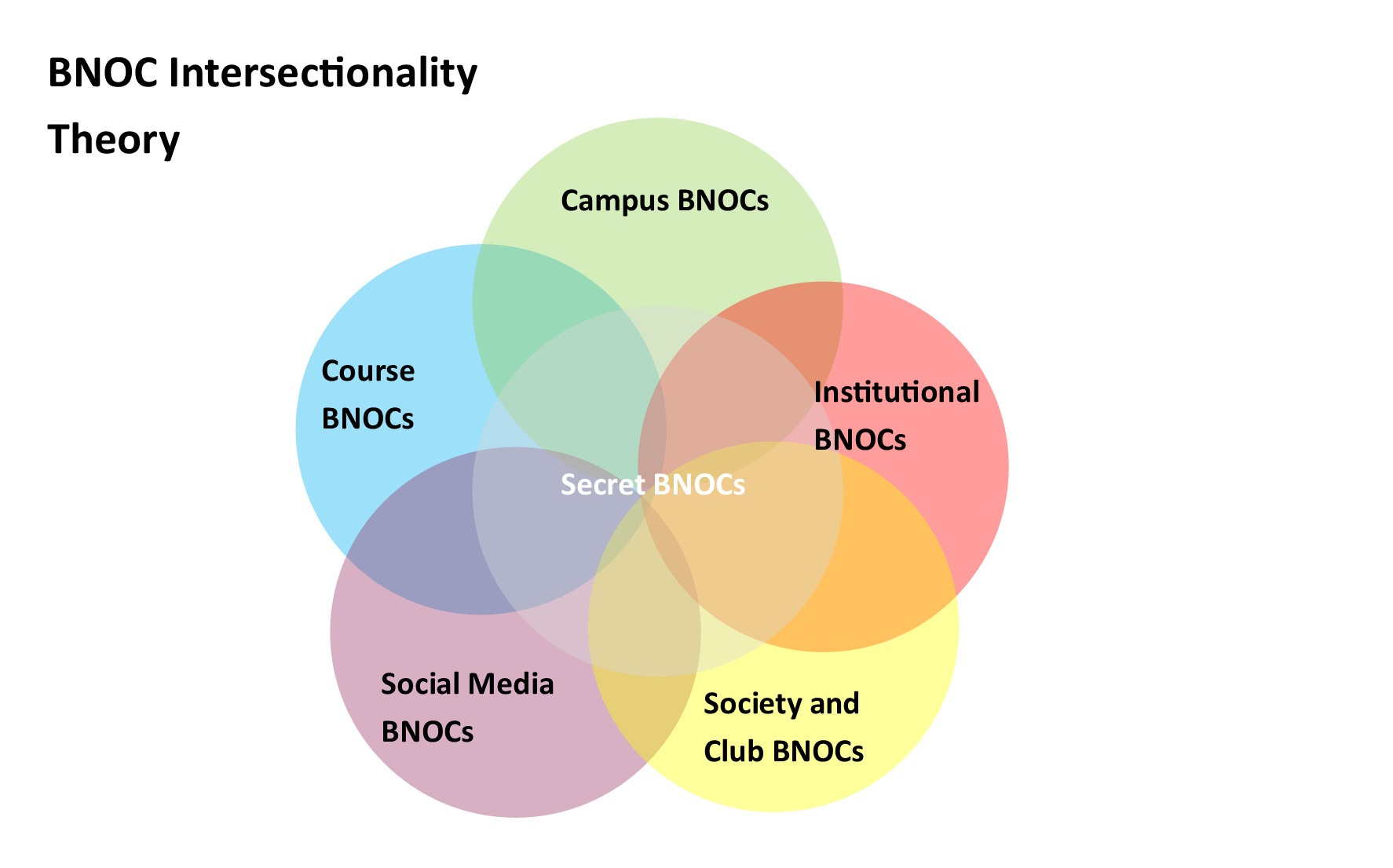
Image: BNOC Intersectionality Theory, MIT / Will Moores
Of course, all of these categories can, and do, intersect; at least, this is the argument posited by many modern BNOC intersectionalists like myself. Others have suggested the potential existence of ‘secret BNOCs’, though this relies on a conspiratorial view of university life and a belief in the as yet unproven existence of a ‘Warwick deep state’.
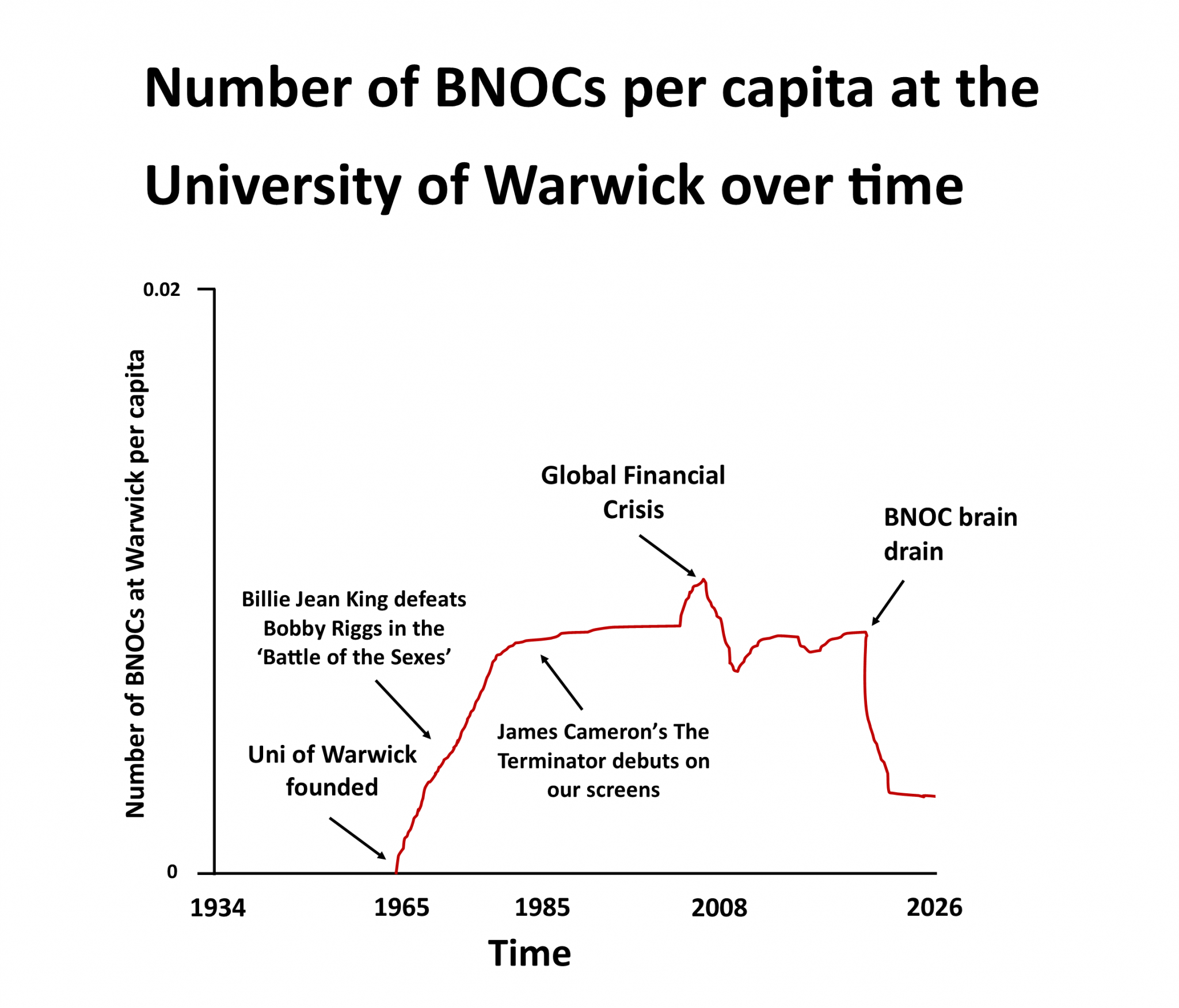
One could obviously not ‘talk BNOC’ without discussing the recent BNOC brain drain. The exodus of BNOCs last year, which supposedly left a major dearth in its wake. While this has been criticised for its golden age thinking, ignorance of up-and-coming names, and tendency towards a simplistic narrative to describe a much more complex situation, it nonetheless remains deeply true that the end of the 2024/25 period saw many famous Warwick names leave campus for presumably bigger and better things. However, perhaps I’m revealing my third-year bias, as someone who finds it hard to relate to the younger generation of incoming names and is plagued by the feeling that past BNOCs would have destroyed the new generation in competition.
Those uninterested in heeding the potential warnings of this article may currently be thinking, ‘How can I achieve BNOC status?’ Possible strategies include, but are not limited to, acting like a maniac; buying the POP! pass; getting elected to an SU position; becoming a celebrated local DJ or vice-chancellor; reading How to Make Friends and Influence People; making every week a Warwick Week; or reaching the final of The Traitors UK. In terms of what not to do (other than trying to be a BNOC, obviously), avoid residing in Canley, Earlsdon, or Whitnash and make sure not to live entirely within the confines of your own room, both enrolled at the university and totally unseen, thereby serving as an all-too-common practical example of Schrödinger’s Bluebell resident.
Perhaps the real BNOC is the friends you make along the way while trying to become a BNOC
There remain serious doubts over whether BNOCs truly even exist. At a campus of almost 30,000, it seems impossible that one student could know personally anywhere close to a tenth of them. Again, this point has its detractors, with some estimates putting the number of Warwick students who actually exist at around 6,000, making the odds of legitimate BNOC status higher. Others suggest that being a BNOC can often be a one-way street of knowing each other, as serious candidates would be unlikely to waste valuable networking time to find out about you and your life. In fact, I recently polled self-proclaimed BNOCs to find out whether they believed BNOCs existed, and, intriguingly, around 100% said yes.
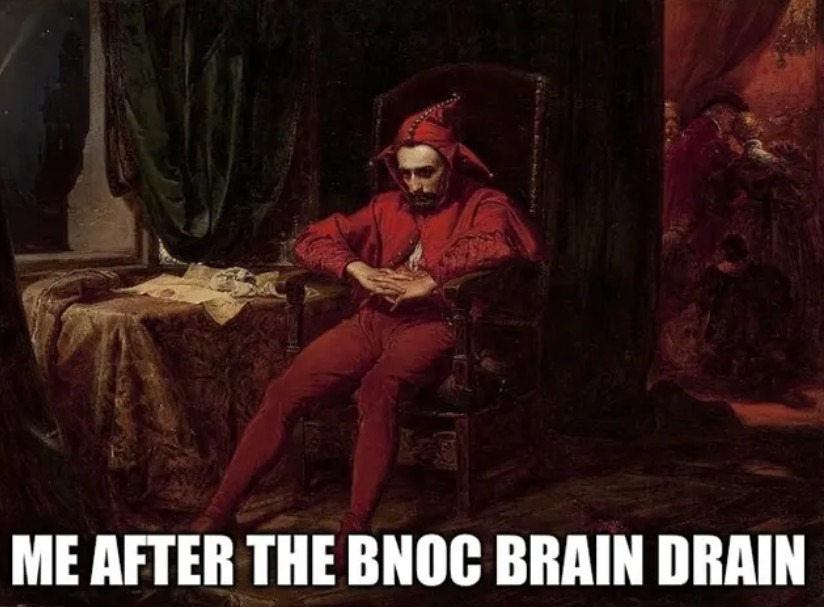
Image: BNOC Brain Drain, BNOC TV / Instagram
It is often asked why one would want to be a BNOC. I’d suggest the appeal is very simple. People like to be liked, known, or famous, and at least some of these are implied by the title of BNOC. While some would argue that this view exposes a fundamental misunderstanding of a BNOC’s place in the university social hierarchy, there’s no doubt that this alluring and socially radioactive title remains a captivating concept for many Warwick students.
Although we now know roughly what a BNOC is, a myriad of questions remain noticeably unanswered. What does it take to be a BNOC? What sacrifices have to be made? What separates the BNOC from the NOC? Do BNOCs really exist? It’s a series of huge questions and ones that I neither have the space nor the qualifications to resolve here. Perhaps the real BNOC is the friends you make along the way while trying to become a BNOC. However, if you want the answers to these queries, I imagine the only solution available to you is to become a BNOC (preferably by honourable means) and find out for yourself.
Comments