Why students are the political activists the UK needs right now
In the 2017-2018 academic year, 254,000 international students studied at a UK university. This number rose to 679,970 in the 2021-2022 academic year. It is no secret that universities are diverse places. For many prospective students, the international student population plays a significant role during the application process. In 2025, Warwick entered The Times’ ‘most international universities in the world’ top 30, boasting an impressive 38% international population.
On February 7, a protest organised by the right-wing group ‘Patriotic Alternative’ was held outside Warwick’s Shire Hall
However, while The Times might be spotlighting the University’s diversity, not everybody is such a fan. On February 7, a protest organised by the right-wing group ‘Patriotic Alternative’ was held outside Shire Hall in Warwick. While some members of the group gave speeches advocating for the deportation of undocumented immigrants, the protest strayed from divisive rhetoric to active hate speech. The MP for Warwick and Leamington, Matt Western, condemned certain protesters who gave Nazi salutes and waved a flag with a form of a Swastika. This recalls memories of the anti-migrant march organised by right-wing activist Tommy Robinson in London last year, a march that attracted more than 100,000 protesters. Such demonstrations in the UK are nothing new. In 1936, the British Union of Fascists organised a march targeting the Jewish community.
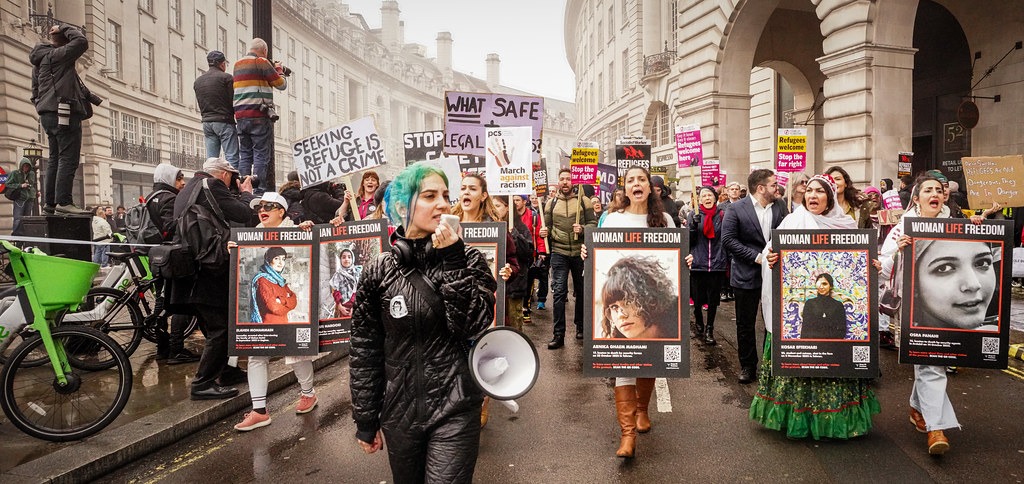
However, Britain also has something to be proud of: counter-protests that mark a collective effort against moments of division and hostility. We saw it in 1936 when the British Union of Fascists were faced with thousands of anti-fascists gathered at Gardiner’s Corner in Aldgate. They shouted “down with the fascists”; this resistance culminated in what is known today as the Battle of Cable Street. Students repeatedly demonstrate this type of resistance; students on our own campus.
However, Britain also has something to be proud of: counter-protests that mark a collective effort against moments of division and hostility
This January, the Reform councillor of Warwickshire attended an event held by the University of Warwick’s PPE Society. Unsurprisingly, this caused mass controversy as the following questions flew across campus: ‘Should he have been invited?’ ‘If he were banned based on his political affiliation, would that be impeding his right to free speech?’ ‘Is this a good opportunity to hold an MP responsible for their political beliefs, or are we facilitating hateful ideologies?’ All of these questions make sense given the current political zeitgeist; the right-wing party is rapidly rising in the polls (as of February 25 2026, Reform’s estimated poll average is the highest, at 27.3%). Many students are growing discontented with Reform’s ability to inflate hate – party leader Nigel Farage and his colleagues are fond of using inflammatory language such as comparing the current immigration rate to ‘an invasion’.
Despite Reform’s apparent encouragement of free speech, it seems Warwick students understand this liberty more than Farage’s own party members do
However, despite the anxiety such extreme rhetoric causes, students are not passive consumers of the news. When George Finch visited Warwick, outside stood a group of around 30 student protesters, angry with his invitation to their campus. And the students in the room were set on challenging his political stances, so much so that the PPE Society decided to restrict certain questions. Despite Reform’s apparent encouragement of free speech, it seems Warwick students understand this liberty more than Farage’s own party members do.
Despite this, national support for Reform is far from dwindling. In fact, it is online where their support is almost impossible to ignore. Their platforms on apps such as TikTok, primarily used by younger generations, are rapidly growing, receiving engagement that parties such as Labour and the Conservatives can only dream of. The Guardian reported that “Reform gets almost 14 times the engagement per post as the main UK parties on the platform.” A TikTok posted to Farage’s own account titled, ‘Isn’t it about time we started looking after our own people?’ has been viewed more than 4.9 million times. This type of content, specifically designed to induce anger to push engagement, is not in short supply on TikTok. 30-second clips are the perfect opportunity to spout fear-mongering ideas about immigration without providing the facts to back them up.
TikTok is kryptonite for extremists
TikTok is kryptonite for extremists. Unfortunately, young people, the app’s primary users, are falling for it more and more. In 2022, content creator Andrew Tate was banned from TikTok for spreading misogynistic rhetoric to young men, encouraging violence and hate towards the women in their lives. Tate amassed 4.7 million followers on the app, despite being charged with rape and human trafficking in Romania only a year later. There is something more important than arithmetic and literacy that we must be teaching in schools: how to identify radical content on social media.
It is important to mention the impact of extremist politics on today’s youth. It is not a problem that will solve itself. However, much of the younger generation still fights for a better future. It would be equally silly to ignore the students who attend protests and involve themselves in organisations that actively fight fascism. As a student myself, I see the effort made by young people on a daily basis to fight for the future they want; a world ruled by tolerance rather than division. The truth is that there was an anti-migrant protest held outside Shire Hall in Warwick. There were people who nicknamed themselves the ‘Aryan Front’ (an objectionable take on the far-right group, the ‘National Front’, which rose in prominence in the late 1960s). It is also true, though, that there was a counter-protest aiming to overpower the hate crystallised by the initial demonstration. Western, the MP for Warwick and Leamington, told reporters, “It was reassuring to see so many Warwick residents turn out to oppose, and heavily outnumber, the Patriotic Alternative demonstration on Saturday in the market square.” Of course, it was not only students who attended this counter-protest, but it certainly caught a large part of the student body’s attention: the SWSS (Socialist Student Worker Society) advertised the counter-protest by pinning up posters around campus. At a time when we worry about the influence of extremism on our youth, we must continue to highlight that it is this generation that will decide the politics of tomorrow.
Annam Khalid, incoming president of Warwick Student Action for Refugees who attended the counter-protest against Patriotic Alternative, reflected on her experience: “I saw the hostility of the far-right first-hand at the counter-protest against Patriotic Alternative, where drunken men shouted racist slurs at me and yelled over my friend, Gina Hardy, sharing her survivor story, all while claiming to ‘stand up for women’. Our counter-protest was diverse and full of love, representing the Britain that has been built up by people from all backgrounds. I stood there with fellow students and locals, thinking about the refugees I know and love who have become some of my closest friends – people who have fled unimaginable circumstances yet remain full of kindness, resilience, and ambition despite it all. Reform’s rhetoric is concerning but nothing new. Immigrants have been scapegoated since the beginning of time for the failures of the political elite, and we must continue to combat these lies whenever we hear them. Diversity is our strength, and it always has been.”
A place where people have the freedom and ability to fight against racist hate; a bubble defined by our diversity
As students, when we think of Warwick, we think of our campus. We think of our valuable time in seminars and the friendships we have cultivated. Students have the habit of feeling like we exist in a bubble. The bubble of university that will be popped the second we graduate. But while we’re here, let’s recognise this unique space we are lucky enough to exist in for a while. A place where people have the freedom and ability to fight against racist hate; a bubble defined by our diversity.
Comments