The female gaze in film
What is the female gaze? Film theorists generally describe the female gaze as “film narrative or media that represents women as subjects having agency.” I interpret this as the women depicted in the female gaze are shown to be credible individuals, with wants or passions unique to themselves, adding depth and quality to their characters, as male characters are cinematically depicted.
It’s shaped by intention, ethics, and craft, and isn’t a biological trait
Typically, this concept highlights that a woman’s character doesn’t require male validation to be essential to the film’s plot—whether romantic or platonic, she isn’t merely an appendage to a man’s narrative. She is also not sexualized or objectified within this narrative. Both male and female directors can achieve this gaze as it’s shaped by intention, ethics, and craft, and isn’t a biological trait. Although, a man won’t know true female perspectives. This progressive cinematic approach helps subvert stereotypes and offers fresh perspectives on topics that have been traditionally male-dominated.
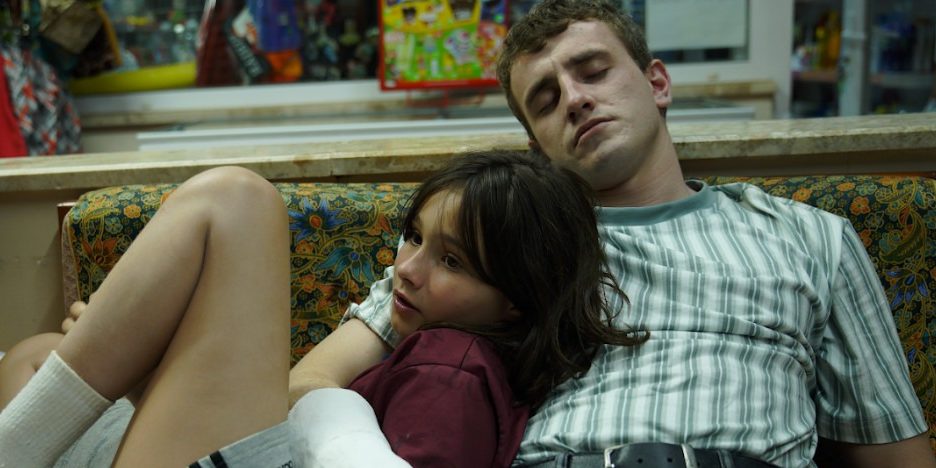
My favourite film centred around the female gaze is Aftersun (2022). The film is a heartbreakingly beautiful portrait of the understated simplicity of a young girl and her father on holiday to Turkey in the 1990s. They don’t know this is the last time they’ll spend together, making the film devastating within the subtle guise of family life. Here, the desire factor is from the young girl reflecting on the holiday to nit-pick the behaviours and actions of her seemingly normal father when she’s an adult, not knowing at the time he was suffering from depression and a desire to escape reality.
This narrative focuses on how Sophie feels when reflecting on her past, not how she looks or sidelines her father’s story
The film is framed through Sophie’s memories and her attempts to reconstruct her emotional experience of her father to understand him, rather than from an objective camera perspective. I interpret the abstract strobe-light sequences as where Sophie feels closest to her father at present, envisioning him at his most liberated, wherever he now is. Along with this scene, the fragmented narrative of memories, the use of diegetic sound, and the captivating saturation of colour emphasise that this narrative focuses on how Sophie feels when reflecting on her past, not how she looks or sidelines her father’s story. We are viewing him through her eyes; therefore, the female gaze.
Let’s compare a film exemplifying female gaze, Orlando (1992), with a well-known example of male gaze, Transformers (2007). Orlando treats bodies as subjects with interiority; the camera is aligned with Orlando’s inner life as their gender shifts from man to woman through history. The viewer sees gender as construct, not destiny. We’re invited into their consciousness and what makes them an individual: their thoughts, humour, bereavement, and pleasure. The camera watches – witnessing Orlando’s life – even when Orlando stares directly into the lens, it’s with an act of agency, not seduction.
With Transformers, however, the camera segments the female body into parts voyeuristically: legs, lips, stomach, chest. This denies the subject any control over how they’re perceived as the camera ‘claims’ their body. The viewer is positioned as a heterosexual male spectator, women becoming superficial beings, subjugated to lust. The roles of gender are ultra-rigid; masculinity is tied to action, machinery, and violence, and femininity to beauty, desirability, and emotional labour. The women aren’t people with perspectives; they’re just surface.
Comments