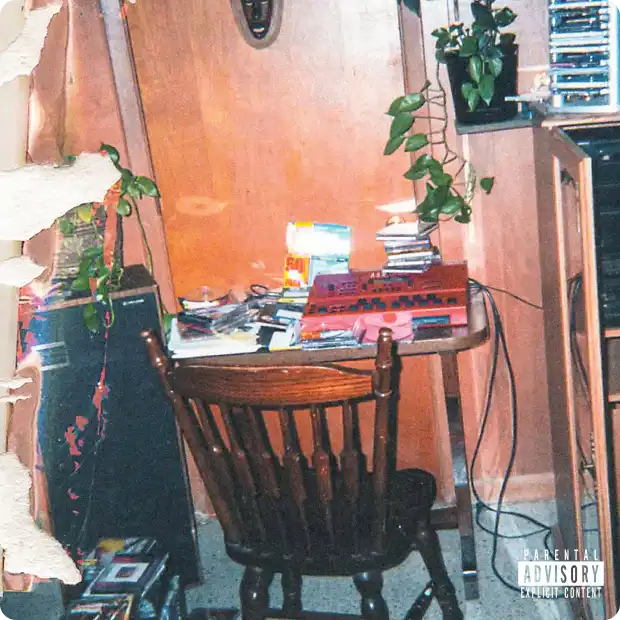
‘The Fall-Off’: J Cole’s ode to hip-hop
In the years since J Cole first released a teaser for his seventh studio album in the final track of his 2018 work KOD, titled ‘1985 (intro to “The Fall Off”)’, the gravity of expectations which fell upon this album has grown exponentially. He released numerous projects in the meantime to mixed acclaim: The Off-Season (2021) was heralded for its technical proficiency and served as a reminder of why he is one of the pillars of hip-hop, whilst Might Delete Later (2024) was viewed as one of his weakest projects to date.
Following on from mixed critical and commercial success, Cole made a potentially career-altering decision to involve himself in the feud between Drake and Kendrick Lamar, retaliating to Lamar’s verse on ‘Like That’ with his own ‘7 Minute Drill’. The move was unexpected and met with criticism, given the meddling nature of Cole’s release, leading to a public apology at Dreamville Festival, and fans admiring his peaceful sentiments. Conversely, many were frustrated by his refusal to involve himself; hip-hop is often viewed as a competition to be at the top – it was perceived that Cole was conceding defeat and thus removing himself from the top of the genre.
In Disc 29, Cole addresses the chaotic misfortunes and dangers of Fayetteville, critiquing the indoctrination of the youth in contemporary America
These instances ramped up the pressure for The Fall-Off to deliver as it promised. Also, teases from Cole suggested (and then confirmed) his plans for this to be his final album, wanting to become a producer instead. He had to go out with a flourish of glory…
Despite being a densely packed double album clocking in at 24 tracks and 1 hour 41 minutes, The Fall-Off rarely becomes predictable or lacklustre. The overarching concept of the project is divided into the two discs: Disc 29 illustrates Cole’s perspective as a 29 year old returning back home to Fayetteville, North Carolina with his newfound stardom, struggling to balance his personal life and career; Disc 39 sees him make the same journey home, but with a new sense of maturity.
Straight from the off, ‘29 Intro’ lulls listeners in a false sense of security, abruptly ending a conversation between friends to a gentle rendition of James Taylor’s country tune ‘Carolina in my Mind’, accompanied by gunshots and screeching tyres before flowing straight into the high energy ‘Two Six’, Cole addressing the chaotic misfortunes and dangers of Fayetteville, critiquing the indoctrination of the youth in contemporary America. The track’s combination of lyrical and storytelling prowess, incredible production, and demonstration of Cole’s versatility is a microcosm of the album as a whole, setting the stage for Disc 29 perfectly.
Disc 39 can be seen to be the weaker of the two sides in terms of consistency but also has arguably the highest points of the album
Throughout the rest of the disc, Cole navigates the plethora of experiences which arrived with his newfound celebrity: the subsequent three tracks ‘SAFETY’, ‘Run a Train’ and ‘Poor Thang’ all wrestle with themes of insecurity, estrangement and the inner conflict of desiring moving on whilst not forgetting where he came from. Other highlights from Disc 29 include ‘Bunce Road Blues’, a more explicit criticism of circumstances for his community, and ‘The Let Out’, which tells the story of Cole fearing for his life at the end of nights at the club with cinematic production accentuating his storytelling and imagery.
The disc ends with the track ‘Bombs in the Ville / Hit the Gas’, culminating in Cole from his current perspective rapping conceptually, talking to his younger self on FaceTime and showing him that everything will work out, whilst also referencing his state of mind in the final verse: “This is The Fall-Off, I’m falling’ off, how? / The rappers do when they can’t find a new sound / Missin’ the day they were hot all year ’round / But life is a film that cannot be rewound.”
Disc 39 can be seen to be the weaker of the two sides in terms of consistency, but also has arguably the highest points of the album. The first three songs are all excellent in their own regard: ‘39 Intro’ reintroduces Cole as an artist with a point to prove after being criticised over his apology, with intricately navigated rhyme schemes and bars for days; ‘The Fall-Off is Inevitable’ sees him autobiographically tell his story in reverse, reframing his successes and failures as fleeting; and ‘The Villest’ featuring Erykah Badu mellows the tone with introspection over a gentle, melodic beat.
Rather than fight violence with violence, Cole fought against the critics by mastering his craft, demonstrating his dexterity as a rapper
Although it has some weak points, this disc contains tracks which I’d argue are some of the best in Cole’s discography. ‘I Love Her Again’ is a storytelling masterpiece which sees Cole detail his love and relationship with hip-hop, metaphorically embodied as a woman he lusts after. The penultimate, vulnerable track ‘Quik Stop’ is one of the most moving of the album, where Cole lyrically details an experience meeting a fan who thanks him for the consolation and catharsis his music had provided; the impassioned delivery and stripped back nature make it a spine-tingling prognosis of his frame of mind and what he values, demonstrated in the final lines: “This life is more than just rap / It’s the difference you make.”
Despite the weight of expectations, there is no doubt that The Fall-Off is one of Cole’s greater projects, easily capable of becoming his Magnum Opus and an all-time classic. Rather than fight violence with violence, Cole fought against the critics by mastering his craft, demonstrating his dexterity as a rapper with an enormous range of flows, melodic choices and masterful production throughout. Whilst it may not have the mass appeal and commercial hits that other artists strive for, it is a love letter to the genre and a classy closing chapter for one of hip-hop’s greats.
Recommended Listening: ‘SAFETY’, ‘Bunce Road Blues’, ‘I Love Her Again’
★★★★★
Listen to The Fall-Off here:
Comments