‘Tere Ishk Mein’ Review: A Passionate Story, but does it work?
Tere Ishk Mein is fantastically fierce, fiery and frantic, with a captivating first half, but it undeniably undoes a lot of this good work with its puzzling second half.
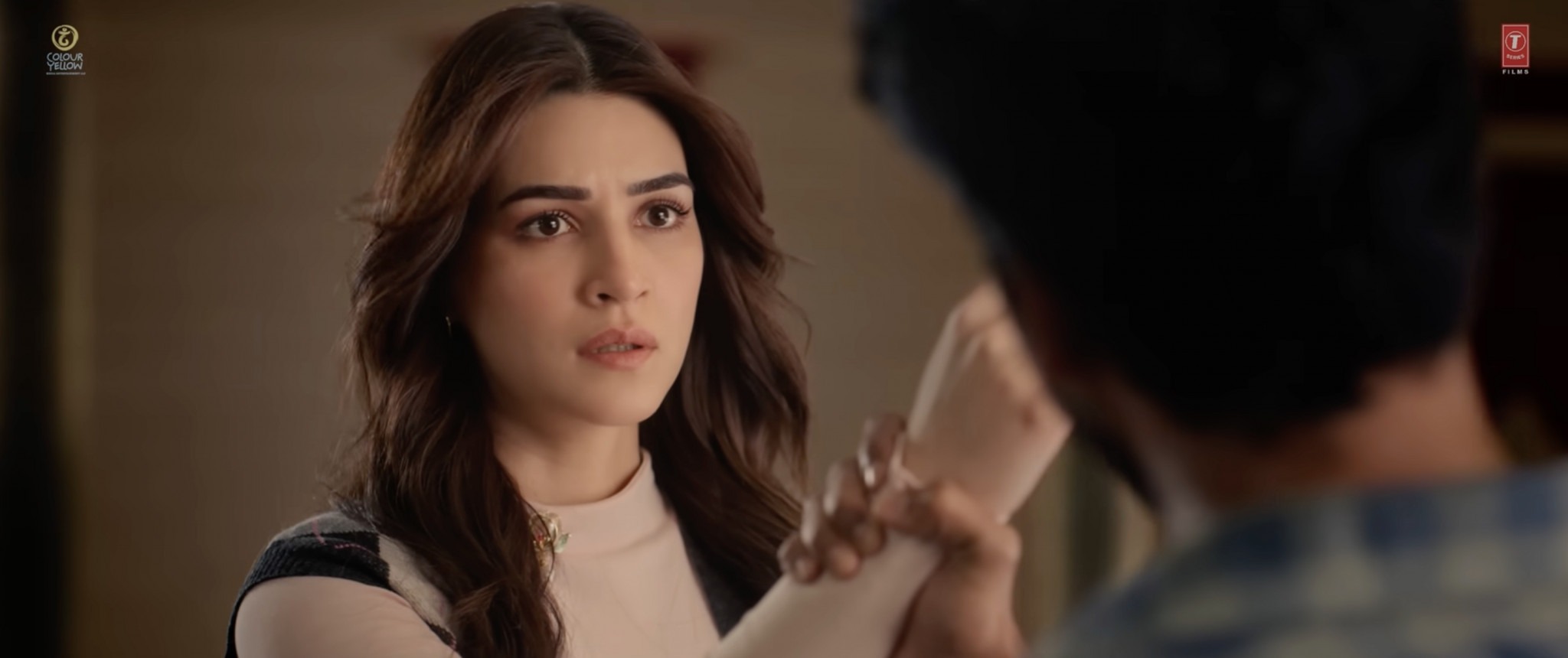
The acting performances unquestionably elevate the film. Aanand L. Rai’s Tere Ishk Mein stars Dhanush, who makes a long-awaited return to Bollywood, and Kriti Sanon in its lead roles, and both impress. Dhanush expertly portrays Shankar’s emotional unpredictability, longing and rage, emoting well, although at times the delivery of his Hindi dialogue feels slightly awkward. Kriti delivers another accustomed performance, particularly excelling in emotional scenes. The supporting cast, Tota Roy Chowdhury for example, all do a fine job.
The film’s score supplements the film well, and AR Rahman once again does a wonderful job, with a soundtrack that encapsulates the audience. The title track is incredibly powerful, but perhaps does not get the crowning moment it truly deserves, which could have aided the film.
While the true trauma he faces could perhaps be explored a little further, the film succeeds in hooking its audience.
Ultimately, Tere Ishk Mein is best assessed when split into its two parts. The first half is gripping; Kriti and Dhanush’s chemistry shines through, and Dhanush’s character is especially intriguing. There’s a lot to unwrap regarding Shankar, and while the true trauma he faces could perhaps be explored a little further, the film succeeds in hooking its audience. Shankar’s unhinged nature too leaves you on edge, and this combined with Kriti’s driven yet bubbly nature, creates a wonderful fire-and-ice-like dynamic, even if the reasons for their initial alliance are peculiarly chosen.
The film is poised for an enticing second half, but it becomes over-chaotic. There isn’t much need for the IAS plot, and while it shows Shankar’s passion, it feels somewhat rushed and gives the film a directionless sense. With the film’s runtime standing at 2 hours and 47 minutes, it’s not outlandish to suggest that this could have been reworked slightly.
However, the film regains momentum upon returning to Shankar’s all-consuming and obsessive love, after the powerful scene that takes place at Mukti’s house, and there’s a nice cameo that invokes a sentiment of nostalgia in the audience.
It seems as though the Bollywood alpha male that destroys themselves in the name of love is becoming less watchable.
Yet, the character arc Mukti embarks upon is rather confusing. It is surprising, and is too far-fetched, especially for someone with a doctorate in psychology. For someone to take such poor care of themselves is unreasonable, especially given her view of her relationship with Shankar for seventy percent of the film. Jasjeet’s character seems underused and could be explored further, in order to give the film’s ending more weight. It leads to a scrambled final 45 minutes of the film. The Kamikaze-style ending also just doesn’t seem to fit. It seems as though the Bollywood alpha male that destroys themselves in the name of love is becoming less watchable.
It could also be argued that Kriti Sanon’s character attempting to completely destroy herself and her unborn child, for an entitled, hotheaded and chauvinistic man is not only uncomfortable to watch, but also directly contrary to the message that Bollywood ought to be sending out. It simply does not come off, and is too problematic to watch.
Tere Ishk Mein is worth a watch for its acting performances, but it loses its legs as the film goes on. The first half of the film is excellent, and it sets up the latter half rivetingly. Dhanush’s character is written well, and the audience quite literally gets lost in Shankar’s fiery passion. Yet as the film develops, its intense nature goes overboard, and it gets lost in its own world, leading to confusion and an unfeasible climax. It becomes inconsistent, with a number of impractical plot points, especially regarding Kriti Sanon’s Mukti. There seems to be no explanation for her almost instant transition from solidity, drive and emotional clarity, to unstable, desperate and self-destructive, all for the one person she spends the majority of the film being unable to relate to.
Tere Ishk Mein is fierce, but it doesn’t always make sense, and is, at most, a one-time watch.
Comments