Shedding light on the Jordanian film & TV industry
Jordan, a Middle Eastern country, is located on the East Bank of the Jordan River, in the Levant. In the past decade, the Jordanian film industry began to pursue globalisation by not only producing TV shows that appeal to Jordanians but also producing ones that are compatible with the taste of the Western world.
This shift in strategy wasn’t just about entertainment; it was a calculated move to transform Jordan into the “Hollywood of the Middle East” over Egypt, which has been holding the lead in this region. By utilising the diverse Jordanian landscape, notably Wadi Rum and Petra, the film industry is able to keep all of its filming natural, ditching green screens and CGI as much as possible.
Releasing TV shows on Netflix wasn’t Jordan’s first step towards having a global film market. The country had already established itself as a filming destination for international blockbusters, such as The Martian. Directors were drawn to its landscapes long before Jordanian series reached Western audiences. The Martian used Wadi Rum’s red desert as a representation of Mars. Aladdin similarly relied on Jordanian terrain to construct its fictional kingdom. These productions showcased Jordan’s ability to efficiently host large-scale, high-budget filming operations.
Jordanian TV shows were no longer constrained by borders
The turning point for Jordanian media came with the entry of global streaming TV series. The 2019 release of Jinn, Netflix’s first Arabic original series, marked the globalisation of the industry and the departure from traditional ‘Musalsalat’ (Arabic word for ‘series’). By blending local folklore with a supernatural teen drama format familiar to Western audiences, Jordan proved it could export modern storytelling. Furthermore, Jinn ensured that the use of the Arabic language would be a strength rather than a weakness, by using a style of language that doesn’t sound ‘tough’ to Western audiences by incorporating English words in their sentences and avoiding emphasis on letters that may seem unfamiliar to the Western audience. This move was one of the talking points in domestic debates regarding the accuracy of Jordanian culture in the TV show.
While the show sparked domestic debate over cultural representation, it succeeded in one major way: It signalled that Jordanian TV shows were no longer constrained by borders.
Despite Jinn causing countless amounts of domestic backlash, this didn’t stop the media industry from globalising. Two years following the release of Jinn, a new series emerges from the walls of Amman: Al Rawabi School For Girls.
Al Rawabi gave Jordanian women a global voice on unspoken issues
Tima Shomali was aware of the controversies surrounding Jinn and attempted to lighten the burden by giving Al Rawabi some meaning and raising awareness of issues in Jordanian schools, such as bullying and the hierarchical social structure of Jordanian high schools. Al Rawabi begins as a familiar high school drama, but it quickly spirals into a dark turn, illustrating the lethal intersection of social media toxicity, cyberbullying, and rigid cultural expectations. By the second season, the show shifts focus to a new class, tackling the devastating impact of digital validation and eating disorders among women. Al Rawabi wasn’t just a source of entertainment but rather gave Jordanian women a global voice on unspoken issues. Despite all the positives that came with Al Rawabi, locals continued to criticise its ‘softness’ and that it was ‘too western’; it continued to thrive, trending across Europe and Canada.
The Boar interviewed Tara Abboud, (Sarah), the lead actress of Al Rawabi School for Girls . She addressed the backlash regarding the ‘New Age of Jordanian Media’ by saying: “People are going to talk whether you get involved or not. The important part is taking every opportunity to do what makes you happy.” (Translated from Arabic)
She further added advice for those seeking to enter the film industry: “Whether it’s your local theatre, or a small musical. You need to find as many opportunities as possible, no matter how small they seem. You never know who you’ll meet there, because your network is a key player in deciding if you’ll get a big role or not. Once you do, all else shall follow.” (Translated from Arabic)
The Jordanian media industry looks bright
A catalyst for this globalisation is the Royal Film Commission (RFC). Founded with the vision of making Jordan develop a competitive, sustainable, and professional film and audio-visual industry. The RFC has fostered a generation of bilingual filmmakers who can speak to the Jordanian heart while maintaining the pacing and production value expected by international distributors.
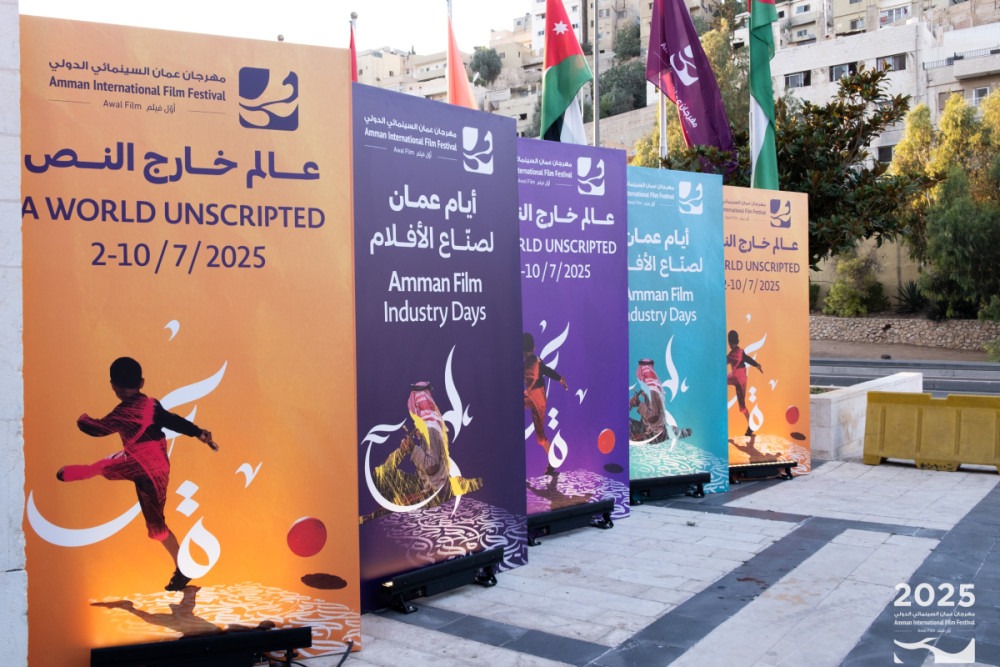
The RFC further collaborated with the embassies of European Countries such as France and Spain to host the ‘European Film Festival’, a month-long film festival with free screenings for everyone in Amman to attend, as a form of encouragement to get people into the film and TV industry. Alongside the film festivals, the RFC hosts film workshops for educational purposes, completely for free.
All in all, the future of the Jordanian media industry looks bright, and the Royal Film Commission is committed to it with the resources at its disposal.
Comments