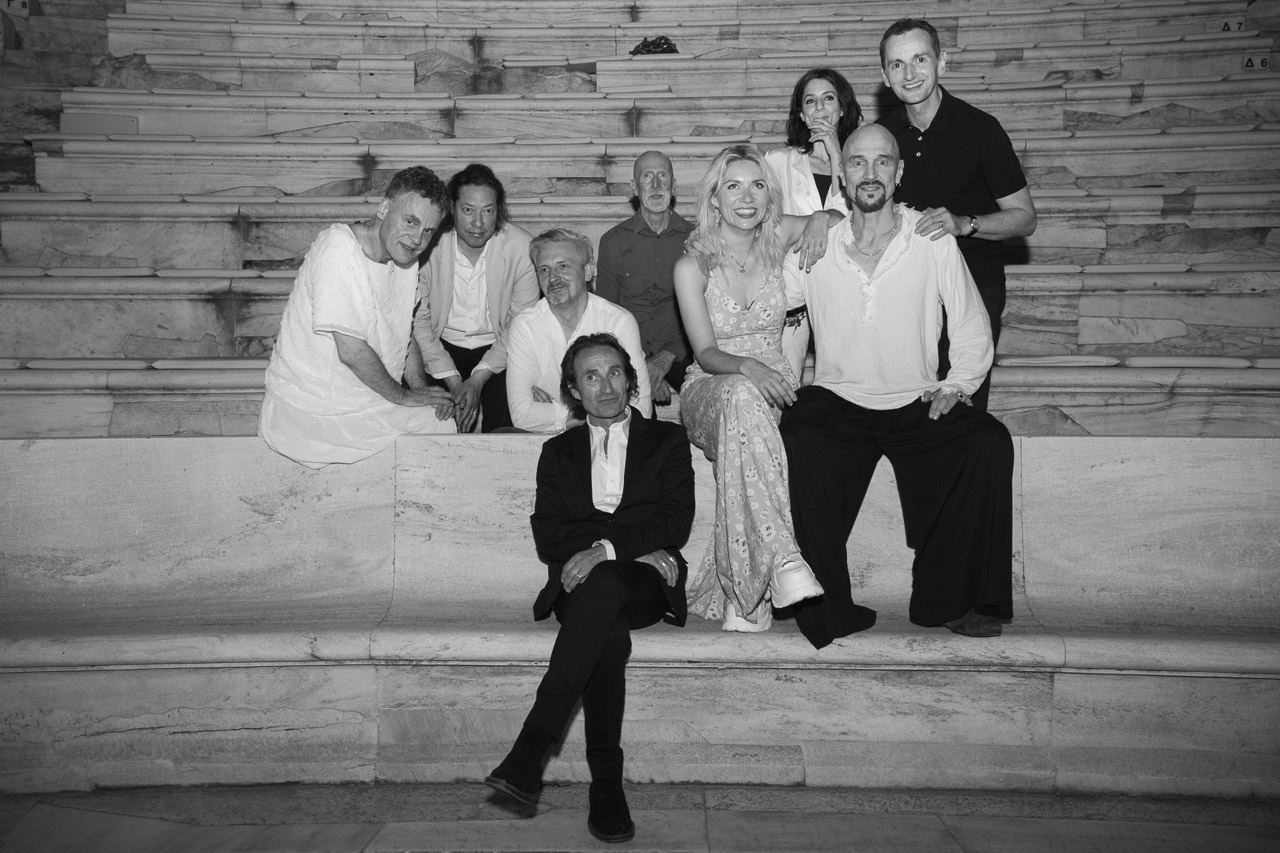
“It’s so special, it doesn’t even require a comment”: Saul Davies on James’ ongoing Love Is The Answer Tour
“This is a deeply philosophical conversation, I thought we were just going to talk about some fucking pop music”.
A conversation with Saul Davies, guitarist and violinist of the band James, was never going to be a typical interview. The band are in the midst of a global tour and spent the weekend playing at the iconic Liverpudlian venue, The Cavern Club, which is naturally where my conversation started.
“No, I mean, it’s special, isn’t it? I mean, as in, it’s so special, it doesn’t even require a comment”. He laughs at the fact that The Cavern Club has been moved across the road from its old location, and yet they transported the bricks across in order to try and keep some of the venue’s historic value. And what a historic legacy it has. “Like there’s a photo outside the dressing room at the cabin of Brian Epstein sat, you know, smoke around him, sat on the side of the stage. And at least one of The Beatles is on behind him. You can’t quite see; it’s not very clear. And I just thought this really struck me. I was standing staring at it for a bit yesterday, because I was, I was struck by how that’s kind of probably like he might have known, I don’t think he did really what they were up to him, and he obviously wanted his band to be successful, but I’m not sure, yeah, early, early, early, they knew what was really going on or where they were going to go. No one could say really. And I look at that photograph, and I think, fucking, hell, yeah, fuck, that’s it, yeah. It’s little moments like that, just caught by somebody, like that’s it. That’s when your culture changes, and little moments which become big moments”.
The band are doing the media circuit to promote their tour, which involves not only speaking to me but also much of the British media industry. Although used to the landscape by now, Davies still enjoys what shows like Sunday Brunch offer to artists. “It’s ironic that one of the last places a band can play live on British television is a cooking show. Yeah, so be it. It’s simple, appropriate for a Sunday morning”.
As soon as you start to crystallise into things that people can really get their heads around … there’s a simplicity and a directness to some of that
Saul Davies
James are a band well known for their changes in sound between projects, and this is definitely a conscious decision. “I’m not sure how radical you could be without completely turning everything upside down. You know what I mean? Like, there’s a limit to that. Like, what you know, at the end of the day, we still have to write songs, right? So, like, if you start out weird as fuck, like Radiohead, then you can continue being weird as fuck”. This is not how it always was for James, however. “I mean, I suppose very early James was odd as hell. But as soon as you start to crystallise into things that people can really get their heads around, and there’s a simplicity and a directness to some of that, then you become that, don’t you?”. That change is massively important for the band; it keeps them sounding fresh and interesting. “Otherwise, I think we’d feel like we’d maybe got stuck in a rut”.
James may be over 40 years old, but it is their ability to transform their sound and image that allows young people to connect with them as they do. Saul explains, “I think as our fanbase, for me, is growing, with a lot of younger people coming, and to those people that are coming, they might be the kids of our original fans, grandkids, even in some cases. And the thing is, there’s no shame in liking us anymore, right?” He sees James as the antidote to modern live performances: “People want a relief from the intensity of the show. I just want to go and be uplifted or made to cry or watch something I don’t know. We’re much more like a football team, you know, a not very good one, League Two maybe”.
The 70s were a moment, and it is impossible to ignore how growing up then influenced not only Davies and his band but the wider musical landscape of the time. It was a stark contrast to how people grow up today. “It’s a strict counterpoint to everything that we were given, which was nothing in the 70s, given anything you were just told, fuck off and get on with this now means that people from some people, there are people from the 70s kind of like a fucking another planet done it?”
He references a book he has been reading on the subject. “It’s a study that’s been done about the hard wiring of people’s brains through those experiences. ‘We don’t take cash’ is a very good example of this. Oh, so I can’t even go through the micro activity of finding the money, counting the money in my hand, which is good for my brain, yeah, it allows me to compute. And then I can, and then we can transact. And through the computation of getting the grotty coins out of your pocket and transacting, we engage on a level that’s gone and that level which is essential to human interaction. Once you take that away, you end up with a bunch of people, all of us in the United Kingdom, and across the West, who are very compliant”.
The music is unrecognisable today compared to what Davies grew up with
It’s not only the society around us that is a far stretch from the 70s; the music is unrecognisable today compared to what Davies grew up with. “Having Pink Floyd is a soundtrack to you growing up, I don’t feel like there is almost a band like that, or an artist like that, which is creating messages for the current generation in a way, not on the level, no, not with that level of bravery and completeness. The Wall is a masterpiece. Well, I mean, and I think anybody who’s not heard it would probably listen to it now and go, fucking hell yeah. What were they doing, these guys back then? Why are we not there now? You know, well, for all sorts of reasons. Yeah, because we’re not allowed to use cash in the shop. Partly, you know, I know that’s a leap, but it but yeah, one begets the other”.
We eventually bring the conversation back to music, discussing the overuse of technical elements such as compression, EQs, and saturation; perhaps another allegory for the current climate. The band may be over 40 years old, but somehow, they seem as relevant to the cultural conversation as any band working today. It is clear that they have a deep awareness of the past and how it has shaped not only themselves but the music industry around them, and it makes any new project a tantalising prospect.
Comments