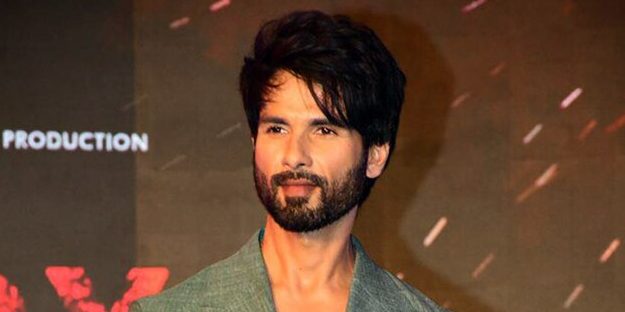
O’Romeo: Did Vishal Bhardwaj and Shahid Kapoor’s return disappoint?
The majority of O’Romeo’s audience over Valentine’s weekend left cinemas underwhelmed. After a long wait, the enigmatic duo of Shahid Kapoor and Vishal Bhardwaj have joined forces once more with great fanfare, but despite strong technical elements, the magic we are so accustomed to seeing from the pair just doesn’t seem to be there.
This review contains spoilers for O’Romeo.
The film’s cast is undoubtedly strong and deserves great credit. Shahid Kapoor simply wows and gives the role everything he has. His grit, dialogue delivery, performance in action sequences and dance moves are all superb. He is brilliantly ruthless and leans fully into Ustara’s obsession.
Tripti Dimri also does a very fine job. She balances being a damsel-in-distress with great determination and willpower, as we’ve seen her do before, and she shows great adaptability and strength even as her character’s role in the story feels a little confusing. Avinash Tiwary does his best to look menacing but is massively hindered by the desperately disappointing writing of his character.
Nana Patekar’s comedic timing is strong, and Farida Jalal, Disha Patani, Vikrant Massey and Tamannah Bhatia all do well in roles that are essentially extended cameos. Certainly, Vikrant Massey’s wonderful ability to emote with his eyes is on display again despite limited screen time, while Farida Jalal swearing on screen is something someone who grew up watching Kuch Kuch Hota Hai and Kabhi Khushi Kabhie Gham may never get used to. However, and it must be re-stated, Shahid Kapoor is the standout.
Shahid Kapoor fails to deliver the one thing the others do: box office success.
Social media discourse recently has centred around a ‘Bollywood top three’, as discussed recently by Tried&Refused Productions, and understandably so, given that the unprecedented dominance displayed by the Khans has long waned. Ranveer Singh and Ranbir Kapoor’s seat at the top table has been confirmed after brilliant performances and box office successes in films such as Dhurandhar and Animal, while Vicky Kaushal’s name has also frequently been thrown into the hat. There is no doubt that Shahid Kapoor is no less than these three, certainly when it comes to talent. He’s undoubtedly given countless strong performances throughout his career, and displayed versatility, such as in Haider, Udta Punjab, Padmaavat, or earlier in Jab We Met, Chup Chup Ke or Kaminey.
However, while all four of these actors have the respect of critics across the country, Shahid Kapoor fails to deliver the one thing the others do: box office success. Commercial success is crucial: there’s a saying that critical success earns respect, while commercial success earns stardom. Without the latter, Shahid Kapoor cannot be considered among Bollywood’s brightest stars, despite undoubtedly having the talent to be.
It seems, when choosing his scripts, Shahid focuses more on the type of character he is playing, rather than the film as a whole, and at least here this appears to be the case. It was hoped that by rejoining Bhardwaj, the duo that brought us gems such as Kaminey and Haider could once again work their magic at a time when the actor needs it. Ustara is beautifully dark, complicated and obsessive, but he exists within a story that does not reach the heights it promises to.
Aesthetically, the film is on point, from its framing and camerawork (especially during action scenes) to its costumes and sets
There certainly is a lot to like about O’Romeo, aside from its acting performances. Shahid Kapoor’s introduction as Ustara is straight out of a wild west thriller, and the Badlands of Mumbai are recreated beautifully. Aesthetically, the film is on point, from its framing and camerawork (especially during action scenes) to its costumes and sets. Bhardwaj has clearly spent a lot of time perfecting these sets and detailing how he wants to convey his world, and it doesn’t disappoint.
In this way, the film does justice to its massive budget by looking the part. The humour that makes Vishal Bhardwaj’s films stand out largely lands but is used sparingly, mostly through Nana Patekar’s character. The film’s item song, ‘Aashiqon Ki Colony’ underwhelms, but aside from this, the music complements the film nicely. In particular, the emotional songs included in the film work well, and Vishal Bhardwaj as a composer does fantastically. Given his recent announcement of his decision to retire from singing in films, Arijit Singh’s voice shines through and is a treat to listen to.
Another area where the film’s music aptly complements the screenplay is in O’Romeo’s action scenes. The film’s action is a real area of strength. The choreography of the action scenes looks very slick, and Shahid fully leans into the role and devotes himself to its bloodthirsty requirements. The decision to play ‘Dhak Dhak’ during the film’s first action scene is excellent, continuing a trend seen recently in Hindi films, like in Dhurandhar, of retro songs accompanying bloody action.
Perhaps the best action scene is when Ustara takes down a group of Jalal’s henchmen in the rain: it is exquisitely edited, and Shahid Kapoor is ruthless once more. However, like many aspects of the film, the action scenes do tail off, and the climax is especially disappointing, focusing more on style than substance when the story moves to Spain. The editing is not as slick as earlier sequences, and elegance is prioritised over emotion. Shahid Kapoor continues to shine but is let down as the scenes become over-theatrical and emotionless.
As alluded to, the film tails off after a solid first half. Bhardwaj devotes ample time to creating his world, but it unravels messily following the interval. Tripti Dimri’s character takes turn after turn and it’s almost as if Bhardwaj cannot settle on a backstory for her. Consequently, her initial mission appears to get lost, and it becomes difficult to track the film’s storyline. There are too many unnecessary reveals that make the film confusing to follow, and not in a good way. Furthermore, while Vikrant Massey’s cameo is strong, especially involving the scene of him lying in bed wounded, a prolonged insight into his and Tripti Dimri’s backstory would have been beneficial. The same could be said for Shahid Kapoor and Tripti Dimri’s relationship. We do not fully understand when Ustara falls in love, and how he does so as intensely, and in keeping with the film, the relationships viewers are informed of do not match the generic relationships they are shown. The flashback scenes seem somewhat out of place and after promising so much, the second half lets the film down.
As previously mentioned, Avinash Tiwary acts well but is limited by his role being very poorly written. It feels as though his ability and versatility as an actor remain unexplored in O’Romeo and his character certainly could have been portrayed as a more menacing villain. He looks fearsome, but the film never truly shows us why we should fear him. He is merely introduced as the antagonist: think of the introductions of Arjun Rampal and Akshaye Khanna in Dhurandhar, or Bobby Deol in Animal, and Avinash Tiwary’s is practically non-existent. He spends too much time posing in extravagant Spanish outfits despite his criminal empire coming under threat, rather than being proactive as a credible villain would. Furthermore, in his biggest opportunity to shine, the climax scene, the action is underwhelming, given what came previously. One can’t help but feel as though he is more talented than his character in O’Romeo suggests.
If Indians are disappointed with the recurring stereotypical Hollywood portrayal of India […] then Spaniards may justifiably feel as though their identity has been similarly flattened through the monolithic depiction of bullrings, flamenco and masks.
The storytelling decision to shift the movie to Spain made very little sense. Bhardwaj manufactures an incredibly culturally naïve depiction of Spanish identity, and the inclusion of bullfighting feels unnecessary. The Spanish spoken in O’Romeo is also laughable. If Indians are disappointed with the recurring stereotypical Hollywood portrayal of India (think of the classic long shot of a temple in the sunset with a sitar or tabla playing in the background), then Spaniards may justifiably feel as though their identity has been similarly flattened through the monolithic depiction of bullrings, flamenco and masks.
As someone currently living in Spain, it feels very out-of-touch with Spanish life. This decision is another classic case of Bollywood’s obsession with using a splendid location for the sole focus of shooting a climax scene which largely underwhelms. This decision contributes nothing to the plot and appears to be done solely for production reasons and to create a big-budget film. One can’t help but feel that a Bombay showdown would’ve been much more effective, and in touch with the film, rather than relocating a Mumbai gangster to Spain for the sole purpose of using him as a matador.
Ultimately, for all the hype surrounding O’Romeo pre-release, the end-product is rather underwhelming. Despite being technically sound, with excellent acting, entertaining action sequences, and beautiful aesthetics, the film is let down by poor production decisions. The climax of the film shifting from the breathtaking Badlands of Bombay to a Spain that is chaotic and tonally discordant is utterly senseless and done solely for commercial reasons. Furthermore, after its intermission, O’Romeo becomes difficult to follow and unravels. Too many unnecessary twists make it confusing, and coupled with lazy writing and a lacklustre, toothless villain, curb what could have been an intriguing conclusion.
O’Romeo is certainly watchable. However, despite great work from certain individuals, it ultimately fails to meet its lofty ambitions and can only be described as underwhelming.
★★★☆☆
Comments