Michael On The Move: Exploring China
Hello all, and welcome back to the latest edition of Michael on the Move. I hope you enjoyed exploring somewhere a little closer to home last time, since for this edition, we’re venturing much farther…
This country is the second most populated country in the world and the third largest by land area. A global manufacturing hub and economic superpower, it has given the world transformative inventions such as paper and gunpowder. The country is well known for its giant pandas, an extraordinarily diverse cuisine and a rich tea culture. It’s also home to some of the world’s most iconic landmarks, like The Great Wall and the Terracotta Army.
I am, of course, talking about China!
With a population of 24.87 million, more than the UK’s five biggest cities combined, its scale is truly staggering
It almost feels misleading to title this piece Destination China, since China is vast and no single article could possibly do it justice. From exploring Beijing’s Great Wall and Forbidden City, to admiring Chongqing’s striking architecture, meeting the pandas in Chengdu, or wandering through Xian’s Terracotta warriors, palace and ancient city walls, the possibilities are endless. These are just a handful of the remarkable places you could discover, even if, unfortunately, they won’t all make it into this section.
Instead, I will be talking about Shanghai.
Shanghai is located on China’s central coast and is both the country’s largest city and a major global financial hub. With a population of 24.87 million, more than the UK’s five biggest cities combined, its scale is truly staggering. In summer, temperatures often climb into the low 30s°C, while during the winter, you can expect lows of 1°C. I’d recommend visiting in spring or autumn, when the weather is milder and far more comfortable, making it ideal for sightseeing.
I’d highly recommend heading up to the observation deck, where you’ll be rewarded with a 360-degree bird’s eye view of the city
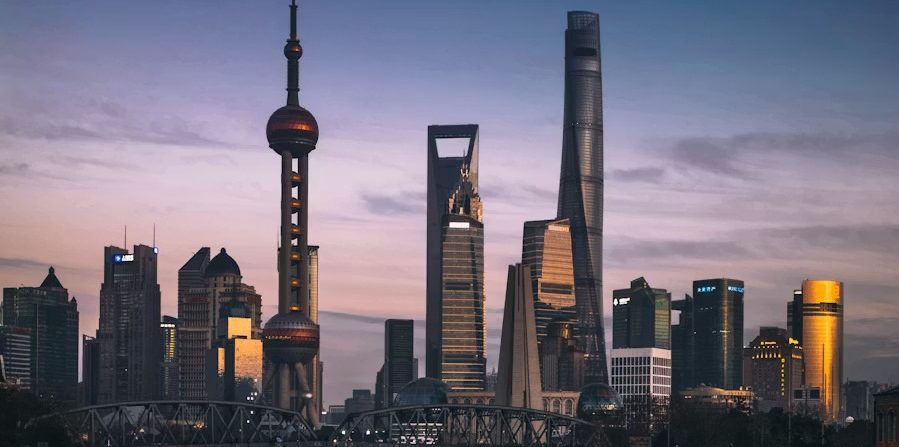
One of the main reasons to visit Shanghai is its extraordinary architecture. A trip to Shanghai Tower, soaring 623 metres into the skyline, is a must. The tower is filled with high end offices, one of the world’s highest hotels and highest observation decks. Inside, you’ll find nine indoor vertical gardens, retail spaces, restaurants (including a Michelin starred one) and even a museum. I’d highly recommend heading up to the observation deck, where you’ll be rewarded with a 360-degree bird’s eye view of the city. Having been to a few observation decks in New York, I cannot recommend them enough. I would especially recommend going in the evening when it is dark, since you’ll be able to see the city illuminated in a sea of lights which makes the experience all the more breathtaking.
If heights aren’t quite your thing, a stroll along the Bund is the perfect alternative. This waterfront promenade is also a protected historical district in central Shanghai, offering some of the city’s most iconic views. From here, you can see the Oriental Pearl Tower, the soaring Shanghai Tower, the Jin Mao Tower (the third tallest building in Shanghai, home to shopping malls and a hotel), as well as the World Financial Center, among many others. Once again, I’d suggest visiting after dark, when the skyline is fully illuminated.
With its traditional pavilions, serene ponds and carefully designed landscapes, the garden offers a beautiful glimpse into historic Chinese culture and aesthetics
Beyond the soaring skyscrapers, Shanghai also offers tranquility in classical Chinese gardens. I’d highly recommend the Yu Garden, which dates back to the Ming Dynasty. With its traditional pavilions, serene ponds and carefully designed landscapes, the garden offers a beautiful glimpse into historic Chinese culture and aesthetics. That said, it’s worth planning your visit carefully since the garden tends to be overcrowded. It’s therefore best to visit in the early morning and hopefully get there before the crowds do.
While you’re in the area, it’s well worth stopping by the City God Temple of Shanghai, located right beside Yu Garden. The temple is unique for honouring three City Gods within a single temple: General Huo Guang of the Western Han Dynasty, Qin Yubo, a respected scholar from the late Yuan and early Ming periods, and Chen Huacheng, a national hero from the late Qing Dynasty. The Temple is also a great example of traditional Chinese architecture, with its north-south orientation and symmetrical layout. If you’re keen to see a site that truly showcases classical Chinese architecture, the City God Temple is a must!
As with many of these articles, I’ve inevitably run out of space to mention everything Shanghai has to offer. In researching this piece, it quickly became clear just how much there is to do in Shanghai: from visiting its Disneyland Park, Zhujiajiao Ancient Town or even just trying some of the culinary delights. I hope this has given you a glimpse into what makes Shanghai so special and that I have inspired you to explore this great city yourself.
Until next time…
Comments