Hawk or dove? Trump’s Fed Chair dilemma
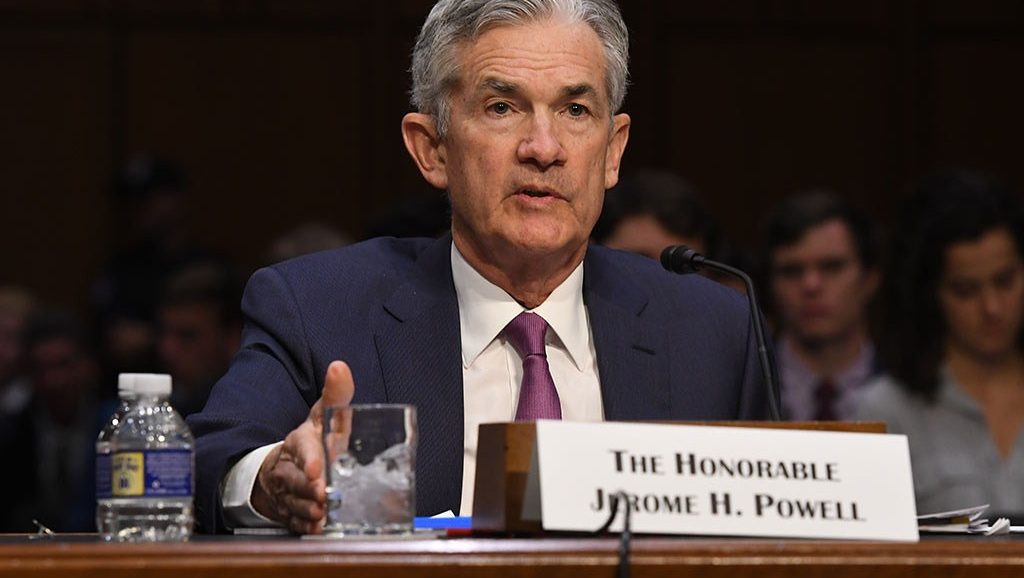
It is no secret that there is very little love lost between President Donald Trump and his Federal Reserve Chair Jerome Powell. Ranging from strongly worded Truth Social screeds to a criminal investigation into Powell’s renovations of Fed buildings, Trump has spent the last year waging a war to loosen American monetary policy dramatically. Fortunately for the President, he’s got 3 years left in his administration, while Powell’s term at the Fed ends in May, potentially paving the way for a more harmonious relationship between the American president and the central bank, as Fed Chairs are nominated by the former. There is a key wrinkle in this happy picture, though: the Federal Reserve is legally independent in setting interest rates from both the President and Congress, and so unless Trump’s new handpicked successor for Powell, who himself was appointed by Trump in 2018, toes the Presidential line, the relationship between White House and the Fed may prove just as unhappy.
Had Trump had a more compliant Fed Chair, the US economy might’ve looked very different at this point. Treasury bonds could have gotten significantly more expensive owing to the inverse relationship between interest rates and bond prices, as older bonds bought under higher interest rates accrue higher interest payments than their newer counterparts, so demand for them would most likely rise and be sold at a premium. Consequently, the higher price reduces bond yields, the return investors make from buying bonds, as the fixed interest payments form a smaller percentage of the now premium price of older bonds. This could mean the US dollar would also weaken: foreign investors would demand less of it as they would make less of a return on US assets, making the currency cheaper. The arguably key issue, however, that Powell’s successor will have to reconcile with Trump’s loose monetary policy will be inflation.
In other words, too much money is being spent in the economy on too few goods
The announcement came on January 30th when Trump declared he is appointing Kevin Warsh as the next Fed Chair. Warsh’s history at the Fed, however, makes him a puzzling pick. Having served in the Fed’s Board of Governors between 2006 and 2011, Warsh initially supported relief measures stimulating the financial sector during the 2008 Financial Crisis, like the Troubled Asset Relief Program, which earmarked $700 billion in federal spending to purchase troubled bank assets to compensate for the mass defaults on mortgages occurring at the time. However, Warsh became reputed as a “hawk” on inflation, prioritising controlling inflation and maintaining stable price levels over reducing unemployment, voting against a 2nd round of quantitative easing in November 2010 even as unemployment was as high as 9.8%.
At face value, this makes the Warsh pick irreconcilable with Trump’s raison d’etre: interest rates below even 1%. This is because reducing interest rates can lead to higher inflation: by reducing borrowing costs, it stimulates increased borrowing and spending from consumers, along with investment from governments and the private sector. This increased aggregate demand, especially with such drastic interest rate cuts, can outpace American productive capacity. In other words, too much money is being spent in the economy on too few goods, driving prices higher and hence producing inflation.
Warsh sang a much more dovish tune, as he supported lowering interest rates leading up to his nomination, asserting that AI will boost US productivity dramatically enough to absorb increased aggregate demand from interest rate cuts without increasing inflation. But even if Warsh tries to follow along with Trump’s sweeping monetary loosening, there is no guarantee it will be implemented. The Fed Chair does not solely control interest rates; the decision is made by a majority vote of the 12-member Federal Open Market Committee (FOMC), among which is the Chair’s one vote. And the FOMC appears far more reluctant to decrease rates: they currently forecast rates falling by only 0.25 points this year to 3.25%, with members like Governor Lisa Cook dismissing the possibility of cutting rates while inflation stays stubbornly above its 2% target.
Warsh’s hawkish reputation precedes his Damascene conversion to Trumponomics
Here, the Fed’s independence plays a big role, as it means the FOMC can decide on how to set interest rates without interference from the President or Congress, and hence largely without taking into account political pressures. This enables the Fed to take unpopular measures like raising interest rates, or in this case, resisting reducing them, and focus purely on controlling inflation despite Trump’s disapproval. That means Warsh faces the tough task of needing to convince members of the FOMC to back his proposed rate cuts for them to be implemented, making it unlikely that rates will be cut as drastically as Trump wants. But that assumes Warsh will remain loyal to Trump’s agenda: Warsh’s hawkish reputation precedes his Damascene conversion to Trumponomics, and economists like JP Morgan’s Michael Feroli believe he may swing back to his hawkish roots if the President is politically weakened by a midterm election defeat. Being independent, the Fed’s new boss may turn out much the same as the old.
Precious metal markets have drawn a similar conclusion: gold, a haven in inflationary times, plunged by 8%, along with silver crashing further at 25%. The dollar itself rallied shortly after the nomination, with investors seeing Warsh as a safe choice who won’t fully yield to the President’s hatching of interest rates.
It remains to be seen which way Warsh will go, but one thing is clear: Trump wanted a dove to send his presidency soaring towards economic growth. He may have picked a bird of a very different feather.
Comments