Greens top, Reform bottom: Warwick students deliver their verdict on economic competence
Warwick students have delivered a clear verdict on which party they trust with the economy: the Green Party. Aligning with national data, respondents were mostly left-leaning and answered accordingly, trusting the Greens and widely rejecting Reform. This article discusses the survey results and provides valuable insights into the political tendencies of Warwick students.
75 students, 52% of whom are first-year undergraduates, answered the survey. The respondents were extremely politically engaged, likely due to the survey’s distribution in specific politically centred parts of the Warwick community. 45.3% of the students reported being very interested in politics, with a score of 10/10 on the scale, and only 2 respondents reported a score below 6. Whilst this may have increased response quality and developed better engagement, this survey may underrepresent those who are less politically engaged, especially as the sample is self-selected. Therefore, the results may demonstrate stronger ideological views.
Despite this, we believe that political interest is high amongst students, largely due to widespread dissatisfaction amongst young people who believe politics isn’t working for them. This is especially true given the economy. 70% of students stated that the economy has either worsened a lot or a little over the past five years, with no respondents stating that it has improved a lot. In an era where our expectations of an improving economy are being unmet, which political parties can we trust to get us back on track?
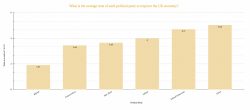
Respondents were asked how much they trusted political parties to improve the UK economy from a scale of 1 (do not trust at all) to 10 (trust completely). The results were averaged and plotted on the diagram shown above. The survey provided some interesting results, with the most glaring being Reform’s failure to even reach an average of 2. This means students do not trust the reform on the economy, with 70% giving a score of 1, and none above 8.
This data is consistent with broader national data, with research by Exeter University finding that 61% of those aged 18 to 30 were very unlikely to ever vote for Reform. Even worse for Reform, 60% of students in our survey stated they trust them the least on the economy out of all parties.
There were varied reasons for this, with the most common being fears over privatisation (specifically the NHS), beliefs that Reform will only help the rich, and worries over plans for austerity, minimum wage cuts, and the re-implementation of the two-child benefit cap. Reform was commonly described as “billionaire proxies” and a “repackaging of disgraced Tories” by students.
Repeatedly, answers centred on redistribution: wealth taxes, higher minimum wages, and measures to prevent poverty.
In a widely different case, the Greens seemed to fare much better, although not everyone appears convinced. The party recorded the highest average trust score across almost every economic category surveyed. Whether respondents were asked about funding public services or managing the cost-of-living crisis, the Greens outperformed their competitors. When respondents were asked to identify the biggest economic problems they consider when voting, three concerns dominated: funding of public services, the cost of living, and social inequality. Repeatedly, answers centred on redistribution: wealth taxes, higher minimum wages, and measures to prevent poverty. As one student put it, “The most important way to improve the economy is to reduce wealth inequality and only the Greens are proposing a wealth tax.”
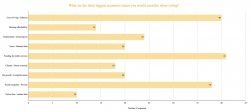 However, whilst the Greens recorded the highest averages, their scores were not concentrated at the top end of the scale. Unlike the sharp clustering of 1/10 ratings seen for Reform, Green support was more evenly distributed across mid- to high-trust levels. Many respondents selected 6s, 7s or 8s rather than 9s and 10s. This suggests that the party’s success is relative rather than certain.
Several respondents expressed reservations about the feasibility and delivery. The form had mixed replies to how they trust the Greens, with some saying, “The Greens are abysmally ill-sighted”, yet the Greens also had an obvious majority (45-48%) in questions regarding trusting who to help make housing more affordable, fund public services, and tackle the cost-of-living crisis. In our view, the Greens’ advantage reveals less about their economic perfection and more about the vacuum left by other parties. When 70% of respondents believe the economy has worsened, the party that most directly acknowledges structural inequality and cost-of-living pressures will naturally resonate.
Interestingly, despite 14 years in government and with many respondents recently viewing the economy negatively, it is surprising to see a stronghold among young people that the Conservatives are a party of economic stability. When asked which party respondents trust the most economically, the Tories got 18.7% of the vote, only second to the Greens. There seemed to be a consensus amongst some respondents that the Conservatives are pragmatic on the economy, but most respondents viewed them negatively due to past economic issues.
One student summed it up by noting that “there’s a lot of bad options” when choosing
One curveball party in the survey was Your Party, a socialist party run by Zarah Sultana and Jeremy Corbyn. Despite the strong left-leaning nature of most survey respondents, 35% gave the party a score of 1, indicating they did not trust it at all. The large theme is that whilst some of their values and ideals may be in the right place, their lack of unity and stability as a party is worrying. One respondent said voting for Your Party is “like saying you trust a dog least to run the UK economy. They’ll never work out how to open the Treasury door.” This funny comment largely sums up the lack of trust in Your Party as an organisation, with those who may have considered supporting them instead looking to the Greens, who are seen as more electable and popular. Ideological alignment may not be enough, with perceived governability playing a decisive role in trust over the economy.
The Liberal Democrats present a more ambiguous case. Whilst they did not dominate any single category, they maintained relatively steady trust scores across the board. Few respondents expressed strong enthusiasm, but equally few rejected them outright. In contrast to the sharp polarisation surrounding Reform or the divided opinions on the Conservatives, the Lib Dems occupy a middle ground of cautious acceptability, a position that might puzzle some observers, given the relative lack of clarity in their platform.
What we believe captures the sentiment of many students is that of a responder who said they “don’t feel represented”. Whilst disheartening, we cannot say we are surprised. Rather than signalling a clear victory for the Greens, this acts more as a warning to other parties. One student summed it up by noting that “there’s a lot of bad options” when choosing which party they trust the least. This illustrates that maintaining support requires more than passive approval. Instead, it demands meaningful engagement and policies that genuinely resonate with young voters. Parties that ignore this risk are trusted in name only, without cultivating real connection or loyalty.
Comments