Bridgerton: How Long Can Historical Escapism Last?
I was bound to write about Bridgerton in this column series, and with the second half of season four now released, it feels like the right moment to examine what the show has offered so far.
Bridgerton is not a series I turn to for historical accuracy. Loosely derived from the Regency era, its charm lies in its compelling narrative structure and its focus on the romantic lives of the Bridgerton family. Much has been said about each of its seasons, as well as the Queen Charlotte spin-off, but one thing remains consistent: Bridgerton is historical escapism. The franchise prides itself on maintaining a ‘colour-blind’ social backdrop while still retaining elements of classism within its narrative.
But how long can historical escapism last before it shifts from blissful euphoria into blissful ignorance?
Season one premiered on Christmas Day 2020, during the height of the pandemic, when audiences were desperate for distraction. Period dramas have long offered that sense of escape, and with the conclusion of Downton Abbey five years prior and the success of shows such as The Crown and Victoria soon after, Bridgerton provided a more fantastical way to revisit the past.
The series established a one-dimensional world that was easily digestible for audiences
By crafting a society where love, marriage and money are the sole motivations behind social mobility, the series established a one-dimensional world that was easily digestible for audiences while still presenting ethnic representation in a time period culturally viewed as distinctly white. Throughout the seasons, there are few meaningful references to social or economic disparities between characters, as the show remains firmly focused on the affluence of the Regency elite.
There are brief glimpses of these tensions, most notably in the class imbalance between Eloise Bridgerton (Claudia Jessie) and Theo Sharpe (Calam Lynch) in season two, and through the introduction of Henry Granville (Julian Overden) in season one — a gay man forced to live a “double life” to protect himself and his lover. However, these narratives fade into the background and do little to alter the show’s broader world-building. Ultimately, they have little impact on the overarching story.
Arguably, these characters had the potential to reshape the series’ direction, particularly Henry Granville. By introducing Benedict Bridgerton (Luke Thompson) to an underground scene of sexual freedom, the show could have explored the realities faced by LGBTQ+ people in the Regency era in far greater depth.
It often avoids fully engaging with the structural realities of the period it depicts
Season three appeared to mark a turning point in Bridgerton’s approach to sexuality through Benedict’s storyline. His involvement in a polyamorous relationship with Lady Tilley Arnold (Hannah New) and Paul Suarez (Lucas Aurelio) offered the most explicit exploration of queer desire the series had attempted, positioning Benedict as a character whose sexuality existed beyond heterosexual convention. However, this development is abruptly abandoned in season four.
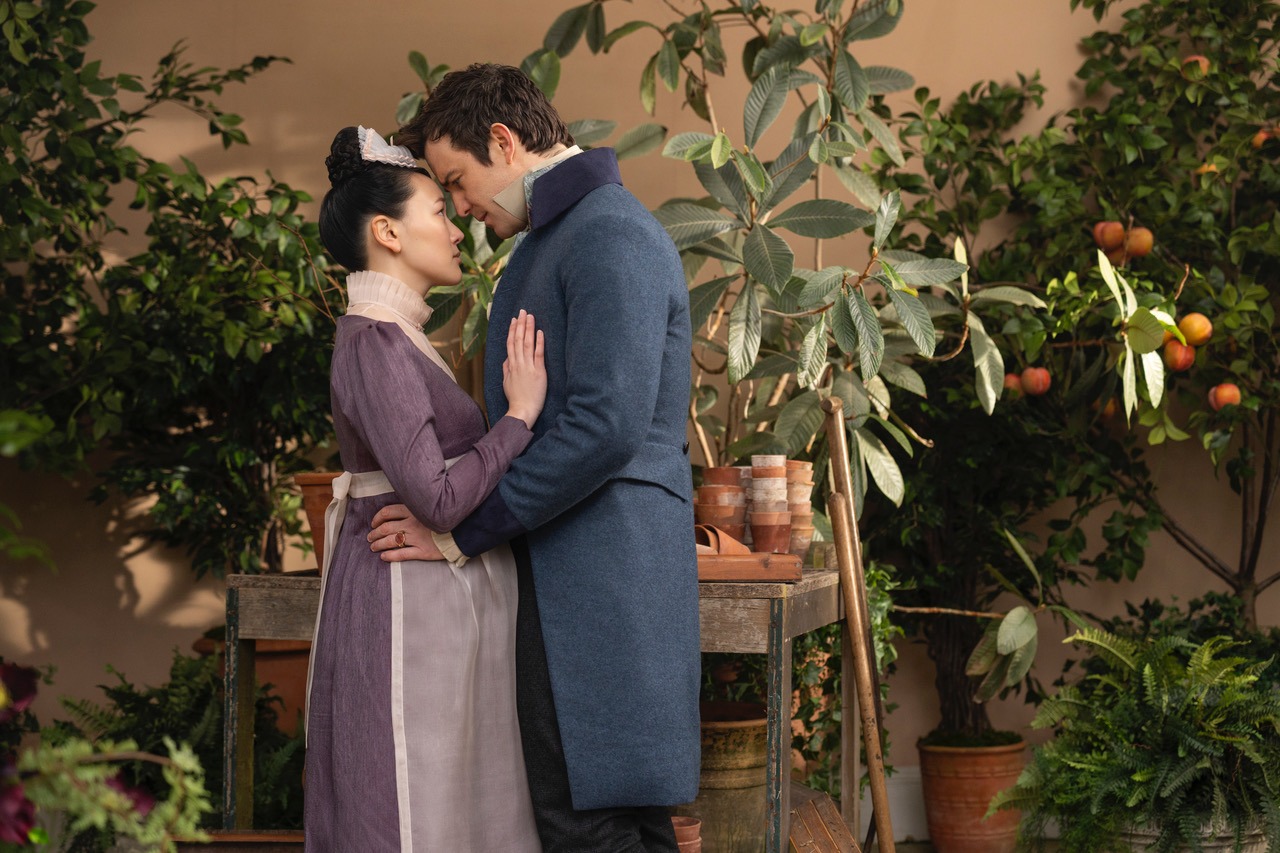
Benedict is written into a Cinderella-style romance with Sophie Baek (Yerin Ha), with no meaningful reference to his previous relationships or to his attraction to men. The dissolution of his polyamorous relationship in season three is portrayed as a quiet and minor ending, framed as a phase of experimentation rather than a lasting element of his identity. As a result, what initially appeared to be a progressive expansion of the show’s romantic possibilities is reduced to a narrative detour, raising questions about whether Bridgerton is willing to fully commit to queerness within its long-term storytelling or merely gestures towards it for temporary intrigue.
Bridgerton does succeed is in highlighting the disparity between the social standing of women
With the blossoming of a lesbian plotline involving Francesa Bridgerton and Michaela Stirling, there remains hope that these themes may be explored, opening up the realm of possibility for intentional engagement with queer identity.
Where Bridgerton does succeed is in highlighting the disparity between the social standing of women. This theme recurs across many female characters, as the expectation of marriage consistently shapes their narratives. The very premise of the show — young women “debuting” into society for the purpose of securing a husband — forms the backbone of the series. However, most other inequalities are sidelined. Classism and homophobia are glossed over, and racism is largely absent from meaningful critique. While the series presents itself as progressive, it often avoids fully engaging with the structural realities of the period it depicts.
Whilst I am not calling for a total upheaval of the fantasy that Bridgerton offers, the question remains: how long can historical escapism endure before its refusal to confront deeper social truths begins to undermine its own world?
Comments