Winter Olympics 2026: The Moments that Defined Women’s Figure Skating in Milan
The women’s skating event at the Olympics received more media attention than most other events in the run-up to the Olympics, with social media hype surrounding many of the skaters. Every podium place was up in the air, unlike the other disciplines, and fans were incredibly excited to see who would be crowned the Olympic champion.
All eyes were on the skaters from two federations in particular: Japan and the USA. The Japanese team consisted of 17-year old Ami Nakai, making her Olympic debut in her first senior season, and one of the only women in the world with a consistent triple axel (one of the hardest jumps in figure skating); Kaori Sakamoto, a giant of the sport, winning a record-breaking three-time consecutive world championships; and Mone Chiba, world bronze medalist and 2024 Four Continents winner. Team USA’s team was nicknamed the ‘Blade Angels’ by the media and their legions of fans, including the likes of Isabeau Levito, who is a 2024 world silver medalist; Amber Glenn, known for her triple axel and activism off the ice around mental health, as well as being the first openly LGBTQ+ USA Olympic skater; and Alysa Liu, returning to the Olympics as part of a historic comeback that included a world championship win in 2025. Other skaters in podium contention included Georgia’s Anastasiia Gubanova and Russia’s Adeliia Petrosian, competing as an individual neutral athlete and coached by the notorious Eteri Tutberidze.
Team USA’s ‘Blade Angels’ were [one of the] crowd favourites
Adelia Petrosian was among the earliest to skate; her short program was set to a medley of Michael Jackson music and showcased her technical excellence, though the emotion didn’t come through in her artistry as it did for some of the other skaters. Similarly, Anastasiia Gubanova skated a clean program with more musicality than Petrosian, but commentators agreed that the high-speed Bollywood music didn’t really suit her style of skating.
The Japanese federation skaters all had beautiful short programs. Ami Nakai landed her opening triple axel with ease that belied how hard the jump is and continued to skate with a sense of effortlessness and joy, seeming absolutely delighted to be at the Olympics. Mone Chiba also skated a perfect, clean program, but the crowd favourite was undoubtedly Kaori Sakamoto. She had previously said that the Olympics would be her last competition before retiring from the sport, and her short program for the season was appropriately set to ‘Time to Say Goodbye’.
Team USA’s ‘Blade Angels’ were also crowd favourites. Isabeau Levito skated to her usual classically beautiful music, her program showcasing her flexibility and cute, old-fashioned style, which suits her balletic skating. Alysa Liu’s program, set to Laufey’s ‘Promise,’ looked effortless despite the difficulty level of her jumps, while her genuine joy shone through. The last of these skaters was Amber Glenn, who landed her triple axel cleanly, but popped her triple loop into a double, making it an invalid element and knocking her out of contention for the gold – a bitter disappointment that had her leaving the ice in tears.
Kaori Sakamoto received a standing ovation for her free skate
Two days later, the skaters returned to perform their free programs. Adelia Petrosian skated her’s cleanly, except for a fall on her opening attempt at a quad salchow, and Gubanova did the same. This time around, both skaters used more classical music for their programs, allowing them to showcase their artistry.
Both Ami Nakai and Mone Chiba also had music that showed off their gorgeous skating, flowing across the ice with ease. Nakai landed her triple axel and visibly celebrated it, a moment of joy that carried throughout the rest of her program, while all of Chiba’s jumps, which appeared to float received positive marks from the judges. Kaori Sakamoto received a standing ovation for her free skate, which was perfect and gorgeously artistic except for one mistake – she downgraded her planned jump combination of triple flip-triple toe to just a triple flip, which counted as a repeated element, and as such cost her gold.
The women’s event overall had an atmosphere of joy, ease, and support among all who competed
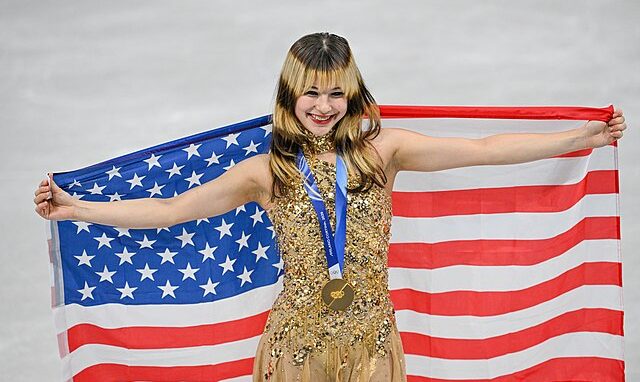
After the heartbreak of her short program, Amber Glenn had an incredible comeback, as she landed her triple axel and the rest of her jumps with her characteristic power, finishing just off the podium in fifth. Alysa Liu was the final skater, and in a program that has since gone viral, she showed off her powerful jumps, incredibly sparkly gold dress, and genuine joy in returning to skating. As a whole, it was a beautiful performance that won her the gold medal to complete her fairytale comeback story.
Despite the fierce competition between these elite skaters, and the heartbreak for several athletes and fans, the women’s event overall had an atmosphere of joy, ease, and support among all who competed – something that was beautiful to see, especially given the discipline’s dark competitive history.
Comments