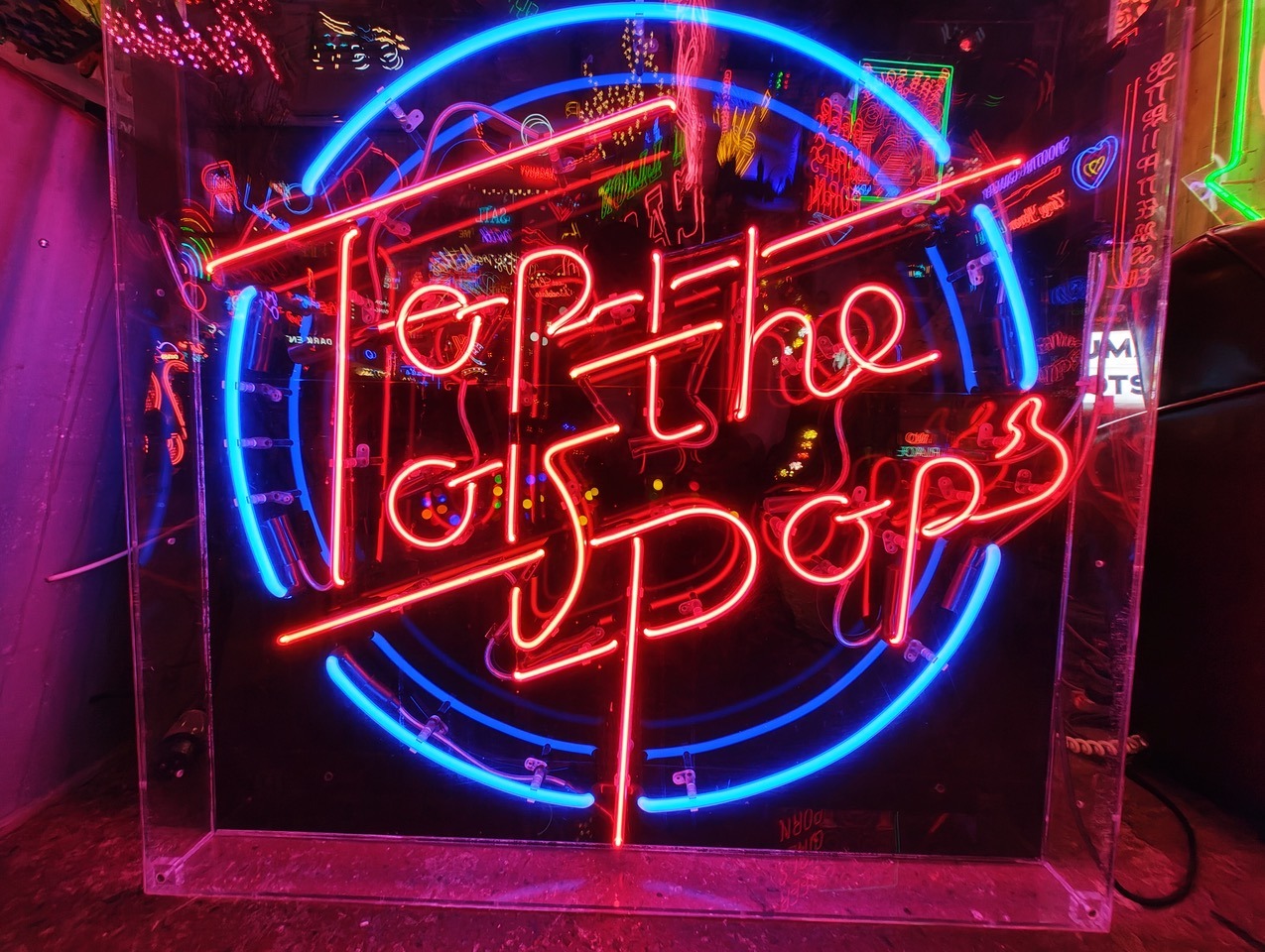
Weird Britannia: The problem with rewatching Top of the Pops
There’s no denying that Top of the Pops inspired and entertained generations of British youth. Bringing rock and roll to British living rooms, creating Glam Rock, and launching the careers of the likes of Bowie and The Smiths, it was, for the majority of its run, the most important show on British TV.
Still, nowadays there’s a certain uneasiness that comes with watching, let alone enjoying TOTP. Despite immense significance, its very foundations were practically cursed from the start. Moreover, rather than merely being tainted by association, TOTP should be viewed as, at its core, both an enabler and symptom of a culture of abuse. In this case, can it ever even be rewatched knowing what we know now?
The Disco Club
The base concept for TOTP came from the Tween and Twenty Disco Club over on Radio Luxembourg. If that name doesn’t ring any bells then its creator will: Jimmy Savile. Yes, Savile wasn’t just the presenter of TOTP but the ‘star’ personality from its inception. By consequence, it’s easy to see how things went so wrong.
The radio show was entirely built on and around the burgeoning teenage subculture that came out of America, which may sound harmless enough, although it does present Savile’s innate ability (or determination) to embed himself within youth culture. Regardless, Savile’s deeds and misdeeds in the clubs of Manchester and Leeds were still essential fuel, which makes it foundationally compromised.
Whilst on television, Savile could replicate the teen club experience but with the support and indeed vindication of the establishment. TOTP became the vehicle for his abuses, placing underage persons within his vicinity and absolving him of all blame simply because he was a major TV personality with all the power that comes with it. Willingly, or unwillingly, the BBC created his opportunities, and it was never really about the music.
And Co
But Savile wasn’t the only abuser connected to TOTP, despite being the most prominent. In some respects his case wasn’t exceptional and he wasn’t the only one who saw music culture as a means to abuse.
Even Savile aside, TOTP at its height was a behind-the-scenes horror show. Dave Lee Travis, Rolf Harris, and Gary Glitter, were all arrested under Operation Yewtree, following the revelations about Savile. And it doesn’t even come as a surprise; presenter Jonathan King had long been associated with sexual abuse allegations; Gary Glitter had been a known paedophile since the ‘90s.
These men all featured prominently on TOTP. When watching past episodes, they appear before some performances. Concurrently, it becomes nigh-on impossible to watch these past performances. Even in the absence of these abusers, there is also the ever-present knowledge of what TOTP was. Surely, then, the show should remain dead and buried.
All the Young Dudes
But is that all TOTP is? It may not have been about the music, but that’s not to say the music didn’t have an impact in its own way.
In 1971, Marc Bolan donned glitter under his eyes for T. Rex’s performance of ‘Hot Love’ giving birth to the Glam Rock genre; in 1972, David Bowie appeared in full Ziggy Stardust get-up for ‘Starman’ going from a one-hit wonder to global superstar; in 1983, Morrissey appeared in a women’s blouse, singing from a bouquet of gladioli, as ‘This Charming Man’ launched The Smiths’ careers.
TOTP, the premier music show for generations, was then immensely significant in the cultural sphere. It reflected the charts but so too did the charts (and the artists) increasingly reflect it…
Moreover, if anything, TOTP’s most influential figure was not any one of the countless abusers attached to it, but singer Marc Bolan, who inspired a generation of guitarists and musicians.
The very visible nature of performances, easily accessible via television sets, drew everyone and anyone into the music business. Not least because now, music was a way of getting noticed.
Consequently, in spite of its very odd beginnings, TOTP became something else entirely as it progressed, containing a real and significant portion of British music history. And so, there’s a real fine line at play.
Burn Down the Disco
And then there’s The Smiths, who owe so much to TOTP and arguably perfected the form. ‘This Charming Man’ launched their careers but there’s also the performance of ‘William, it was really nothing’, where Morrissey rips off his shirt to reveal the words ‘Marry Me’ brandished on his chest, or the endlessly posturing performance of ‘The Boy with the Thorn in His Side’ where Morrissey has the word ‘Bad’ written on the side of his neck.
It’s superficial, yes, but it makes a mockery of TOTP’s incessant fakery. The flowers that aren’t a microphone, the half-bored gesturing. It’s as if the audience are being made aware of the façade and, in turn, the wider culture it represents.
But that’s only the half of the Smiths’ real genius; from a stage that had previously satiated the lurid desires of very real predators, Morrisey and the band presented a coy, and transgressive anti-sexuality.
Like T. Rex, and like Bowie, The Smiths’ performances then stand entirely apart from what TOTP really was because they transcended through music. However flawed TOTP is, you simply can’t erase some of the greatest artists of the 20th century.
Besides, it’s not as if they weren’t telling us all along…
Burn down the disco, hang the blessed DJ – ‘Panic’, The Smiths, 1986.
Comments