Is streaming destroying the music industry? Warwick students’ take on the Spotify debate
While walking up the FAB’s never-ending staircase, on the bus, or in the library, it is not uncommon to see many students with music blasting in their ears as they go about their day – myself included. As we get drawn into university life, it is so easy to just press play and not consider whether there is a more ethical option for our music consumption. With backlash against Spotify on the rise, now may be the time to test out a music streaming alternative.
When The Boar Music asked Warwick students why they chose to use their current music streaming app, the words “convenience” and “popular” regularly popped up. Indeed, this opinion is reflected globally: Spotify currently has 713 million monthly active listeners, with 281 million paying the premium subscription fee. But with Spotify increasingly coming under fire for ethical reasons, what are Warwick students’ opinions on the streaming debate?
Almost 20 years ago, Spotify was founded by Daniel Ek, and it seemed revolutionary. Having endless songs at your fingertips, all available directly on your device for a small fee, seemed unimaginable. It is no surprise, then, that it is widely used today: 75% of respondents to The Boar’s music streaming survey admitted to using Spotify as their go-to music streaming destination.
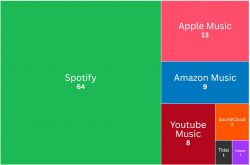
Where do Warwick students stream music?
Spotify regards itself as the “saviour of modern music”, as it was released during a time when piracy was at its peak, which directly impacted music sales. So why would several artists be leaving a platform which has supposedly transformed the music industry for the better?
Spotify is not profitable for new or up-and-coming artists
Firstly, Spotify CEO Daniel Ek is a controversial figure. This came to light last year after it was revealed that he had invested €600 million through his firm Prima Materia in German defence technology company Helsing. The company specialises in AI defence software and develops military strike drones and underwater surveillance systems.
Ek’s multi-million-euro investment drove many artists to remove their music from the platform, as they did not wish to be associated with it. Australian band King Gizzard & The Lizard Wizard are among the list of artists who removed their catalogue from the streaming app. Eventually, Ek stepped down from his position as CEO, handing over the reins to Spotify co-presidents Gustav Söderström and Alex Norström.
Displaying ICE ads, partnering with ChatGPT, and poor royalty pay for artists also keep Spotify in the headlines of many publications. An article in The Times revealed that artists are paid 0.3p per Spotify stream, which illustrates that a new artist will need to have their tracks streamed around ten million times to earn £30,000. Hence, Spotify is not profitable for new or up-and-coming artists.
According to The Boar Music’s survey, 58.1% of respondents are aware of Spotify’s low royalty pay to artists, but only 32.6% said that they considered royalty pay to artists when selecting which streaming apps work best for them.

Are you aware of spotify’s low royalty pay to artists? [Green = Yes / Red = No]
Users like specific features of Spotify, including the easy-to-use interface and the ability to create playlists
Unsurprisingly, as students are known bargain hunters, affordability is the top priority for Warwick students, with many students commenting on the fact that they are part of a family or student plan for their preferred streaming app. 77.9% of respondents chose it as one of their most vital factors, while the availability of songs followed closely behind at 75.6% and the ability to create playlists at 73.3%.
The fact that the availability of songs ranks so highly on Warwick students’ priorities when choosing a streaming app is interesting, given the recent news that a list of artists is pulling their songs from Spotify. This begs the question of whether, if increasingly more high-profile artists start removing their songs from Spotify, will more consumers follow suit and boycott, too?
Additionally, as revealed by The Boar Music’s survey, users like specific features of Spotify, including the easy-to-use interface and the ability to create playlists. The most important day of the year in any music lover’s life, Spotify Wrapped, also earned a few mentions.
That being said, there is not a huge loyalty when it comes to Warwick students and their streaming apps. When asked if they would consider switching music streaming apps, 43% said maybe and 36% said yes; some even stated that they’re actively looking to switch their go-to music streaming platform.

Would you ever consider switching music streaming apps? [Green = Yes / Red = No / Blue = Maybe]
So, the question is, is there a reliable alternative?
Many of the respondents to The Boar Music’s survey stated that they are continuing to use Spotify as there is no apparent alternative that offers all of Spotify’s features for the price. So, the question is, is there a reliable alternative?
The answer: yes, kind of. Alternatives Tidal and Qobuz offer a student plan, which is cheaper than Spotify. You can access Qobuz for £4.99 a month, or Tidal for £5.49, compared to Spotify’s £5.99. Although it must be mentioned that these alternatives are music only, so if you use your streaming app to listen to audiobooks or podcasts, these will not be included in the subscription. There is also no free version of these platforms, unlike Spotify, where there is a free version with ads.
For any audiophiles out there, Tidal and Qobuz also come out on top compared to Spotify. Tidal offers lossless HiFi and Hi-Res tiers, and Qobuz, deemed the ‘audiophile’s choice’, provides pure, high-resolution sound.
If the fancy features are what you’re after, Tidal has a wrapped style roundup at the end of the year, just without the fancy graphics that Spotify has, so it won’t inform you that your average listening age is closer to retirement rather than early 20s. Tidal also has daily mixes if you’re looking for specially curated playlists, but, unfortunately, they are not titled ‘Pink Pilates Princess Listening Party’.
Royalty pay is a priority for Tidal, too. A recent post by Los Campesinos! broke down how much they earned through streaming: Tidal came out on top, with the band generating 0.75p per stream – over double compared to what Spotify pays.
The survey overwhelmingly supports the idea that streaming has pushed people to purchase physical media
Despite this, when it comes to supporting artists, streaming in general is not the optimal option; rather, it’s purchasing physical media.
The purchase of physical media, such as vinyl and CDs, has seen a huge boom recently, which has been largely driven by a younger crowd. In 2025, vinyl sales in the UK increased 13.3% year-on-year to 7.6 million units, and the records that topped the charts for the most sales reflect that Gen Z are the one pulling the trigger on the vinyl boom. Taylor Swift’s Life of a Showgirl holds the top spot for the most sought-after record of the year, followed closely by Geordie singer-songwriter Sam Fender, who has sold 73,000 copies of People Watching since its release in February 2025.
Warwick students are hopping on the vinyl-buying bus: 66.3% of respondents to The Boar Music’s survey have bought some form of physical music media, whether that be CDs, vinyl, or tapes.
Often, publications typically report that young people are spending on physical media for the tangible and aesthetic appeal, as we have become more drawn to the feel of holding a vinyl in our hands due to growing up in the digital age. This is certainly reflected in The Boar’s survey, as people mentioned enjoying collecting CDs and vinyl as “they look nice on my shelf.” However, many of our respondents commented that they collect vinyl to support their favourite artists financially, and also so they are not beholden to streaming platforms. Therefore, the survey overwhelmingly supports the idea that streaming has pushed people to purchase physical media, which is certainly one positive for artists that has risen out of the streaming age.

Do you ever buy physical media (CDs, vinyls, etc)? [Green = Yes / Red = No]
So, is streaming destroying the music industry? Honestly, the answer is not so straightforward.
While Warwick students currently prioritise affordability and specific features when choosing a streaming platform, as awareness increases around royalty pay and artists continue to fight against ethical issues, alternative streaming platforms and investing in physical media may become more appealing.
Streaming may not be ‘destroying’ the music industry, but it is certainly reshaping it. As students, we are not passive consumers; by switching streaming platforms or turning to physical media purchases, the listeners who press play are the ones who can influence how artists are valued and paid within the streaming age.
Comments