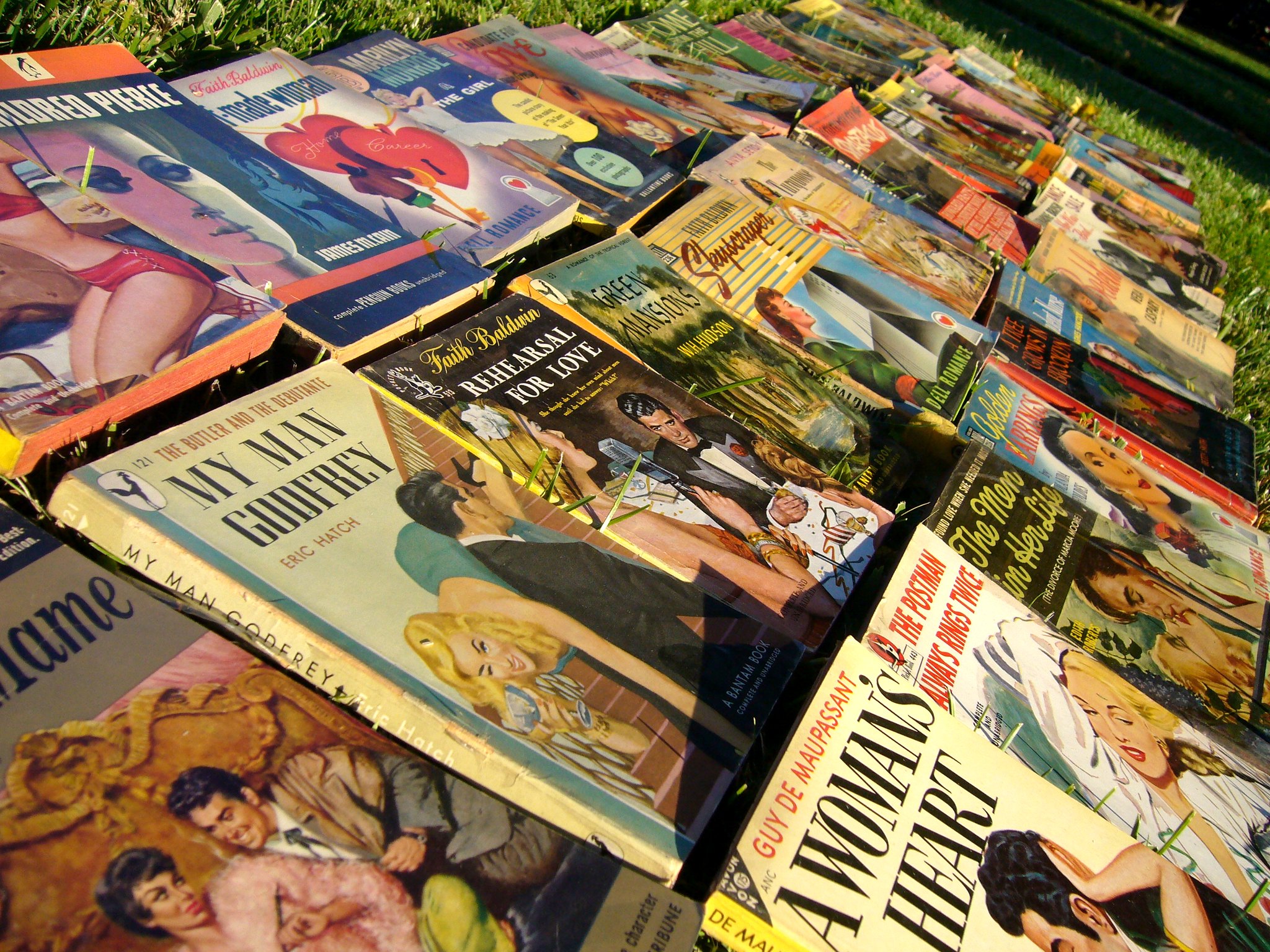
The trivialisation of romance: It’s not just anything, it’s love
If you find yourself saying ‘it’s just a romance book,’ then this is for you; a genre, especially romance and romantasy, is never just anything, it’s art.
I know you readers are out there – I am one of them – guilty of perpetuating this trivialisation. In fact, one in four people responded to a survey shared by The Boar, saying that they had previously lied about reading romance novels.
When 40% of respondents, all young females under 25, state that romance is their main genre and 70% of all respondents engage with the genre, I find myself questioning how mainstream media has managed to mould our perceptions of female desire so significantly that respondents “feared judgment” for reading a genre that “made them feel hopeful and comforted”.
When the whole foundation of human life is built on love, connection and intimacy, who are we to look at a romance book’s cover and trivialise it to just paper and ink, rather than a commentary on the one thing most of us are desperate for?
We’ve sadly entered a pandemic of insecure readers, book-cover hiders, and self-censorship victims.
Why do we react so strongly to female desire?
If you, like me, came across Jack Ben Edwards video-clip on the importance of the romance genre, then I hope you feel as strongly as I do that it has so much merit and so much, as a genre, to say on the general condition of the human response to romance and love.
As he rightly says, “It’s not just romance, love is one of the things we think about our entire lives … on your deathbed, you will be thinking about the people that you love. And so, why shouldn’t we make art about it? And why shouldn’t we give our criticism of art that dignity to think about it as an important form, an important medium of self-expression.”
Why do we react so strongly to female desire? Why are we embarrassed to engage with a genre that means so much to so many? Why do we disregard our dreams of living out a ‘fairy tale’ romance? Why do we believe this level of love is unattainable?
The genre is rapidly growing. In the UK, ‘Romance & Sagas’ rose from a value of £62 million in 2023 to £69 million in 2024. “Fantasy & SciFi” rose from £59 million in 2023 to £83 million in 2024. The first five months of 2024 saw nearly double the number of romantasy books sold worldwide vs the same period in 2023.
Romantasy is simply fantasy where women are centred … the moment women’s narratives gained visibility and commercial strength, the industry created a separate label
Half of the readership that makes up the romance/romantasy demographic is aged under 35. It’s younger readers who are energising the market, and their imagination, hopes, and dreams should not be dampened by social media’s pressure cooker.
I had the chance to speak to Camille Burns, founder of Solas Literary Agency, about her perception of this trivialisation.
“Romance is still too often dismissed in mainstream media, and that largely comes down to the fact that it centres women’s desires, emotions and interior lives.”
“At its core, romantasy is simply fantasy where women are centred. Yet because fantasy has been a male-dominated space for so long, the moment women’s narratives gained visibility and commercial strength, the industry created a separate label. In many ways, it is ‘fantasy for women’, and the need to name it separately speaks volumes about who has traditionally been allowed to define a genre.”
Yet Camille hasn’t seen these attitudes affect consumerism: “Romantasy hasn’t diluted fantasy. It has revitalised it”. In fact, quite the opposite, and she puts this down to the new age of social-media marketing and engagement.
“Readers of romance and romantasy engage with incredible enthusiasm. They don’t simply read a book and move on. They annotate, tab, highlight, [and] analyse. They talk about their favourites with extraordinary passion, and they drive word of mouth in a way most genres could only hope for. That level of engagement has real commercial impact, and I think the industry is finally catching up to that.”
Despite this increased consumerism, 47% of respondents stated they have experienced embarrassment or uncertainty when reading the genre, and 45% of respondents said they had been laughed at or teased for their reading habits. But why is this?
Has mainstream media conflated implicit female desire to be synonymous with irrationality and lack of intelligence?
Respondents stated that the books were “not sophisticated, intellectual or intelligent enough” and that “people have preconceptions about the quality and the plot” because “people assume romantasy books only engage in sexual discourse (smut)”, but even if they did, why does female desire raise so many problems?
As Burns suggests: “There is still a discomfort with women taking pleasure and emotional fulfilment seriously, even though the craft, structure and narrative skill in these books can be as strong as anything else on the shelves.”
Furthermore, around 45% of respondents questioned the attainability and realism of fictional romance, suggesting that, as “they’re written by women, for women”, they become “idealised” and therefore, “unrealistic”.
Interestingly, 67% of respondents felt less embarrassed when reading classic romance novels compared to modern romance novels, which brings a whole new aspect into question. One respondent said the reason for their embarrassment was because they wanted “to seem more ‘clever’ and to be taken more seriously”, so has mainstream media conflated implicit female desire to be synonymous with irrationality and lack of intelligence?
Whilst social media is helping to change the way publishers and authors package and market their books, it also seems to be the case that social media is changing the way readers engage with their own passions, often in a negative way. However, no respondents over 25 reported feeling embarrassed, so it seems that opinions on social media mostly impact younger generations.
Whatever the reason for this trivialisation, I don’t believe there is any shame to be felt, as you are definitely not the only one, but I do hope that as readers continue to engage with romance and romantasy, they feel a sense of pride in engaging with a genre that centres women, love and human relationships.
In the wise words of these respondents to our survey, romance and surrounding genres allow a sense of “escapism”, that “makes you feel something”, “distract from stresses of work”, “put into words the joy that the love you feel gives you” and offers “hope”, “warmth” and “happiness.”
The next time you find yourself saying “it’s just a romance”, stop for a second and let yourself remember everything the genre champions!
Comments