The rise of CRISPR
If you’ve ever taken a GCSE-level biology course, you may vaguely recognise the term CRISPR-Cas9 (or just CRISPR for short); it has been a buzzword in biotech circles for quite a few years now. Within wider western culture you might have noticed how the societal fear of bioweaponry and biowarfare has proliferated and developed partially due to the upsurge of technologies like CRISPR and an increase in the general public’s awareness of them.
If the words ‘societal fear’ seem a tad wishy-washy then instead contemplate how the villain of any generic action movie now has plans revolving around gene-editing or mind-control, rather than the traditional nuclear apocalypse (I’m looking at you specifically, James Bond). But I don’t dare tread on the toes of our Film section for any longer than necessary, so what is CRISPR exactly?
CRISPR itself stands for ‘Clustered Interspaced Short Palindromic Repeats’ and describes an immune system commonly found in microbes like bacteria. This system is used to protect the bacteria from invading viruses or other pathogens by taking in some of the genetic information from the invading pathogen to future-proof the bacterium against similar invasions later down the line. For any Nintendo fans in our readership, imagine that the intrinsic CRISPR system is like Kirby (in the sense that it can mimic its enemies and use their abilities against them).
Scientists can now treat genetic diseases that were previously thought to be incurable. Just by using these ‘super-scissors’ – it sounds too good to be true!
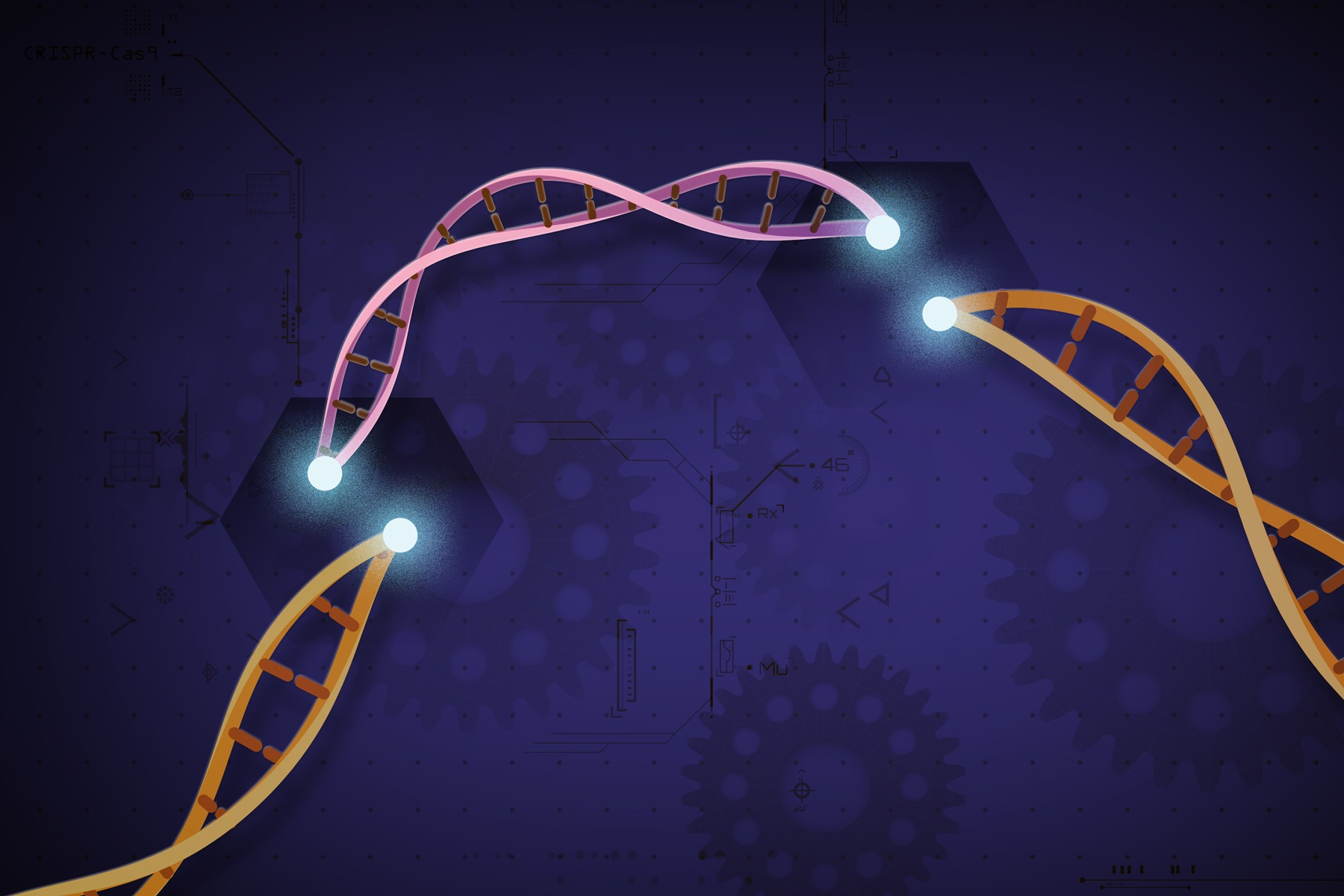
But if all that sounds very complicated, then simply put: CRISPR is like a pair of scissors, and just like my mother has a pair of super-sharp scissors she uses for sewing (that I’m not allowed to touch because they’re “too good”), CRISPR is often referred to as the ‘molecular scissors’ that make the editing of a genome possible. One part of the CRISPR system is reprogrammed to identify and locate a specific section of the genome, and the other part cuts both strands of the faulty DNA so it can be replaced with the desired genetic sequence.
So, you might be thinking that this all sounds rather amazing – scientists can now treat genetic diseases that were previously thought to be incurable. Just by using these ‘super-scissors’ – it sounds too good to be true!
And I would agree with you, on both points: new research from the University of Cambridge and the Karolinska Institutet in Sweden suggests that CRISPR may indeed be ‘too good to be true’. Specifically, their work identified a link between the use of CRISPR and increased risk of cancer development in cells. In an interview with Cancer Research UK Dr Emma Haapaniemi from the Karolinska Institutet explains the original findings of her team.
The absence of this p53 protein in cells is thought to increase the likelihood of them developing cancer
The absence of this p53 protein in cells is thought to increase the likelihood of them developing cancer
“We found that cutting the genome with CRISPR-Cas9 induced the activation of a protein known as p53, which acts like a cell’s alarm system, signalling that DNA is damaged, and opens the cellular ‘first aid kit’ that repairs damage to the DNA. The triggering of this system makes editing much more difficult.”
The absence of this p53 protein in cells is thought to increase the likelihood of them developing cancer since – without the ‘first aid kit’, as Dr Haapaniemi puts it – the cell cannot repair any errors that may occur within its DNA. The Swedish team also discovered that decreasing the level of p53 in a cell allowed for greater efficiency when editing ‘healthy’ cells, and whilst this may decrease the risk of selecting cells lacking p53, it may also leave cells temporarily vulnerable to mutations (and no, not the snazzy X-Men kind).
CRISPR is certainly an exciting new technology that promises to revolutionise all corners of our world, from cancer immunotherapy and treatment of hereditary diseases all the way to genetically modified crops. But as with all research (and when using my mum’s sewing scissors) we should proceed carefully, cautiously, and as ethically as we can.
Comments