The importance of literature in crisis
The current political climate around the world is a stark reminder of the inherent value of literature in times of crisis. The global rise of fascism, the ICE crisis in the US, and a societal regression in human rights highlight the power of the pen in fighting oppression. In the rise in the popularity of genres such as dystopia, satire, and social commentary, the public’s reliance on literature for guidance and resistance during times of crisis is clear. Most significantly, the response of oppressive regimes to such literature is telling; books are banned when they are too revealing of an unspoken, ugly truth.
Whilst science fiction and dystopian genres may seem far-fetched or even absurdist, the societal phenomena they critique are real and dangerous
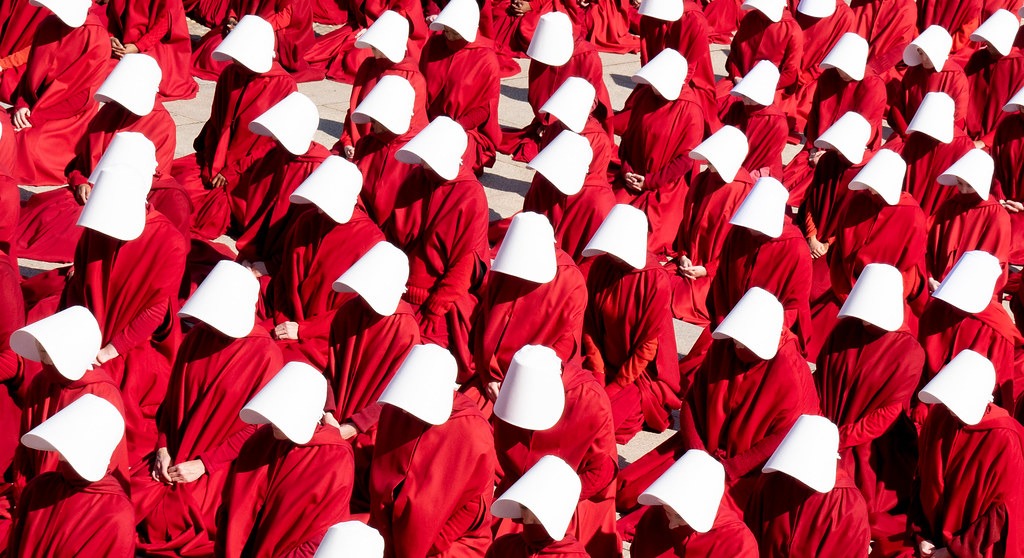
Literature is threatening to oppressive regimes because it organises and articulates discontent through imagery, symbols, and slogans, which can be weaponised against the regimes. Whilst science fiction and dystopian genres may seem far-fetched or even absurdist, the societal phenomena they critique are real and dangerous. The application of Margaret Atwood’s 1985 novel, The Handmaid’s Tale, to critique the 2022 overturning of Roe v. Wade exemplifies the disturbingly real nature of modern dystopian novels. Atwood’s prophetic novel depicts a society in which women hold no reproductive rights, forced to engage in regular government-mandated rape for reproductive purposes. Such a loss of reproductive rights is particularly resonant in modern-day America, with hundreds of women turning to Atwood’s notorious red cloaks as a symbol of protest outside closed abortion clinics and government buildings. The Trump administration fear Atwood’s words as they expose the threat women’s reproductive rights are under. In their banning of The Handmaid’s Tale, the administration have said the quiet part out loud: words on the page hold political meaning and can threaten oppressive regimes.
Literature is additionally a valuable tool in immortalising victims of oppression; what is written in physical pages often outlasts the writer themselves, ensuring that history does not forget victims’ suffering. Indeed, there is an expansive literary tradition of the oppressed writing in secret, finding comfort in the possibility that future generations may find their work and learn from it. Perhaps the most famous example is Anne Frank’s The Diary of a Young Girl. Whilst Frank died in a concentration camp aged just 16, her diary immortalised her legacy and is now a key resource used in Holocaust remembrance education. Similarly, Oscar Wilde’s classic, The Picture of Dorian Gray, expresses the struggles of covert homosexuality in Victorian England. Original manuscripts of the novel were used in Wilde’s sentencing for “gross indecency”, adding to the text’s legacy as a book about homosexual oppression. Whilst Wilde was imprisoned for his sexuality, the novel received immense acclaim posthumously, and its anxieties around identity, religious morality, and societal judgement remain potent today. History cannot forget the suffering undergone by writers like Frank and Wilde, as it is immortalised in the literary canon.
Literature continues to be a vehicle for exploring possible societal realities
Additionally, literature allows us to examine the world we live in, by comparison to others. Genres such as fantasy and science fiction allow readers to escape the constraints of modern concepts of societal norms and explore alternative possibilities. According to research conducted by The London Book Fair, science fiction and fantasy were the fastest-growing genres of 2024, with the highest number of weekly number one sellers. Within the landscape of the aforementioned cultural crises, the popularity of escapist literature is hardly surprising. The recent mass growth in the fantasy genre is revealing of such a desire in readers, picking up a book with the intention of briefly escaping the real world. However, fantasy and science fiction novels can also act as methods of reassessing our own societal predicaments. This has been a literary tradition for centuries, with early examples including Thomas More’s Utopia and Jonathan Swift’s Gulliver’s Travels, both of which created new worlds to express their dissatisfaction with 17th-century societal hierarchies. Literature continues to be a vehicle for exploring possible societal realities, as seen in Charlotte Perkins Gilman’s Herland (a society entirely composed of women), Aldous Huxley’s Island (a peaceful society influenced by Buddhism), and Ernest Callenbach’s Ecotopia (an ecological utopia). As such, the literature facilitates an exploration of possible societal changes, emphasising the need to reexamine the status quo.
Comments