The hilarious profundity of Community’s ‘Remedial Chaos Theory’
Have you wondered how significantly your life would differ if you made a different choice? What if you chose a different degree or a different university? What if you had taken a gap year and joined university a year later? Now try to apply this to smaller decisions – could choosing to eat a blueberry muffin over a chocolate donut, or saying hello to your neighbour change the entire trajectory of your life in a similar way? It sounds absurd at first, but if you think about it, even the smaller decisions we make can alter the bigger picture.
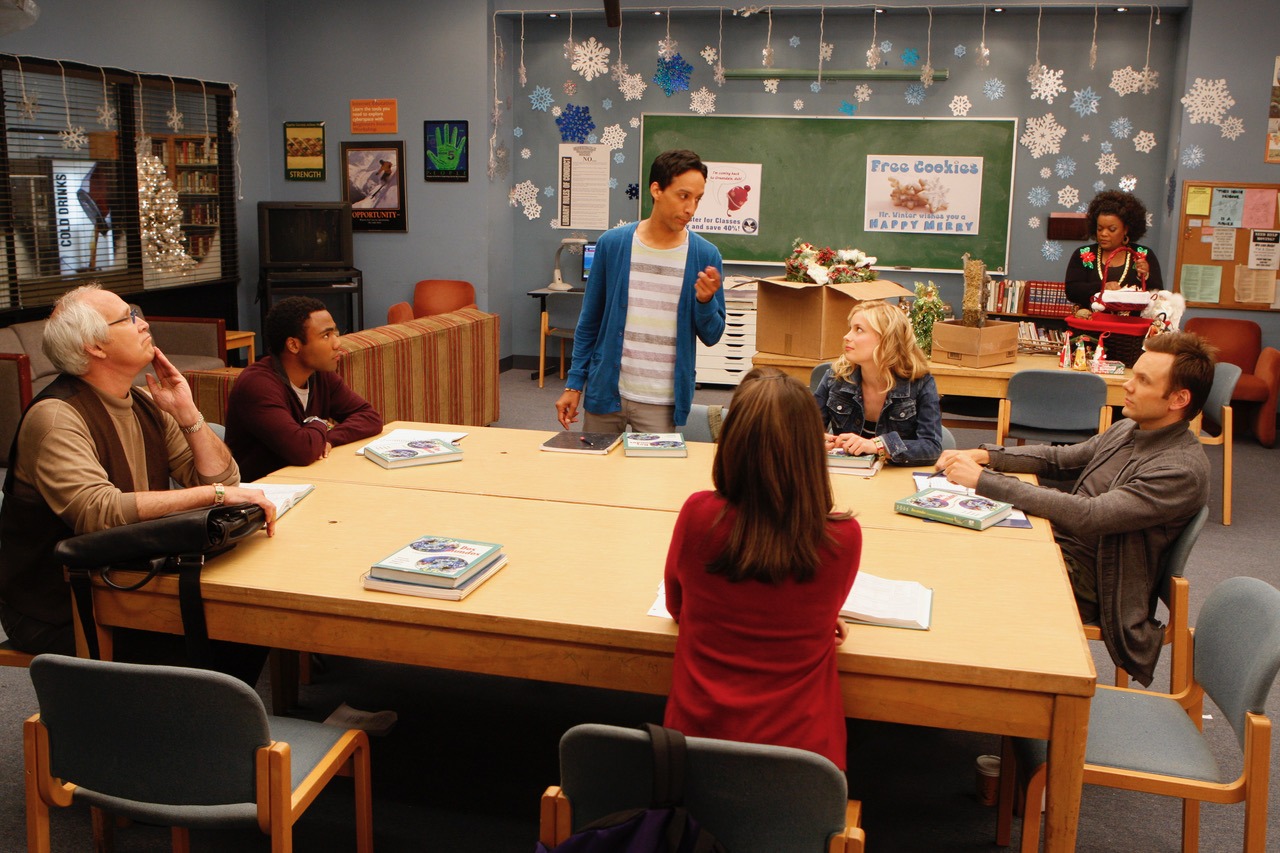
Surprisingly, this wasn’t really an idea I came across in a prestigious literary fiction novel or a philosophy lecture. Oddly enough, it was after watching an episode of the American sitcom Community, called ‘Remedial Chaos Theory’ where I had this epiphany. Community is a show revolving around a seven-member study group that attends a non-serious and eccentric community college.
In many ways, this fan-favourite episode makes use of brilliant storytelling conventions in an obvious yet subversive fashion. The foundation of a compelling episodic story is intact – but in addition to that, the episode stays with the viewer beyond its vacuum, which is what makes it my favourite TV episode of all time. Without further ado, let us explore ‘Remedial Chaos Theory’ as a captivating case study in episodic TV storytelling!
It is both hilarious and alarming
The first element that drew me in was the structuring and storytelling elements, which are introduced very transparently. The episode’s premise is simple enough: the ensemble has gathered for a housewarming party to celebrate Troy (Donald Glover) and Abed’s (Danny Pudi) new apartment. As everyone is gathered around the dining table, the doorbell rings and someone must get the door. This will be determined by the de facto leader, Jeff (Joel McHale) by rolling a die. As Jeff rolls the die, Abed says, “you are now creating six different timelines”, and that’s exactly what happens. After the setup, the episode is divided into seven fragments, which uncover how differently the night could unfold, based on who gets the pizza.
The most effective storytelling technique I find here is the use of Chekhov’s Gun. Put simply, Chekhov’s Gun is a storytelling principle where every prop, character, and plot point must be significant: no element exists for the sake of existing. Instead, even the smallest, most insignificant-seeming object could have considerable ramifications on the plot. ‘Remedial Chaos Theory’ gradually introduces these minuscule yet crucial elements, which not only makes for extremely effective suspense, but also results in a rewarding experience while re-watching.
The most literal example of this is Annie’s (Alison Brie) gun, which is casually introduced in an earlier fragment. After seeing this gun, the viewer is left to wonder when it will come into play, and when it does, it is both hilarious and alarming. A more subtle example of this is presented when, in every fragment, the song ‘Roxanne’ by The Police begins to play. In every instance, Britta (Gillian Jacobs) starts singing along, and is abruptly stopped by an unimpressed Jeff – this leads us to wonder how things might end up differently if Jeff were to let Britta enjoy the moment.
The episode also crosses the line into absurdity and subversion
By dividing the episode into seven fragments, there’s also a break from the three-act structure that Community and many American sitcoms tend to follow. Instead, the episode is divided based on the die and who must get the pizza, which makes for considerably shorter fragments. Added with the use of Chekhov’s Gun, this results in tight and measured story beats that heighten the suspense. This makes the episode, and the show at large, exciting, because suspense isn’t strictly what a viewer expects from a sitcom. By introducing a very different genre into the mix, the episode also crosses the line into absurdity and subversion. After all, Community is known for incorporating homages and bending genres, earning it great renown as a more experimental twist on the tried and tested sitcom.
My favourite part of the episode, however, is its message. While this is hinted at throughout the episode, it is finally established when Jeff rolls the die for the last time. Here, Abed stops him and points out the importance of not allowing the die to control the fate of the night. Hilariously, it also turns out that if the group has seven members, and the die has six sides, Jeff never has to get the pizza himself.
In the final fragment, as Jeff leaves, no one stops Britta from singing along to ‘Roxanne’. This allows other characters to join in on the fun. All the elements of Chekhov’s Gun that made the episode suspenseful are promptly discarded, as the characters are immersed in a joyous dance. When Jeff returns, he nods his head disparagingly before smiling.
Six years later, ‘Remedial Chaos Theory’ has stayed with me – I must have seen it over 20 times, having identified all the different variables that change the outcomes in every timeline. What has stayed with me, though, is its profound message: to relinquish control every once in a while and let life unfold as it does. To not think too much and just act. Most importantly, to try and enjoy life, even on a day that seems uneventful, because you never know when something great can happen!
Comments (1)
Love this article and the message you interpreted from the episode – Community is awesome !!